
A precision plastic profile extrusion line is a single screw production line that converts pellet materials — PP, PE, ABS, TPU and selected PVC pellet compounds — into continuous plastic profiles with a fixed cross-section, built to a customer drawing with defined dimensional tolerance, surface finish and sizing method.
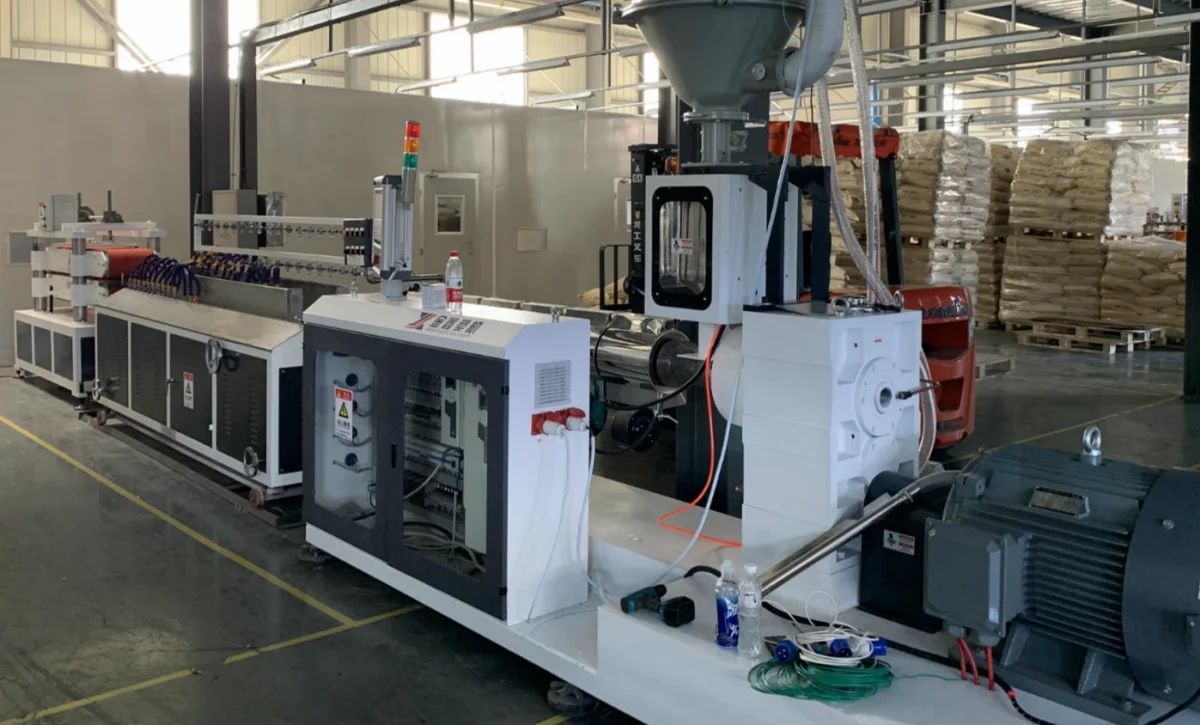
Precision single screw plastic profile extrusion line
Precision Plastic Profile Extrusion Line for PP, PE, ABS and TPU Profiles
A single screw precision plastic profile extrusion line that converts PP, PE, ABS, TPU and selected PVC pellet compounds into continuous profiles built to your drawing — with defined cross-section, dimensional tolerance, surface finish and downstream sizing method.
What Is a Precision Plastic Profile Extrusion Line?
Configuration inputs
| Configuration input | Why it matters |
|---|---|
| Profile drawing or cross-section | Defines die flow path, calibration tooling, haul-off type and cutting method |
| Critical dimensions and tolerance | Determines sizing method (free-sizing or vacuum calibration), cooling support and haul-off stability |
| Resin grade (PP / PE / ABS / TPU / PVC pellet) | Sets screw geometry, compression ratio, temperature profile and drying requirement |
| Surface and finish target | Decides die polishing, cooling path, haul-off contact and optional film protection |
| End use and product behavior | Helps confirm rigid or flexible, gloss level, co-extrusion or soft-rigid structure |
Typical scope: material feeding, single screw melting, profile die, sizing (free-sizing or vacuum calibration), cooling, haul-off, cutting and optional straightening or co-extrusion.
Typical products: PVC track and guide profiles from pelletized compound, ABS wall guards and decorative trims, TPU seals and flexible profiles, PP and PE industrial profiles, and co-extruded dual-color or soft-rigid profiles.
Applications
Plastic Profiles Produced on This Line
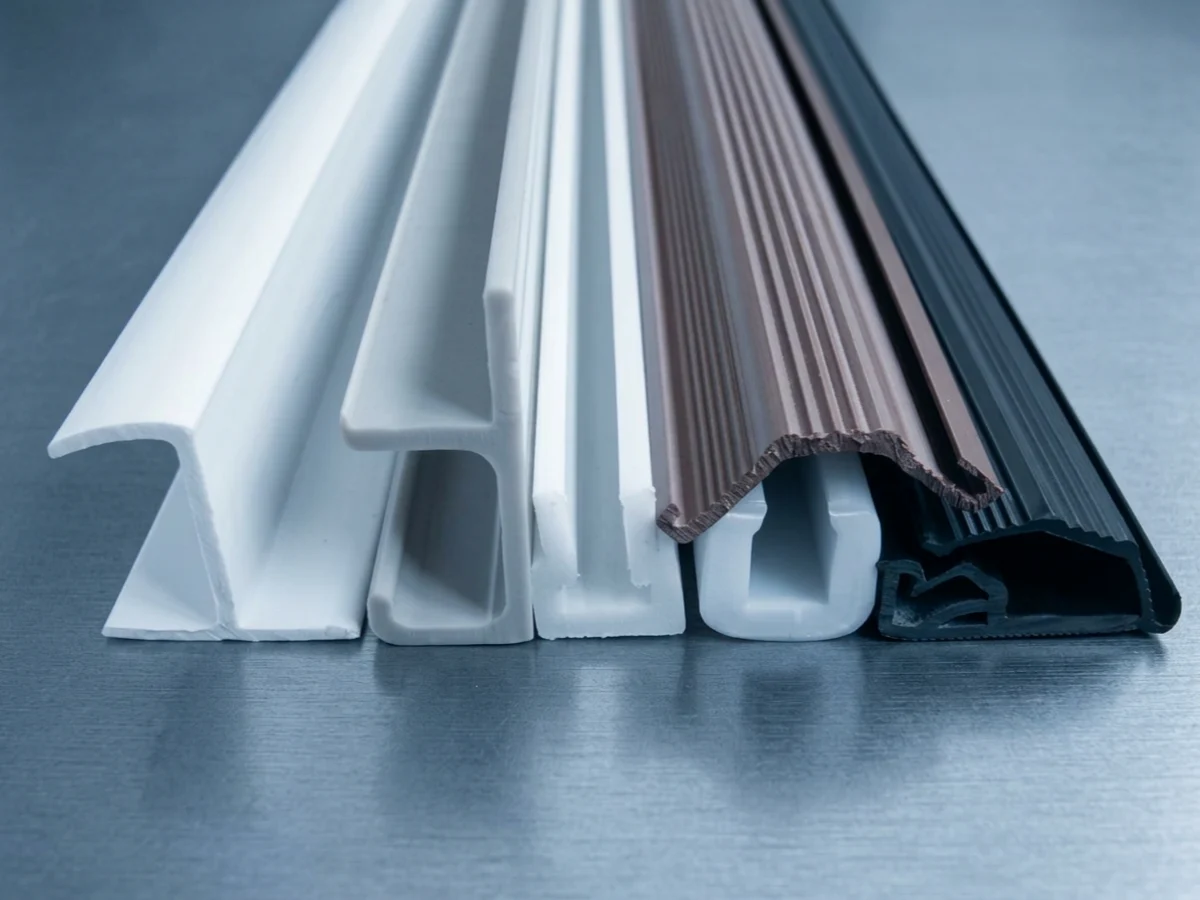
PVC Track and Guide Profiles (Pellet Compound)
Transparent or colored track and guide profiles from pelletized PVC compound for electrical, sliding and interior applications. The line is configured around optical clarity, snap-fit precision and dimensional stability where required.
ABS Protection and Decorative Profiles
Wall guards, corner trims and high-gloss visible components for healthcare, commercial and interior use. The die and cooling path are matched to hold tight tolerances and consistent surface finish across long production runs.
TPU Flexible and Sealing Profiles
Elastic strips, seals and soft-touch profiles requiring surface clarity and dimensional stability. Non-stick sizing surfaces and gentle homogenization help reduce drag marks and air entrapment on soft, high-clarity compounds.
PP and PE Industrial Profiles
For a PP profile extrusion line, shrinkage control and shape stability are key to continuous production of structural and functional profiles. Extended cooling and lower haul-off contact pressure help manage the high post-cooling shrinkage of polyolefins.
Co-Extruded Profiles
Dual-color, cap-layer or soft-rigid combinations when material compatibility and product design allow. The co-extrusion tooling and layer ratios are reviewed against the specific compound pair.
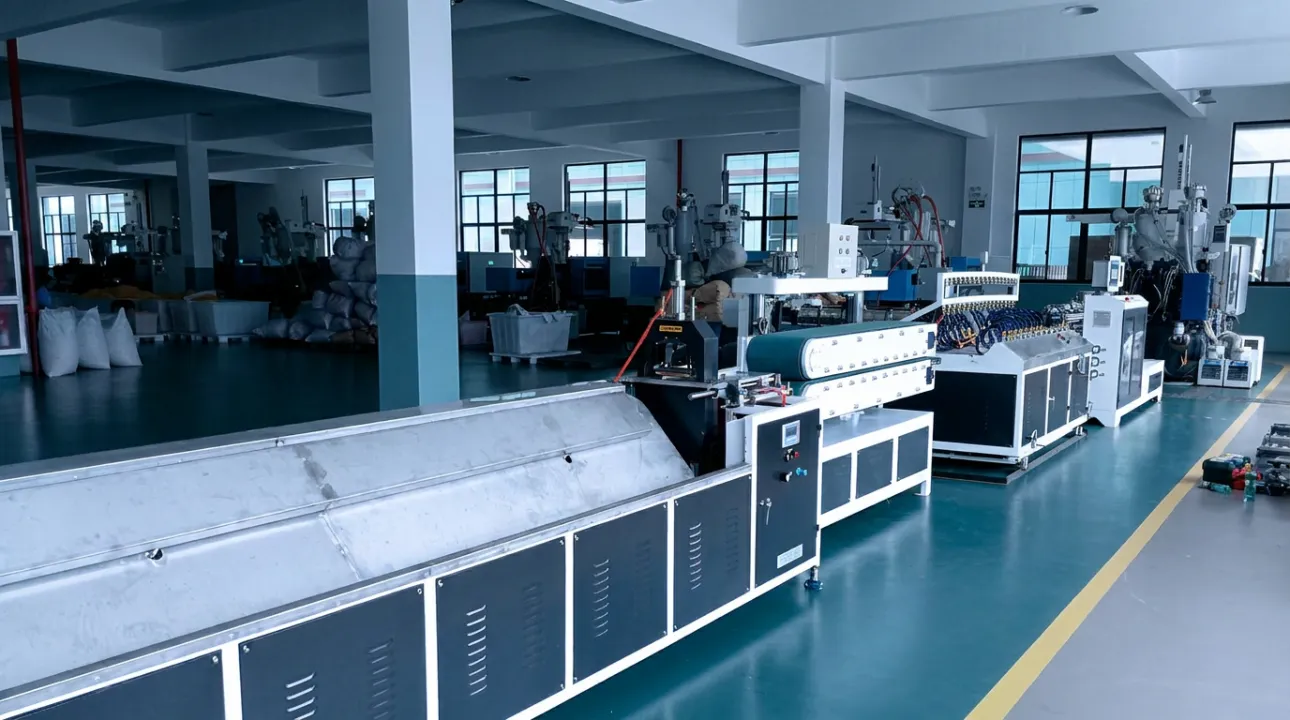
Plastic Profile Extrusion Reference Video
This reference video shows textured plastic profile extrusion on a single screw line. It helps buyers understand the line layout, melt stability and downstream handling used for precision profiles.
Watch Reference VideoDrawing-based profile samples are usually project-specific and may not be public. Final profile tooling and line configuration depend on your cross-section, resin grade, tolerance and surface requirement.
Material Behavior in Precision Profile Extrusion
PP, PE, ABS, TPU and selected PVC pellet compounds can run on a single screw precision profile extrusion line, but each resin has a different processing window and a different set of profile defects to manage.
PP and PE
- Buyers choose it for
- Structural and functional industrial profiles, chemical resistance and cost efficiency
- Process attention
- High crystallization rate, significant post-cooling shrinkage, die swell compensation, extended cooling, controlled cooling coverage and lower haul-off contact pressure
ABS
- Buyers choose it for
- High-gloss visible components, impact strength and rigidity
- Process attention
- Melt homogeneity, precise temperature control, ABS-specific screw geometry, desiccant drying when needed, and controlled shear to preserve impact resistance
TPU
- Buyers choose it for
- Elasticity, seals, soft-touch feel and surface clarity
- Process attention
- Friction and moisture sensitivity, non-stick sizing surfaces, gentle homogenization, soft-touch haul-off and chipless rotary cutting for very soft grades
PVC Pellet Compound
- Buyers choose it for
- Track, guide, electrical and interior profiles run from pelletized compound on a single screw line
- Process attention
- Pelletized PVC compound only; not PVC powder for twin screw window profiles. Free-sizing or vacuum calibration is selected by geometry and co-extrusion compatibility.
Material behavior drives the whole line configuration: PP and PE need shrinkage control, ABS needs surface and impact-strength protection, TPU needs gentle handling, and PVC pellet compound must be separated from twin-screw PVC powder window-profile projects.
Key Quality Points for Precision Plastic Profiles
For precision profiles, the line is reviewed around surface finish, dimensional stability, material-specific behavior and scratch-free handling before quotation.
Surface Finish
Gloss or textured profiles are sensitive to die marks, melt instability, moisture and downstream scratches. Jinxin reviews die polishing, temperature control, drying and profile handling before quotation.
Dimensional Stability
Vacuum calibration (or free-sizing), cooling coverage and haul-off speed must work together to keep the drawing-defined cross-section stable. PP and PE need extended cooling and lower haul-off contact pressure to manage post-cooling shrinkage.
Material-Specific Defects
Each resin brings its own defect pattern: PP and PE shrinkage and warping, ABS silver streaks from moisture or brittleness from excessive shear, TPU drag marks and bubbles, and delamination in soft-rigid co-extruded profiles. Screw geometry, temperature strategy and drying are matched to the compound to manage these.
Scratch-Free Handling
Glossy PVC, ABS and TPU profiles can be rejected if the visible surface is scratched. Guided haul-off, clean support surfaces and optional film application help protect the finished profile during collection, packing and shipping.
Precision Plastic Profile Extrusion Process
Select a stage to see its details.
-
01Material Feeding and Preparation
PP, PE, ABS, TPU or selected PVC pellet compound is fed according to the resin grade. Hygroscopic resins such as ABS and TPU may need a desiccant dryer before extrusion to reduce moisture-related surface defects.
-
02Single Screw Melting
The single screw extruder melts and conveys the resin with controlled shear and temperature. The screw geometry, compression ratio and temperature profile are matched to the compound to deliver a stable, uniform melt.
-
03Profile Die Shaping
The melt enters a profile die matched to the product drawing. Die flow paths are balanced around the cross-section and wall thickness distribution for consistent melt delivery and dimensional stability.
-
04Sizing — Free-Sizing or Vacuum Calibration
The hot profile is sized by the method selected for its geometry and surface sensitivity: free-sizing direct-to-water cooling when surface appearance is contact-sensitive, or vacuum calibration with a calibrator and vacuum tank when hollow or complex profiles need stronger shape lock.
-
05Cooling
The profile continues through water cooling to lock the cross-section before traction. Cooling length and water coverage are selected according to material, profile size and line speed; semi-crystalline PP and PE typically need longer cooling paths.
-
06Synchronized Haul-Off
The haul-off pulls the profile at a steady speed matched with extruder output. Belt or caterpillar traction and contact pressure are selected by profile rigidity and surface sensitivity to hold dimensions without imprinting.
-
07Cutting and Stacking
The cutting unit cuts profiles to the required length using saw, rotary or guillotine cutting matched to material rigidity, wall thickness and target length. Take-off and stacking handle the finished profile without surface damage. For profiles prone to twist, bend or camber, optional straightening can be added before or after cutting.
Optional: a mobile co-extruder can be added for dual-color, cap-layer or soft-rigid structures, and a protective film applicator can be added for glossy profiles.
Core Components of a Precision Plastic Profile Extrusion Line
The line is configured around the product drawing, material, expected production format and quality requirement. Final configuration varies by material, profile geometry and sizing requirement. A typical precision plastic profile extrusion line can include the following modules.
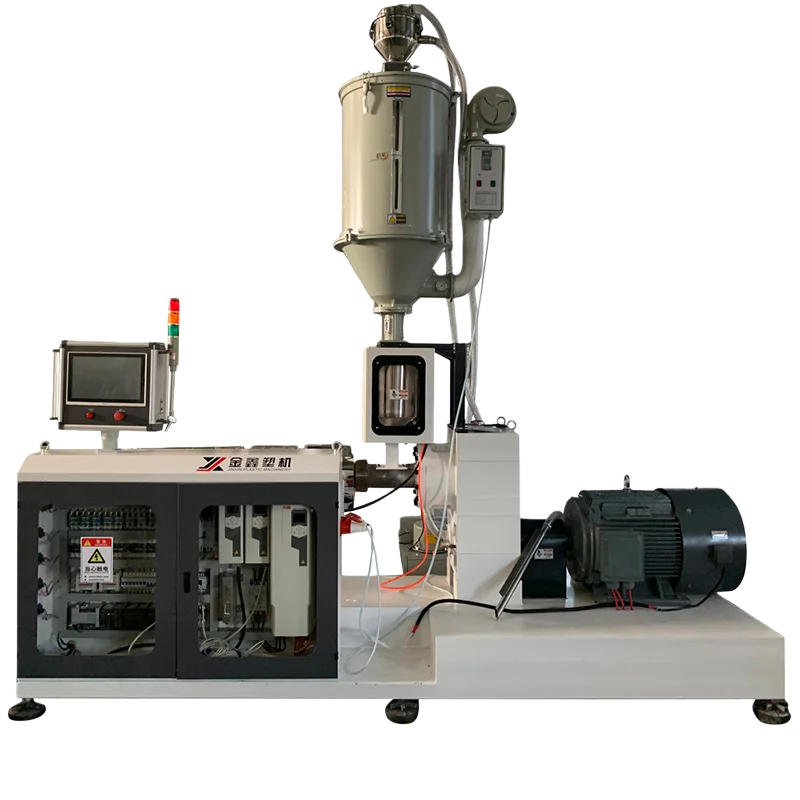
Extrusion system
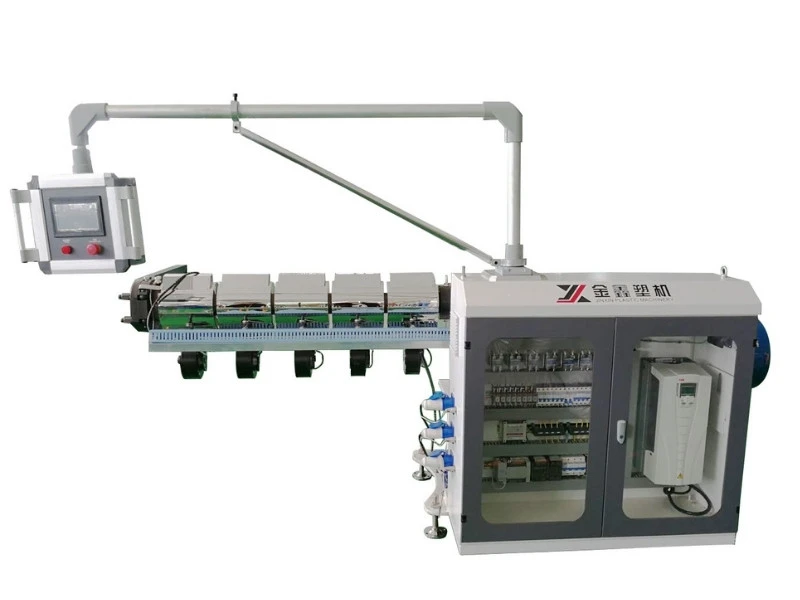
Material-Driven Single Screw Main Extruder
| Detail | Reference |
|---|---|
| Function | Melts and conveys PP, PE, ABS, TPU or selected PVC pellet compound into the profile die. |
| Drive system | Siemens Beide motor matched with an ABB frequency inverter (for example ACS580) for stable speed control in continuous profile extrusion. |
| Control interface | A PLC touchscreen (typical configuration) for synchronized adjustment of extrusion and downstream speed. |
| Thermal regulation | Multi-zone heating controlled by solid-state relays (for example Taiwan FOTEK SSRs in a typical configuration) for stable melt temperature. |
| Plasticization | Nitrided alloy screw and barrel selected for the processing window of the target compound. |
Co-extrusion
Mobile Co-Extruder for Special Profiles (Optional)
| Detail | Reference |
|---|---|
| Function | Supports dual-color, cap-layer or soft-rigid structures when required by the profile design. |
| Positioning | Mobile structure with height and angle adjustment for flexible die matching. |
| Control | Independent speed and temperature control for repeatable co-extrusion startup and stable layer ratios. |
Tooling
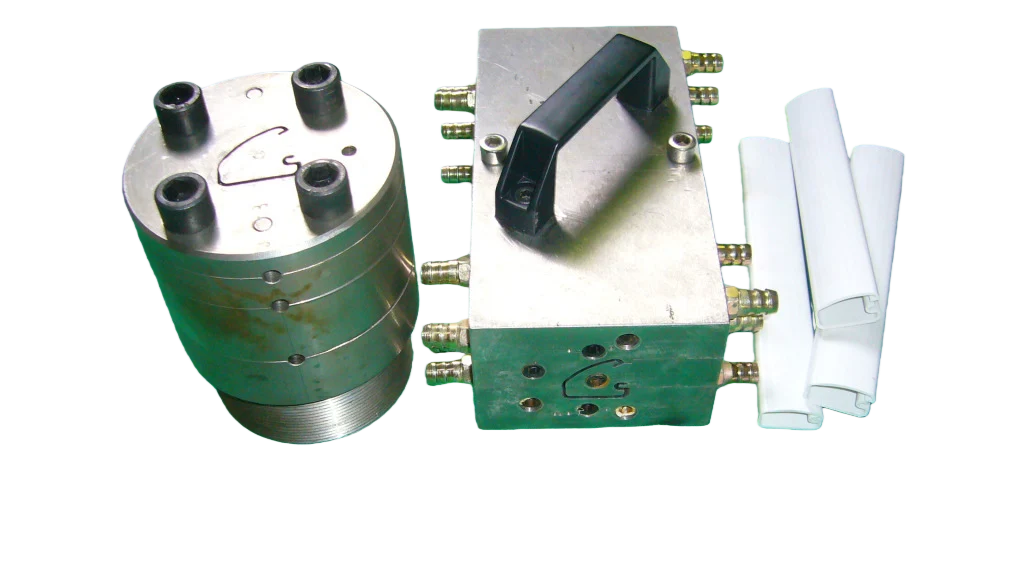
Profile Die and Co-Extrusion Tooling
| Detail | Reference |
|---|---|
| Function | Forms the final cross-section according to the buyer's drawing. |
| Flow balance | Distribution geometry engineered around the cross-section and asymmetric wall distribution for uniform melt delivery. |
| Co-extrusion interface | Tooling for dual-color, cap-layer or soft-rigid structures, with flow geometry designed to reduce interface instability across layers. |
Sizing and cooling
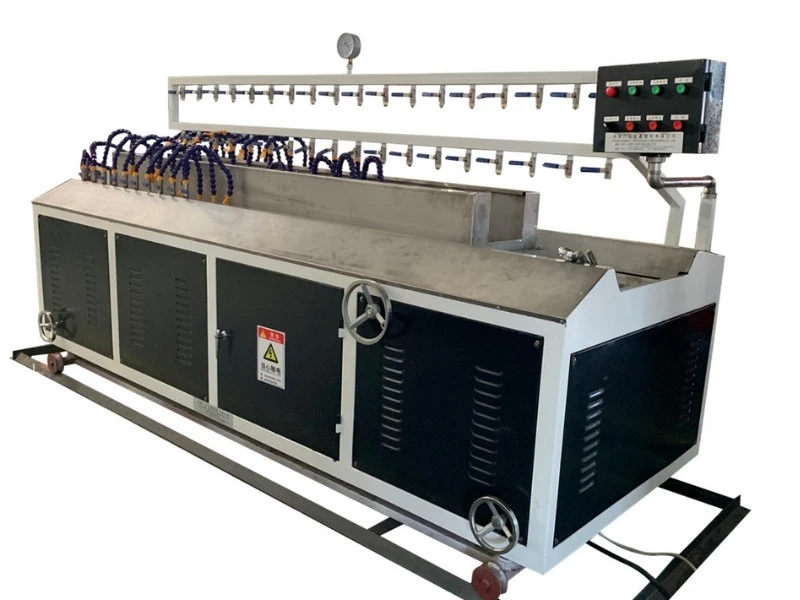
Sizing and Cooling: Free-Sizing or Vacuum Calibration
| Detail | Reference |
|---|---|
| Free-sizing cooling | Direct-to-water cooling for profiles where surface appearance is contact-sensitive. |
| Vacuum calibration | Calibrator with vacuum tank for hollow or complex profiles requiring shape lock; multi-stage vacuum sizing is available for demanding geometries. |
| Water and vacuum management | Cooling loop and vacuum stability monitoring for consistent sizing performance. Final setup depends on profile geometry and site utilities. |
| Function | Stabilizes the profile before haul-off and cutting. |
| Configuration | Cooling length and water circulation are selected according to material, profile size and line speed. PP and PE typically need longer cooling coverage than amorphous resins. |
Traction
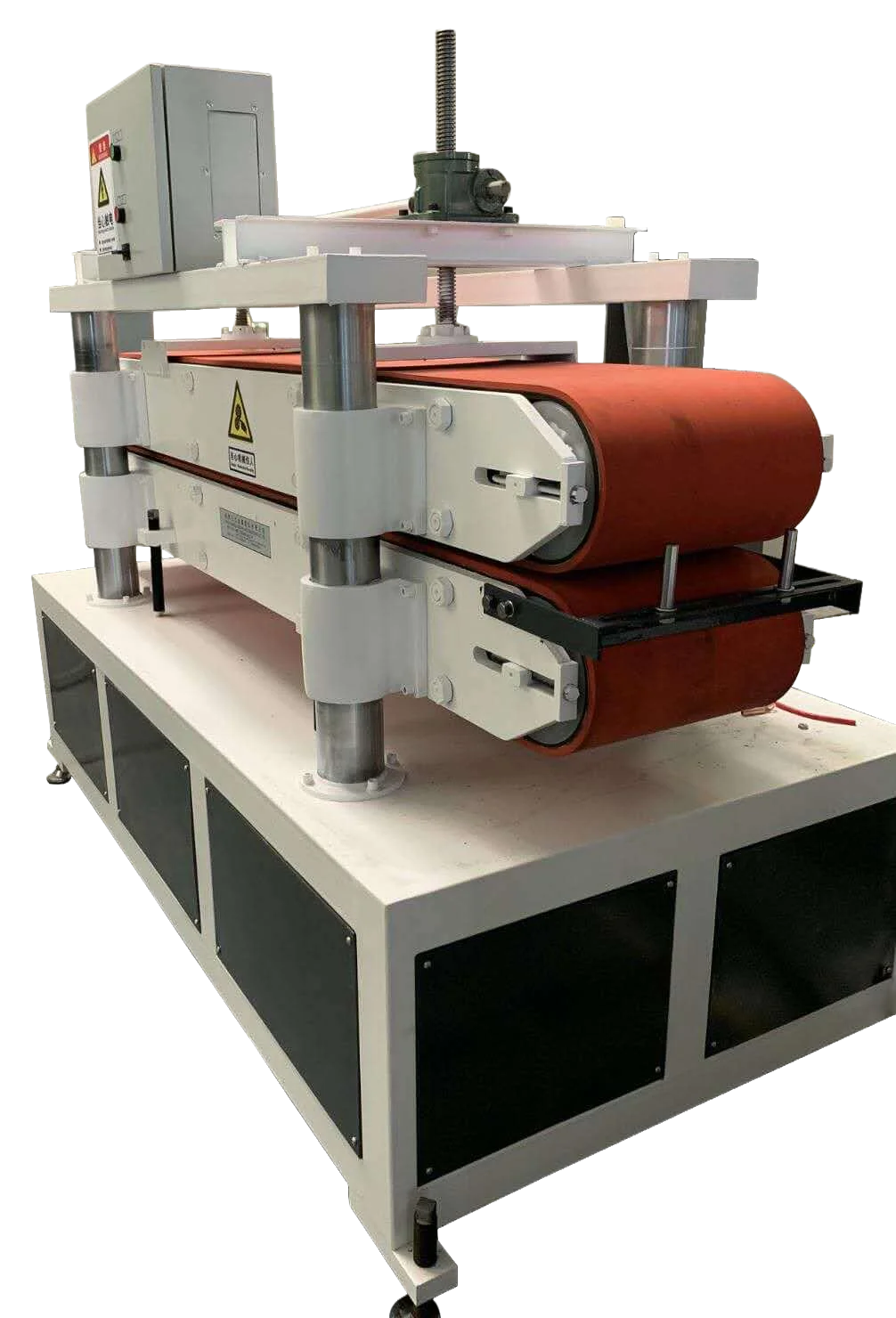
Precision Haul-Off
| Detail | Reference |
|---|---|
| Function | Pulls the profile at a synchronized speed without deforming or marking the surface. |
| Traction type | Belt or caterpillar haul-off matched to profile rigidity and surface sensitivity. |
| Control | Speed synchronized with extruder output to reduce thickness fluctuation and dimensional drift; quick-adjust, access-friendly structure for routine cleaning and changeover. |
Correction
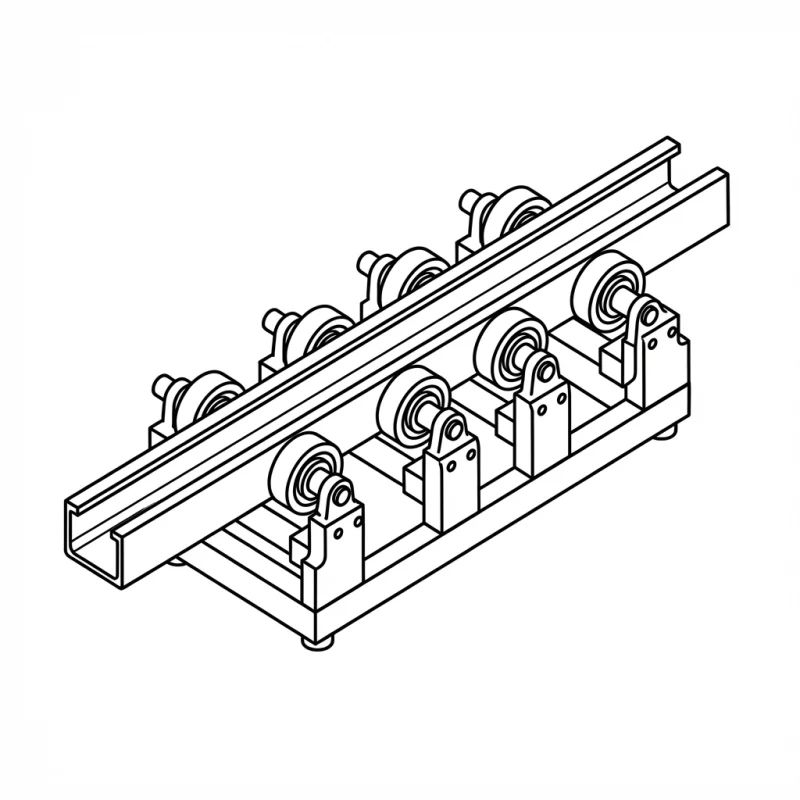
Straightening / Anti-Twist Correction (Optional)
| Detail | Reference |
|---|---|
| Function | Counteracts twist, bend or camber on profiles prone to post-cooling deformation. |
| Placement | Positioned after sizing and cooling according to cross-section complexity and product behavior. |
Cutting and handling
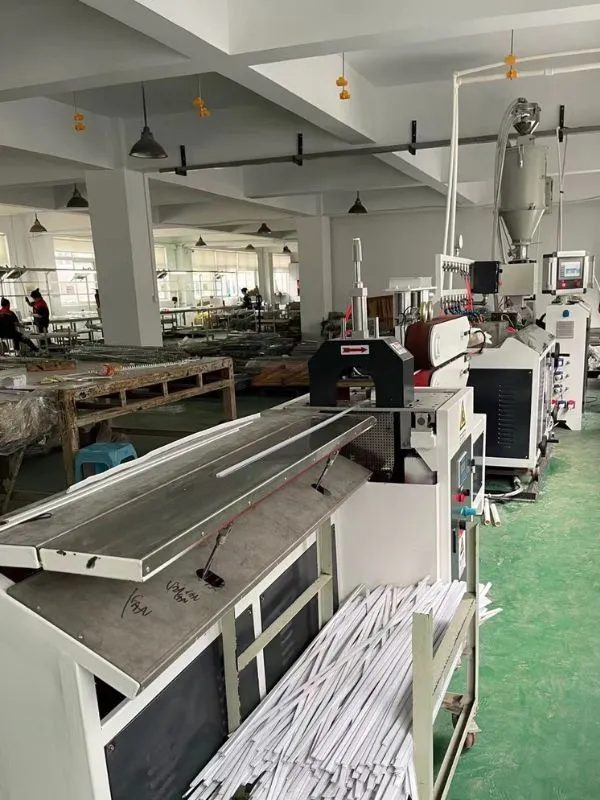
Cutting, Take-Off and Stacking
| Detail | Reference |
|---|---|
| Function | Cuts profiles to length and handles the finished profile without surface damage. |
| Cutting method | Saw, rotary or guillotine cutting matched to material rigidity, wall thickness and target length. |
| Handling | Take-off and stacking configured around profile shape and finished length; layout based on plant space and packaging preference. |
Auxiliary cooling
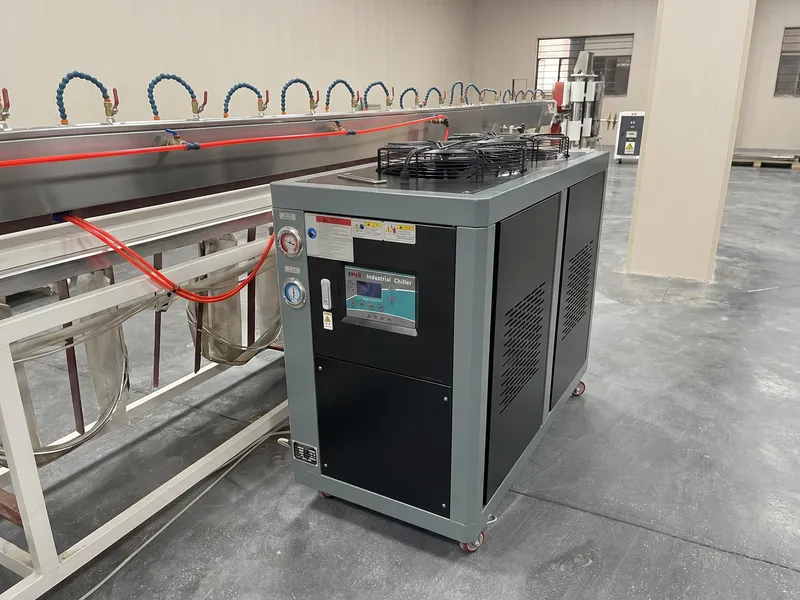
Air-Cooled Industrial Chiller
| Detail | Reference |
|---|---|
| Function | Closed-loop water cooling without a civil water pool. |
| Install | Plug-and-play design for constant cooling-water temperature, which supports stable profile dimensions. |
Why Manufacturers Choose Jinxin for Precision Plastic Profile Production
01
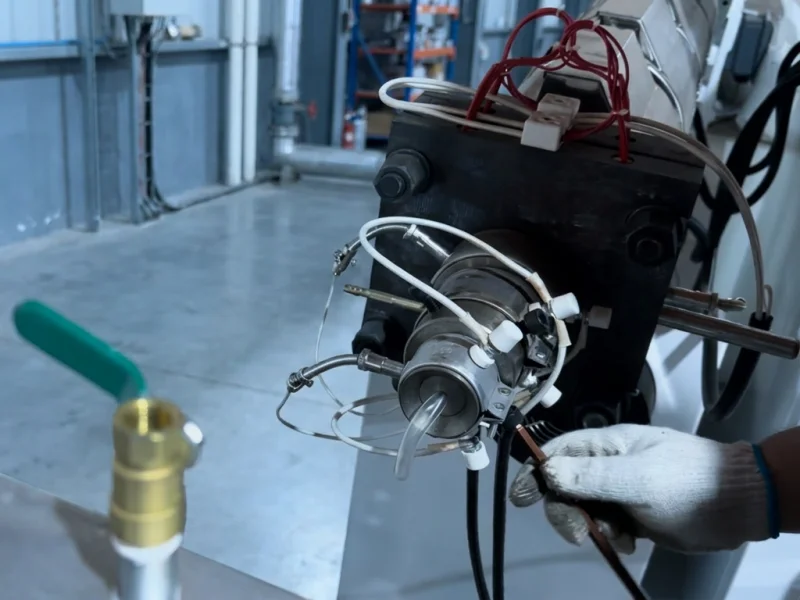
Product-Based Line Configuration and Testing
Jinxin does not quote a generic profile line without checking the product. The extrusion unit, die, sizing, cooling, haul-off, cutting and optional straightening or co-extrusion modules are selected according to your actual profile drawing and production requirement.
- Product review: Profile drawing, material grade and surface requirement are reviewed before configuration.
- Material focus: Each resin's processing window and defect pattern are addressed in screw, die and cooling configuration.
- Startup references: When a test run is arranged, practical startup references can be recorded after stable running.
02
Itemized Equipment Quotation
The quotation lists the selected equipment modules and major component brands, so buyers can compare the real line scope instead of comparing only the listed equipment price.
- Equipment modules: Extruder, die, sizing, cooling, haul-off, cutting and optional co-extrusion or straightening are listed clearly.
- Component brands: Major drive, control and electrical parts can be reviewed before confirmation.
- Scope clarity: Optional co-extrusion, film protection and service items are separated from the base line.
03
Service-Ready Component Strategy
Core electrical and control components are selected with maintenance and overseas serviceability in mind. Buyers can review the component list before confirming the final configuration.
- Drives and motors: ABB and Siemens Beide are used according to confirmed line configuration.
- Control system: PLC, touchscreen and electrical components are selected for practical operation and maintenance.
- After-sales support: A clearer component list helps future troubleshooting and spare parts planning.
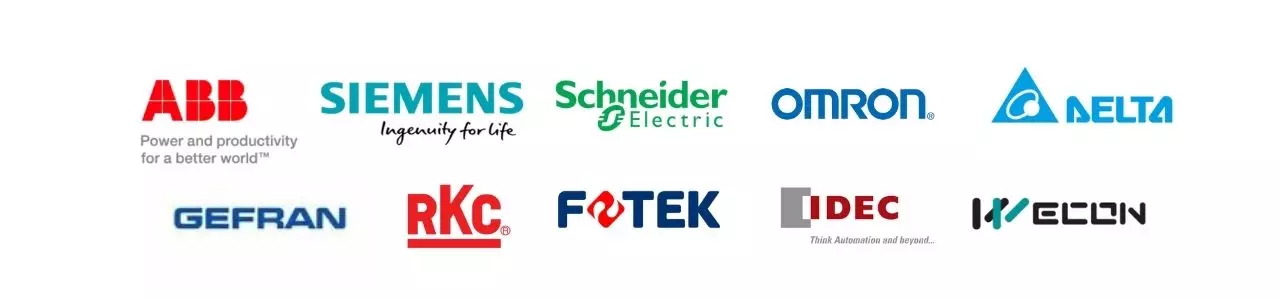
Siemens · ABB · RKC · Omron · WECON · CHINT
Trust Credentials
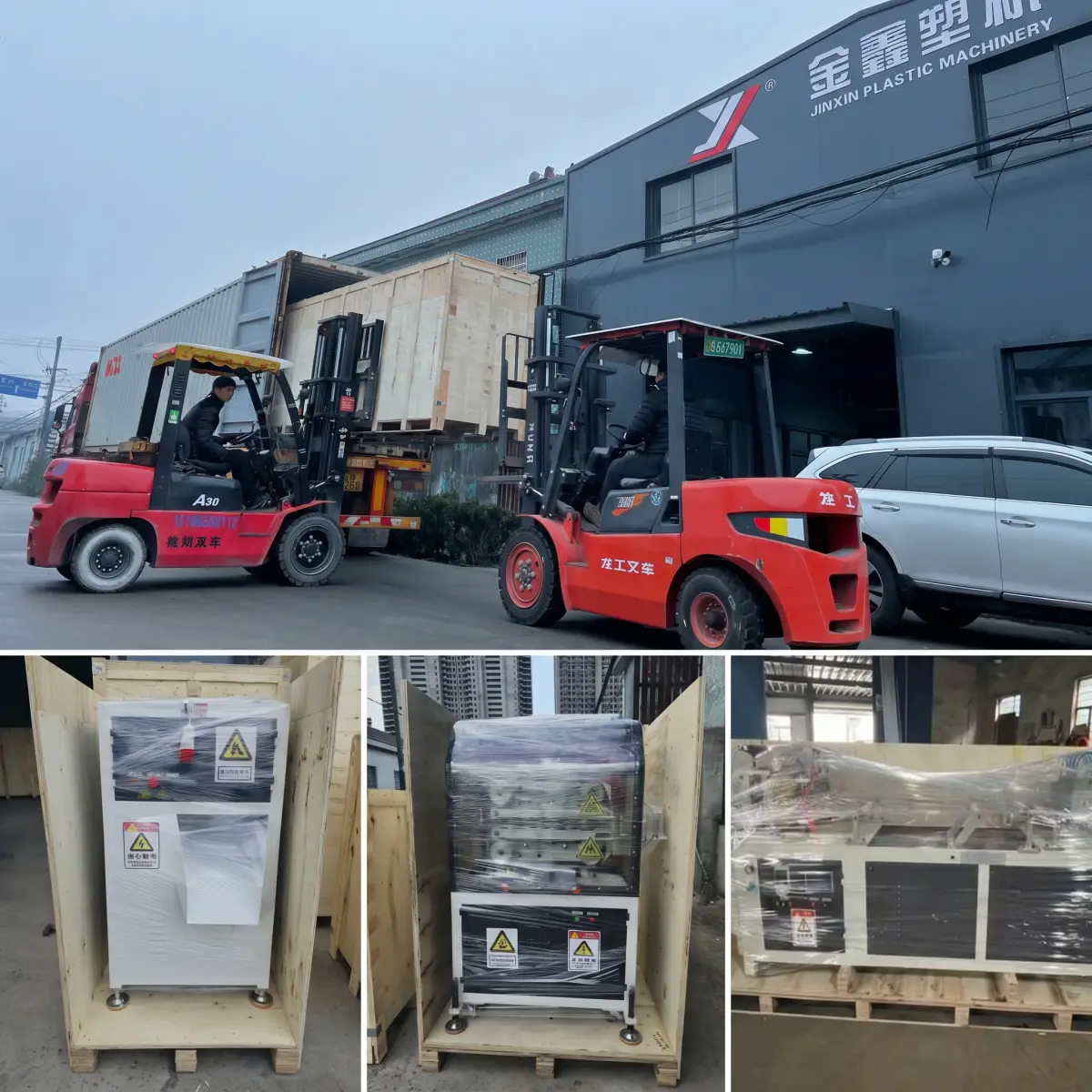
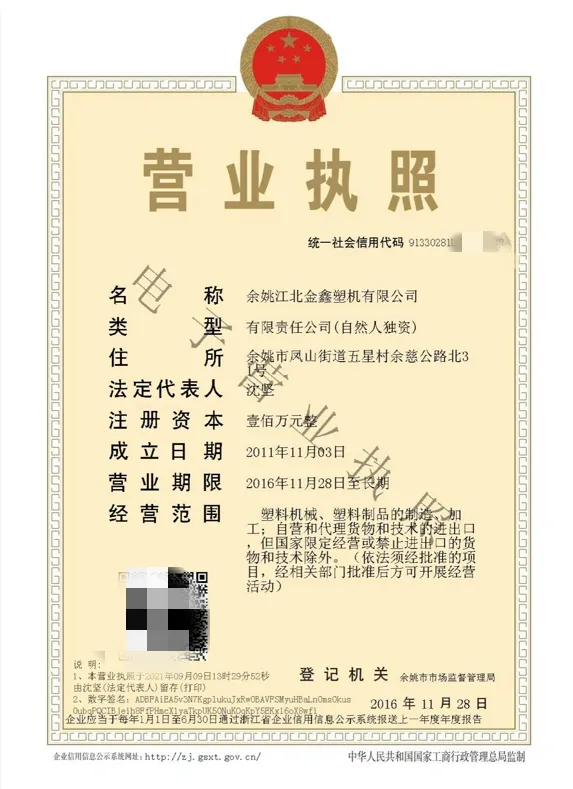
Ningbo-based extrusion equipment manufacturer
Jinxin Extruder focuses on configured single screw extrusion lines for pipes, tubes, hoses and profiles.
Factory inspection support
Buyers may arrange factory visits, inspection or third-party checking when required.
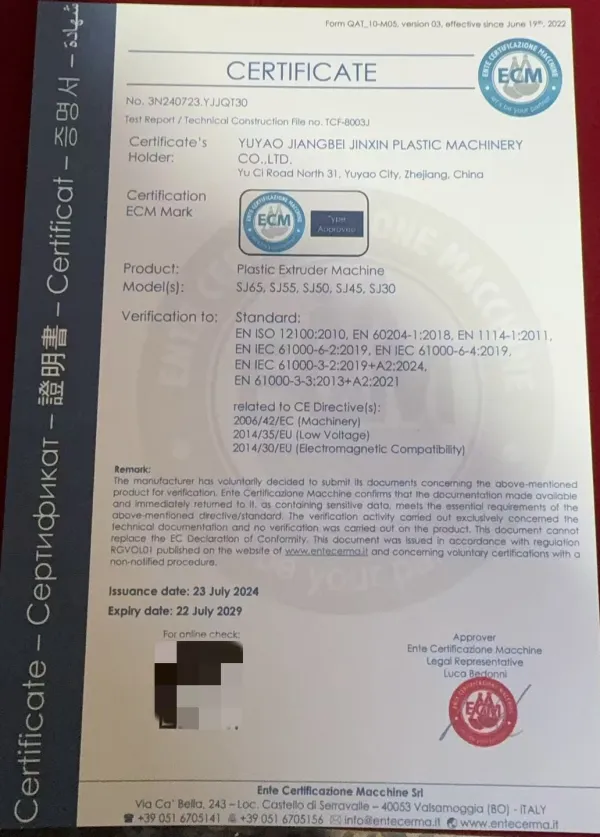
CE documentation for the main extruder
CE documentation is available for Jinxin main extruder models SJ30, SJ45, SJ50, SJ55 and SJ65 and is valid until 2029-07-22.
FAQ
FAQ About Precision Plastic Profile Extrusion Lines
01 When should a plastic profile line use a single screw extruder instead of a twin screw extruder?
A precision single screw plastic profile extrusion line is normally used for pellet materials such as PP, PE, ABS, TPU and selected PVC pellet compounds. It is suitable when the project depends on stable melt delivery, profile die matching, surface finish control and downstream sizing rather than powder-compound processing.
Twin screw systems are more commonly used for PVC powder compound and rigid PVC window or door profile production. This page focuses on precision plastic profile extrusion lines for pellet materials, not PVC window profile lines.
02 What materials can this precision plastic profile extrusion line process?
This precision plastic profile extrusion line can process PP, PE, ABS, TPU and selected PVC pellet compounds when the line is configured around the resin grade, drawing, tolerance, surface finish and sizing method.
The screw geometry, temperature profile, drying requirement, cooling path, haul-off contact and cutting method are reviewed according to the material behavior and finished profile use.
03 How are PVC pellet compound profiles configured?
PVC pellet compound profiles are configured as single screw extrusion projects for track, guide, electrical and interior profiles, not as PVC powder window or door profile lines.
Free-sizing or vacuum calibration is selected according to the profile geometry, while glossy track and guide profiles may need careful die polishing, cooling support, haul-off contact control and scratch-conscious downstream handling.
04 How are TPU flexible profiles handled during extrusion?
TPU flexible profiles are handled with moisture control, gentle plasticizing and low-friction downstream contact because TPU is sensitive to bubbles, drag marks and deformation.
For soft TPU grades, the line can use non-stick sizing surfaces, soft-touch haul-off and chipless cutting to reduce surface marks and profile distortion during traction and cutting.
05 How do PP and PE profiles control shrinkage and warping?
PP and PE profiles control shrinkage and warping through die compensation, longer cooling paths, stable cooling coverage and haul-off pressure matched to the profile shape.
Because PP and PE are semi-crystalline materials with post-cooling shrinkage, the line is configured to reduce temperature gradients, dimensional drift and surface imprinting during continuous production.
06 How do ABS profiles keep gloss and impact strength?
ABS profiles keep gloss and impact strength through melt homogeneity, precise temperature control, suitable screw geometry and drying when the resin or surface requirement needs it.
A desiccant dryer can help reduce silver streaks or splay marks from moisture, while controlled shear helps avoid degrading the butadiene rubber phase that gives ABS its impact resistance.
07 What information is needed before quotation?
Before quotation, Jinxin needs a profile drawing or sample photo, resin grade, profile size, wall thickness, tolerance, surface requirement, line speed or daily production target if available, cutting length, packing requirement and factory voltage.
Co-extrusion, straightening, film protection, cooling water and layout limits should also be shared when they affect the final line configuration.
Plastic profile extrusion line quote
Request a Precision Plastic Profile Extrusion Line Quotation
Tell us what you want to produce and any details you already know. We can confirm the remaining specifications together. You can also email sales@jfextruder.com with your drawing, sample photo and project notes.
Helpful details for configuration (optional)
- Profile drawing or sample photo
- Resin grade (PP, PE, ABS, TPU or PVC pellet compound)
- Profile size, wall thickness and tolerance
- Surface requirement and finish
- Line speed or daily production target if available
- Cutting length and packing requirement
- Co-extrusion, straightening or film protection need
- Factory voltage, cooling water and layout limit
Custom drawings are used only for configuration review and quotation.