
A TPE tourniquet extrusion line is a complete single-screw production line that converts modified SEBS-based TPE compound into flat elastic bands for latex-free tourniquets, Esmarch bandages and medical TPE bands. Jinxin supplies the configured complete line — not finished tourniquets, not a latex dipping line, and not a standalone making machine.
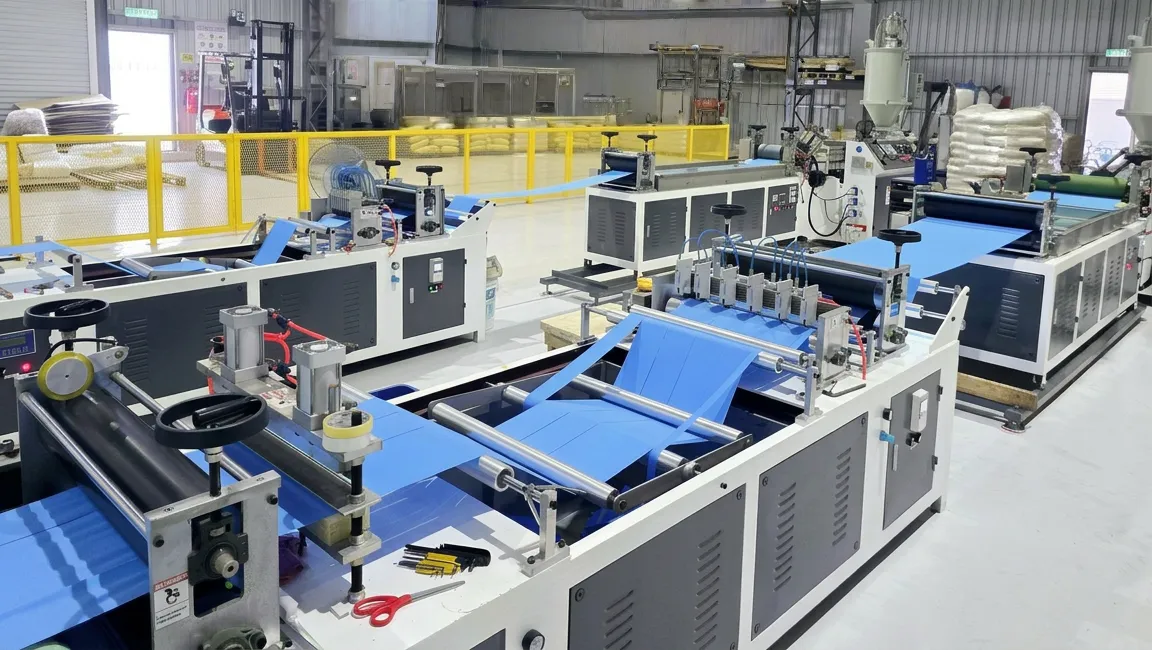
TPE tourniquet extrusion line
TPE Tourniquet Extrusion Line for Esmarch Bandage and Medical TPE Band Production
Complete TPE band extrusion line for latex-free medical tourniquets, Esmarch bandages and custom medical TPE bands.
Configured with TPE extrusion, two-roll calendering, W-path buffering, slitting and perforation cutting, then factory-tested on the buyer's compound when available.
Quick Facts — TPE Tourniquet Extrusion Line
Field Reference
Line type TPE tourniquet extrusion line / TPE band extrusion line
Finished products Latex-free tourniquet bands, Esmarch bandage rolls and custom medical TPE bands
Main material Modified SEBS-based TPE compound (35–65 Shore A typical); buyer-supplied compound recommended
Forming process Single-screw extrusion → two-roll calendering → water cooling
Common finishing Slitting → W-path dancer buffering → perforation / cut-to-length → manual roll take-off
Quote basis Band width & thickness, compound behavior, smooth or textured, slitting count, cut format, factory test with buyer compound
TPE Band Formats and Line Configuration
A TPE tourniquet extrusion line is configured around the target band format and TPE compound. The same extrusion route supports short tourniquet bands and wider Esmarch bandage rolls by changing width, thickness, surface feel, slitting and cutting format.
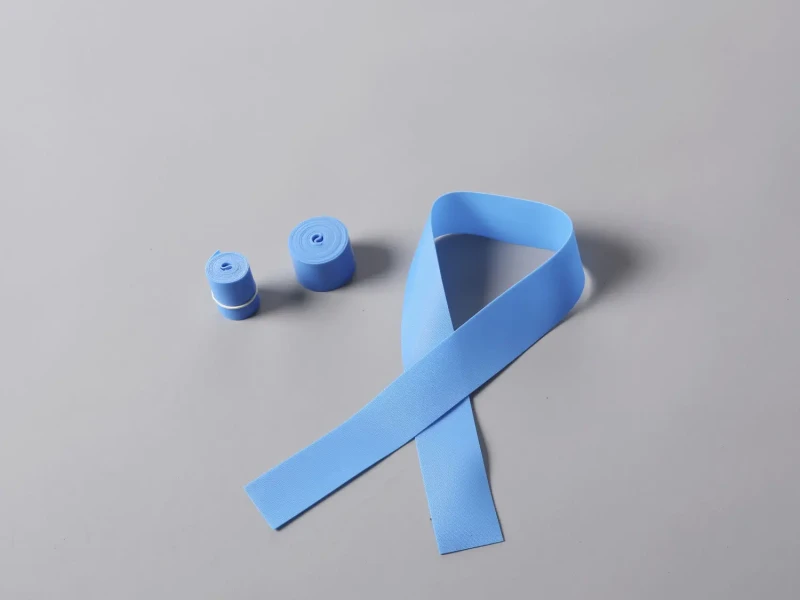
CUT SECTION
TPE Tourniquet Bands
- Product format
- Typical single-use tourniquet format is around 25 mm × 450 mm, with Shore A 40–55 often used for latex-free medical band applications.
- Typical setup
- Flat band extrusion, two-roll calendering, slitting, then cut-to-length or pull-and-tear perforation.
- Buyer decision
- Confirm band width, thickness, hardness, color, texture and final cut or roll format before quotation.
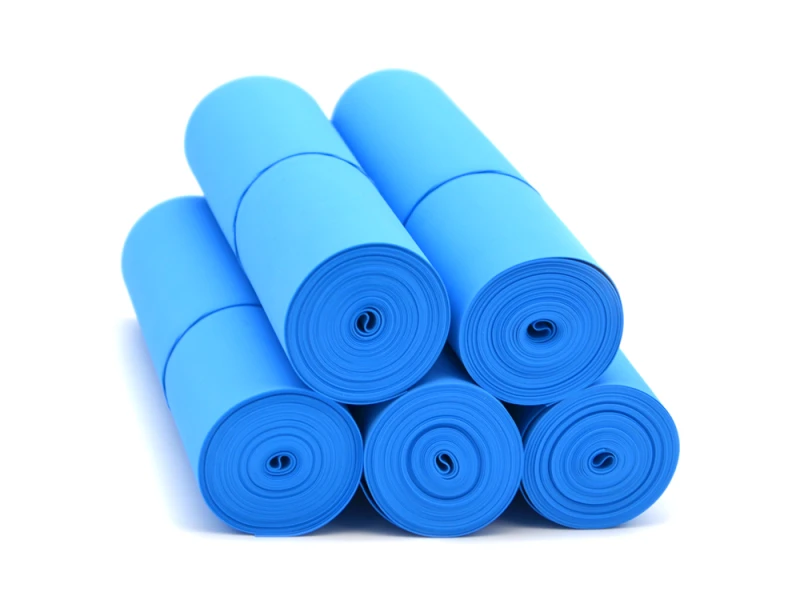
ROLL FORMAT
Esmarch Bandage Rolls
- Product format
- Esmarch bandage rolls often use a wider flat elastic band format, commonly around 75–100 mm depending on product design.
- Typical setup
- Same extrusion route, with wider slitting and roll/perforation format instead of a different extrusion process.
- Buyer decision
- Confirm roll width, roll length, tear interval, surface feel and compound behavior.
Tourniquet vs Esmarch Line Configuration
Tourniquet bands and Esmarch bandage rolls use the same extrusion, calendering and cooling route. The quotation changes mainly at band width, slitting, buffering and the final cutting or roll format.
| Configuration decision | TPE tourniquet bands | Esmarch bandage rolls |
|---|---|---|
| Typical width | About 25 mm | Commonly about 75–100 mm |
| Finished format | Short sections, typically around 450 mm, or pull-and-tear rolls | Wider continuous rolls with the agreed roll length and tear interval |
| Finishing setup | Multiple narrow slits plus cut-to-length or perforation cutting | Wider slitting plus roll take-off and the agreed perforation format |
| Factory-test focus | Width, thickness, surface feel, recoil and cut-length accuracy | Width, thickness, roll handling, recoil and tear-interval consistency |
| Quote inputs | Band size, hardness, texture, cut length and bands per sheet | Roll width, roll length, texture, perforation pitch and collection method |
The line produces the TPE band. Final medical compliance depends on the end manufacturer's compound, sterilization, packaging and quality management process.
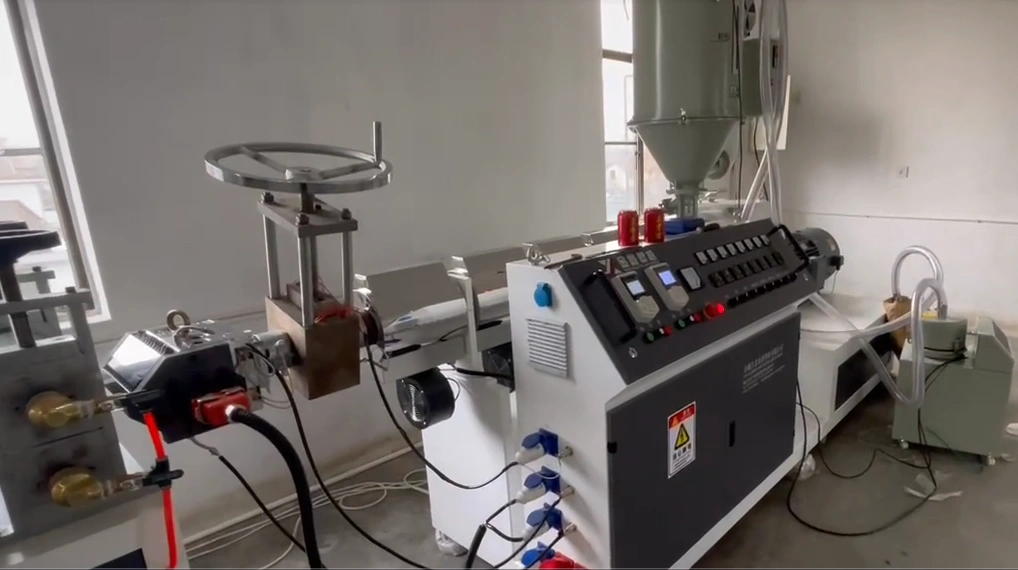
See the TPE Band Extrusion Process in Operation
Watch how the TPE compound is extruded, calendered, cooled, buffered and finished into flat medical band formats for tourniquets and Esmarch rolls.
Watch TPE Band Extrusion ProcessCompleted project record
What Jinxin Built and Verified
For a completed TPE tourniquet extrusion line project, Jinxin configured the line for latex-free TPE band production with nine-zone temperature control, Teflon-coated water-cooled rolls and a W-path dancer accumulator. Before shipment, the complete line was test-run and its startup parameters were recorded for the buyer.
Material Guidance — SEBS-Based TPE Compounds for Tourniquet Extrusion
In TPE tourniquet production, the compound matters as much as the extrusion line. A well-built line running the wrong TPE grade can still produce bands with poor recoil, surface defects, odor or skin-contact concerns. After 14+ years building extrusion lines for medical, hygiene and industrial product manufacturers, we have learned that material-line matching is where many TPE band projects succeed or fail.
Material Compatibility Reference
- Compound base
- SEBS-based TPE
- Shore A hardness
- 35–65 typical
- Melt temperature window
- ~160–210 °C
- Temperature profile
- 9-zone barrel and die profile recorded by compound
- Line speed
- Matched to compound behavior
Send a 10–20 kg Compound Sample
If you already have a local modified TPE compound supplier, we recommend sending a 10–20 kg sample before factory testing begins so we can check whether it forms a stable band and record the references that work with your compound.
Material Suggestion for First Commissioning
If you do not have a suitable compound supplier yet, we can share practical material suggestions based on previous TPE band extrusion projects. This is commissioning support for a confirmed line project, not a standalone material trading service.
 with finished TPE elastic band roll for medical tourniquets.webp "TPE pellets and a finished elastic band roll used for material-line matching review.")
SEBS vs SBS — Why the Base Polymer Matters
Not all TPE compounds behave the same during extrusion. The base polymer affects odor, oxidation resistance, elasticity, skin-contact suitability and long-term product stability.
| Factor | SEBS-based TPE | SBS-based TPE |
|---|---|---|
| Polymer structure | Hydrogenated, saturated structure | Unsaturated structure |
| Oxidation and odor | Higher oxidation resistance; usually lower odor and extractables | Lower oxidation resistance; odor and extractables are usually more noticeable |
| Rebound and stability | Better long-term elastic recovery for higher-requirement medical bands | Lower oxidation stability; final behavior depends on the complete compound formulation |
| Fit for this line project | Jinxin's preferred starting point for tourniquet, Esmarch bandage and medical TPE band trials | Not Jinxin's default recommendation for these medical-band projects; evaluate only when required by the buyer's approved formulation |
| Cost | Higher | Lower, but compound price alone does not determine finished-band quality |
If a supplier quotes only "TPE" without specifying the base polymer and formulation target, ask for more detail before testing.
We do not sell TPE as a material business. This section exists because many buyers ask whether they should use their own modified TPE compound or ask us to suggest a practical material starting point.
How TPE Tourniquet Bands Are Produced
A TPE tourniquet is produced by melting modified SEBS-based TPE compound, forming it into a flat sheet, cooling it, then slitting and cutting the sheet into finished bands. On this line the stages run as one continuous tourniquet band extrusion line, not as separate machines.
-
01 Drying & Feeding
Compound is fed into the hopper; pre-drying is checked for moisture-sensitive grades.
-
02 Single-Screw Extrusion
SEBS-based TPE is melted in a multi-zone single-screw extruder and formed through a flat die.
-
03 Calendering & Cooling
The sheet is calendered to thickness, then cooled with Teflon-coated rollers and water cooling.
-
04 Slitting
The cooled sheet is slit into tourniquet, Esmarch or strip widths.
-
05 W-Path Dancer
The W-path dancer buffers tension between continuous extrusion and intermittent cutting.
-
06 Perforation / Cut-to-Length
Encoder-controlled cutting supports pull-and-tear rolls or fixed-length sections.
-
07 Take-Off / Winding Coordination
The standard line uses manual take-off; when automatic winding is required, Jinxin can recommend compatible downstream winder suppliers and coordinate the line interface.
No vulcanization and no latex dipping are involved anywhere in this process. TPE bands are formed by extrusion and cooling only.
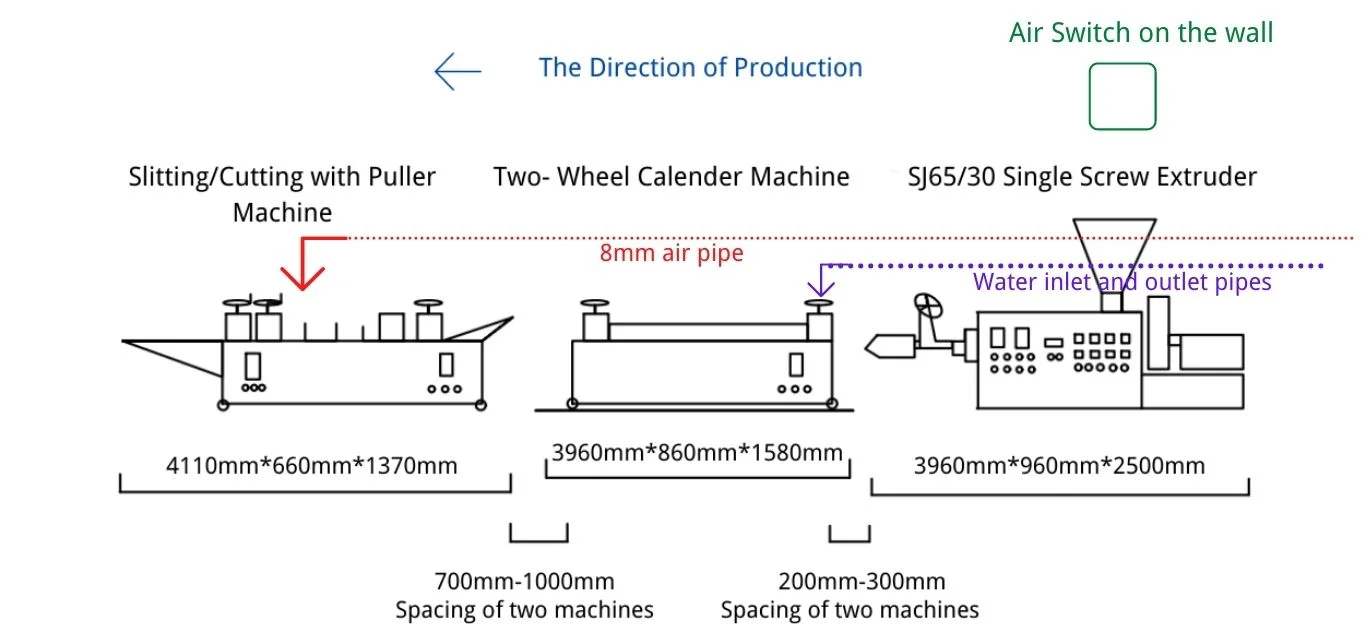
Technical Parameters
| Parameter | Reference |
|---|---|
| Extruder platform | SJ65/30 single-screw TPE extruder |
| Product width | Tourniquet band ~25 mm; Esmarch bandage ~75–100 mm; custom medical TPE band width per project |
| Product thickness | Per project, matched to compound behavior and recoil target |
| Shore A hardness | 35–65 typical; 40–55 common for single-use latex-free tourniquets |
| Output (band count) | ~2,500–3,300 bands/hour (≈60,000–80,000 bands per 24 hours); depends strongly on the TPE compound, band size and cut format |
| Heating zones | 9-zone barrel and die temperature profile, recorded per compound during factory testing |
| Melt temperature | ~160–210 °C for SEBS-based TPE, grade- and oil-content-dependent |
| Line speed | Matched to melt viscosity, cooling behavior and finished band quality |
Band output, line speed and melt temperature all depend heavily on the TPE compound, band width and thickness, surface finish and cooling setup — the same line can run noticeably faster or slower on different SEBS-based grades. The values above are a practical reference window; confirmed numbers are delivered with the itemized quotation and recorded during factory testing.
Price and Configuration Scope
FOB Turnkey Price Reference: USD 45,000–55,000 for a configured TPE tourniquet extrusion line (SJ65/30-based).
This reference is for a configured full production line, not a bare single-screw extruder, a basic manual setup, or a standalone making machine. The final quotation depends mainly on the band format, the compound behavior and the finishing scope, not on band width alone.
Configuration factors that change the quote
| Configuration Factor | Why It Changes The Quote |
|---|---|
| Band width and thickness | Wider bands (Esmarch) or thicker bands need a wider die, larger calender and adjusted cooling. |
| SEBS / TPE compound behavior | High-oil or sticky grades need Teflon-coated rolls and a tuned temperature profile; this affects calender and cooling scope. |
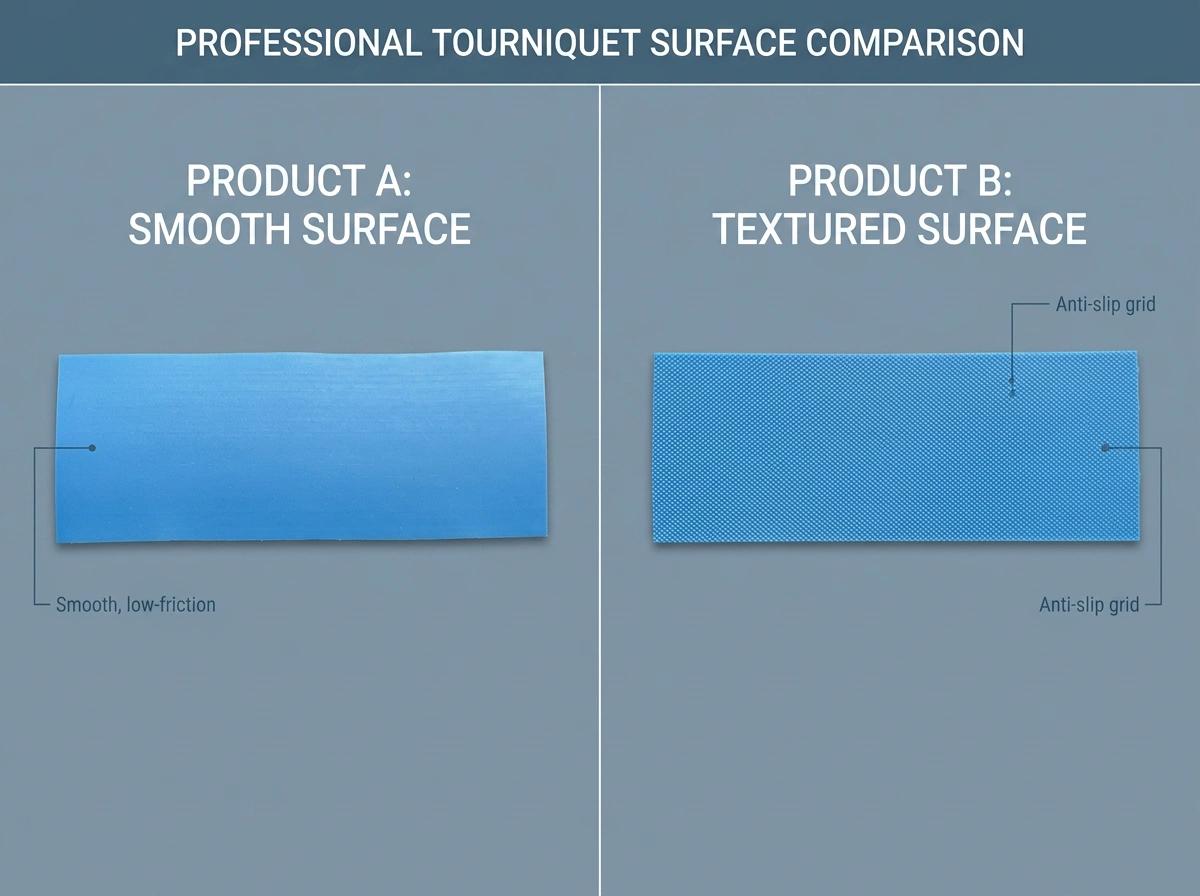
| Smooth vs textured surface | Textured (patterned) calendering rollers are an interchangeable set configured to the buyer's finish. |
| Slitting quantity (bands per sheet) | More bands per pass means more slitting blades and a wider sheet line. |
| Perforation / cut-to-length format | Pull-and-tear perforation rolls vs fixed-length cut sections change the cutting station scope. |
| W-path dancer accumulator | Configured for tension-stable cutting; scope is matched to line speed and cut cycle. |
| Factory testing with buyer compound | Testing on the buyer's own 10–20 kg compound sample is an agreed test scope item. |
Send target product type (tourniquet bands, Esmarch bandage rolls or custom medical TPE bands), band width / thickness / length, roll or cut format, smooth or textured, compound type and Shore A, and whether you can send a 10–20 kg compound sample.
Request a Line ConfigurationTPE Tourniquet Extrusion Line Configuration
This complete line is organized into units that handle everything from raw material melting to flat band forming, cooling, slitting and perforation cutting, built for the stable processing of sensitive TPE grades.
Extrusion core
High-Stability TPE Extruder
| Detail | Reference |
|---|---|
| Platform | SJ65/30 single-screw extruder, configured for modified SEBS-based TPE. |
| Drive System | Siemens Beide motor with ABB 580 series high-performance inverter. |
| Drive | Direct coupling (no belts, maintenance-free). |
| 9-Zone Temperature Profile | We record the precise 9-zone barrel and die temperature profile required to prevent TPE degradation during factory testing, providing a practical thermal baseline for consistent thickness and surface quality. |
| Application Range | Configured for modified SEBS-based TPE compounds in the typical 35–65 Shore A window used for tourniquet, Esmarch bandage and elastic band production. |
Forming and cooling
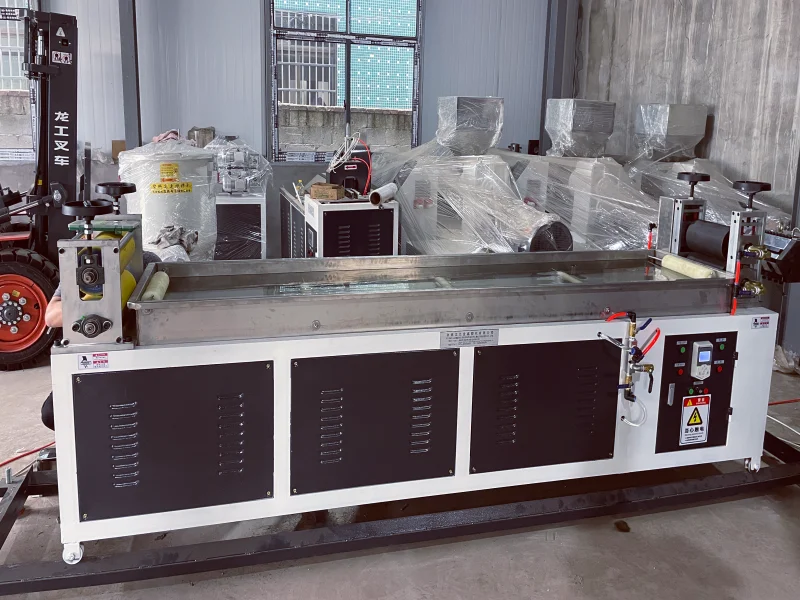
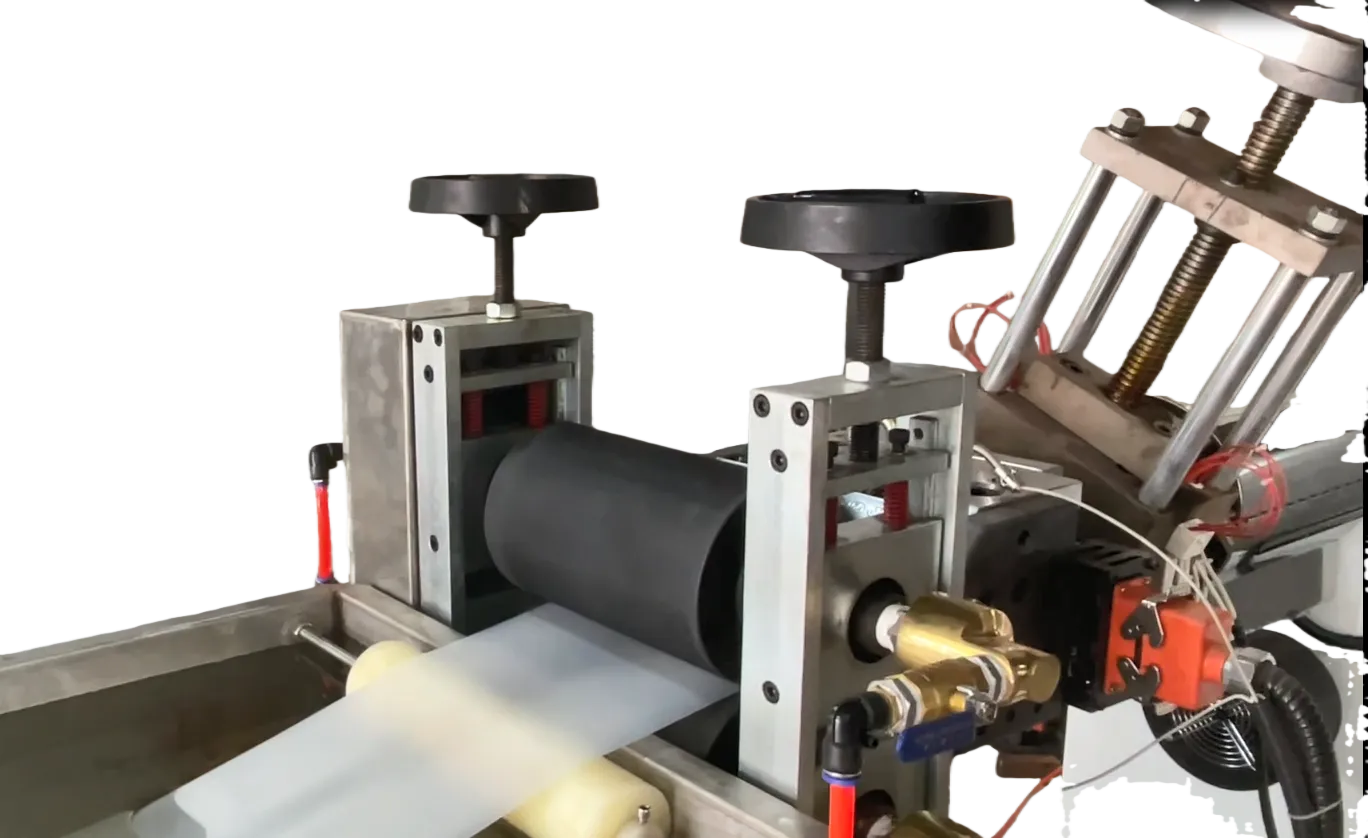
2-Roll Teflon-Coated Calendering & Cooling Station
| Detail | Reference |
|---|---|
| Precision Calendering | Two-roll calender system with adjustable roller gap for manual thickness control of the TPE sheet. |
| Anti-Stick Technology | Rollers are Teflon-coated with internal water cooling to handle high-oil, sticky TPE formulas without sticking. |
| Stainless Steel Cooling Section | Stainless steel water tank with an independent motor and ABB inverter for stable sheet cooling. |
| Interchangeable Surface Rollers | Choice of smooth or textured (patterned) calendering rollers to produce both standard smooth bands and anti-slip textured tourniquets. |
Converting and buffering
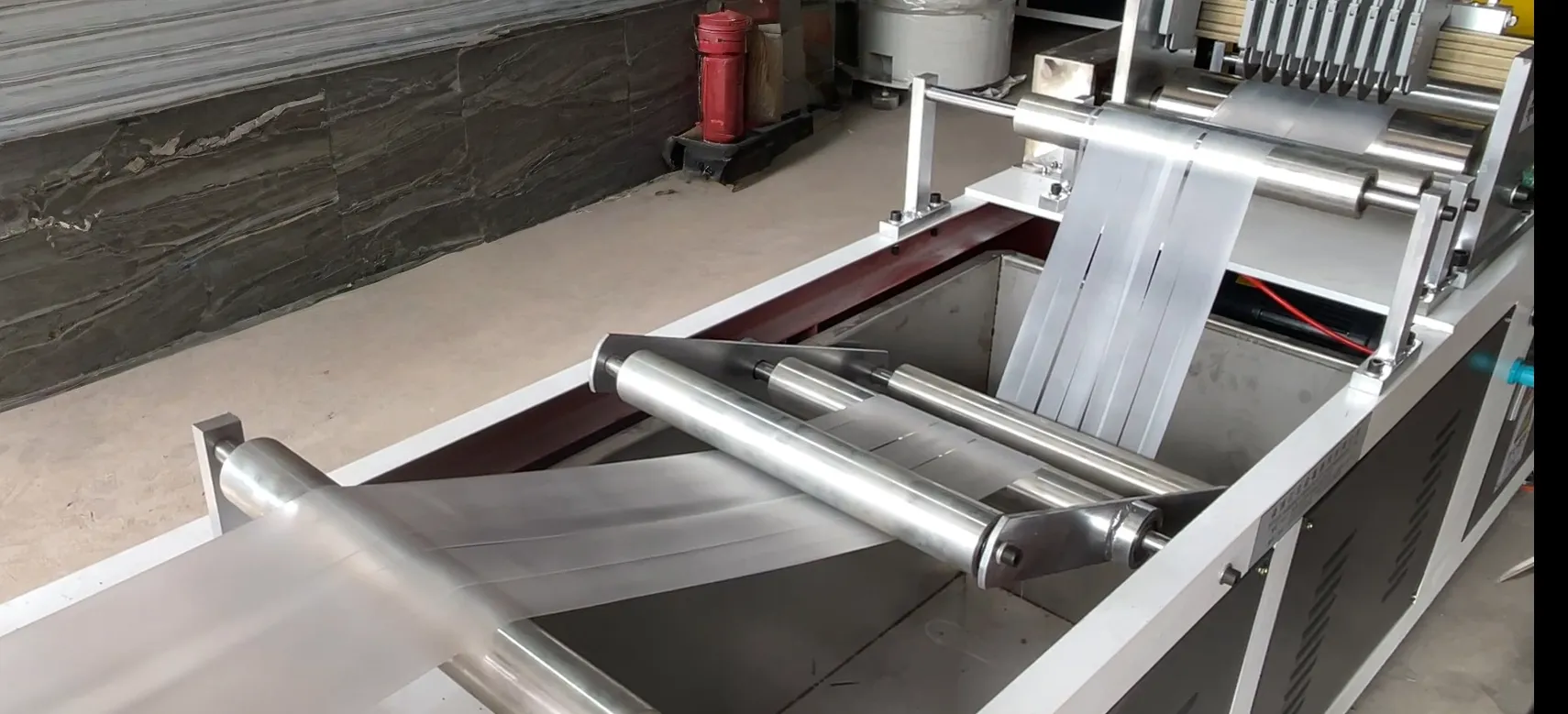
W-Path Dancer Accumulator & Slitting Unit
| Detail | Reference |
|---|---|
| Dancer-Arm Accumulator (W-Path) | A 4-arm dancer accumulator that buffers the speed mismatch between continuous extrusion and intermittent cutting — storing excess band length between cuts to reduce sudden tension changes when the cutter stops. |
| Precision Slitting | Adjustable pneumatic slitting blades to divide the wide sheet into multiple tourniquet bands or wider Esmarch bandages. |
Cutting and take-off
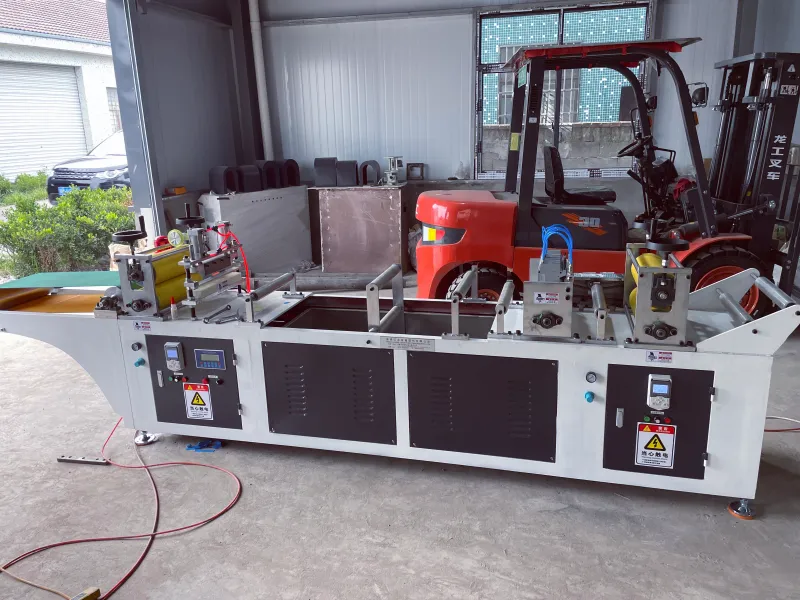
Perforation / Fixed-Length Cutting Station
| Detail | Reference |
|---|---|
| Perforation Cutting | Computer-controlled cutting with encoder for fixed-length accuracy; produces professional pull-and-tear rolls with cut-length completion alarms. |
| Take-Off / Winder Coordination | Finished bands or rolls are taken off manually on the standard line. For automatic roll collection, Jinxin can recommend compatible downstream winder suppliers and coordinate the interface requirements. |
Quality and Process Control
Flat elastic TPE bands are more sensitive to temperature, tension and surface handling than most extruded products. The quality decisions below are where this line differs from a rubber-band or hair-tie winding line.
Sharkskin (Melt Fracture)
TPE bands can show fine, scaly ripples related to temperature profile, shear rate, die design, melt viscosity and haul-off speed. During factory testing, we tune the line around the tested compound and record a practical thermal baseline.
Sticky, High-Oil TPE
Many soft, high-oil SEBS-based TPE compounds are sticky at calendering temperature. Teflon-coated rollers with internal water cooling keep the roll surface stable and prevent the soft band from sticking.
W-Path Dancer for Tension Control
A 4-arm W-path dancer accumulator stores band length between the continuous extruder and the intermittent cutter so tension does not spike into the die when the cutter stops.
Recoil and Pre-Stretch
No extrusion line can add elasticity the compound does not have. The line protects built-in elasticity through a documented temperature profile, stable buffering and controlled finishing; when automatic winding is required, the downstream winder should be selected and tuned around the validated band format.
Production Details and TPE Band Surface Samples
Factory Testing and Startup Baseline
Before shipment, Jinxin test-runs the agreed product type under real extrusion conditions. The test is product-specific, not a generic equipment check, because TPE band quality depends on compound behavior, temperature profile, calendering, cooling, slitting and cutting coordination.
- Run the buyer product format: Tourniquet bands, Esmarch bandage rolls or custom medical TPE bands at the target width and thickness.
- Record the 9-zone temperature profile: The barrel and die zone temperatures that run stably on the tested compound.
- Check width and thickness: Against the target specification, with calender gap and cooling adjustments.
- Check slitting and perforation / cut format: Band count per sheet, perforation pitch and cut-length accuracy.
- Record speed, cooling and cutting references: Screw speed, line speed, cooling settings and cutting cycle.
- Deliver startup parameters: A practical startup baseline (the Data Sheet) so the buyer's operator starts first-run production from a tested reference instead of a guess.
After factory acceptance testing, Jinxin's extrusion line installation and commissioning support can cover site-readiness review, mechanical and electrical checks, startup, operator training and first-production coordination. The final on-site scope, engineer travel and buyer preparations are confirmed in the quotation.
For special or modified TPE compounds, Jinxin recommends sending a 10–20 kg sample before factory testing. This makes the startup references closer to the buyer's real production material, especially when the compound is locally sourced or specially modified.
When a buyer later reported surface defects on a high-oil SEBS-based compound, the recorded factory-test baseline helped trace the issue to a changed compound batch and guide the temperature adjustment, instead of treating it as an equipment fault.
TPE Extrusion Line vs Other Production Methods
Buyers often compare this line against very different processes. The four comparisons below are the ones that come up most often.
| Comparison | What Buyers May Assume | Correct Difference |
|---|---|---|
| Latex dipping | Same equipment can make latex tourniquets. | Different raw material, tooling and process route; TPE extrusion is not latex dipping. |
| Rubber vulcanization | TPE bands need curing or vulcanization. | TPE bands are formed by extrusion and cooling only; no vulcanization or curing oven. |
| Making machine | One machine can produce finished bands end to end. | Finished bands require a complete line: extrusion, calendering, cooling, slitting, buffering, cutting and take-off. Jinxin supplies the configured complete line, not a standalone making machine. |
| Medical certification | The line itself carries CE, FDA or ISO 13485 finished-device compliance. | The line produces the TPE band. Finished medical compliance belongs to the end manufacturer's material, sterilization, packaging and quality system; Jinxin does not certify the finished medical device. |
Company Facts and Trust Credentials
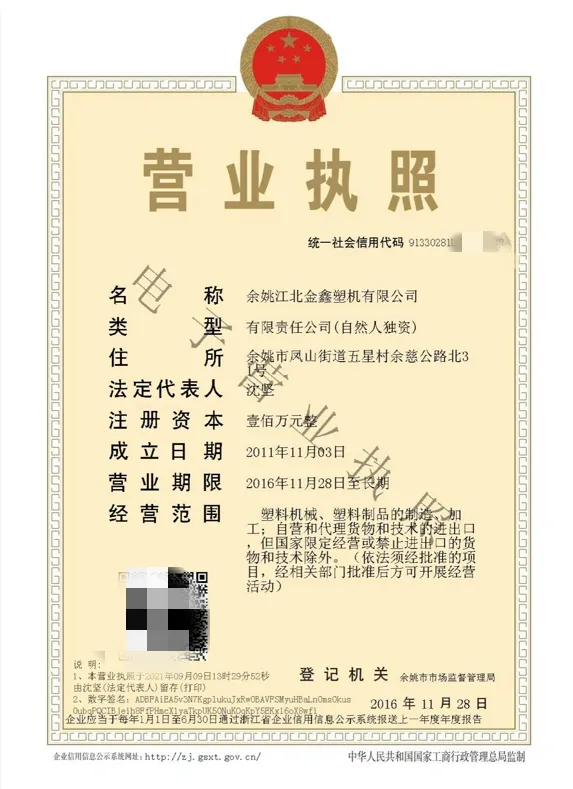
Jinxin Extruder is the manufacturing brand of Yuyao Jiangbei Jinxin Plastic Machinery Co., Ltd., a Ningbo-based extrusion equipment factory focused on configured single-screw production lines. For TPE tourniquet and Esmarch bandage projects, line configuration, factory testing, startup references and after-sales support are handled by Jinxin's factory team.
Manufacturing entity
Yuyao Jiangbei Jinxin Plastic Machinery Co., Ltd.
Brand
Jinxin Extruder
Founded
2012, Ningbo, Zhejiang, China
Production focus
Single-screw extrusion lines for plastic tube, hose, pipe, profile and medical elastic band applications
Export reach
15+ countries across Asia, Europe, Africa, and the Americas
Export support
Export packing and shipment documentation support after project confirmation
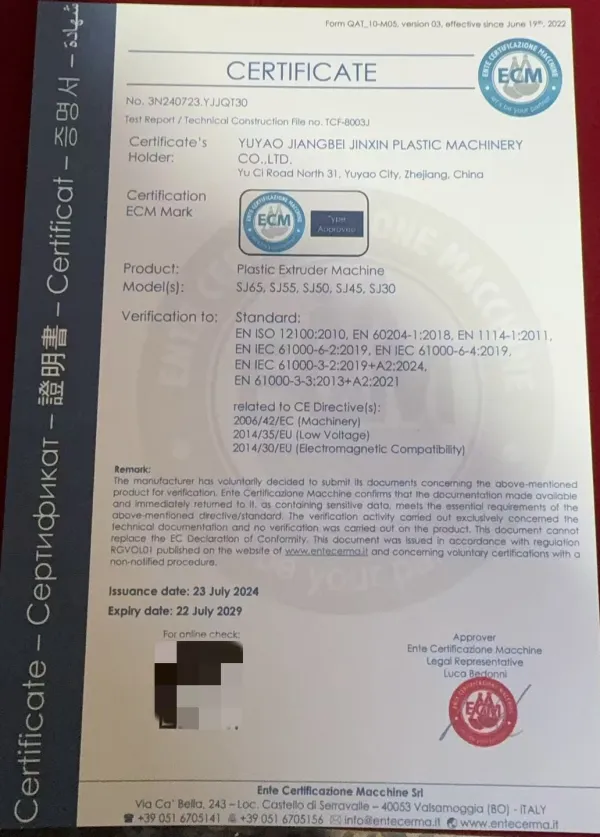
CE documentation for the main extruder
CE documentation is available for Jinxin main extruder models SJ30, SJ45, SJ50, SJ55 and SJ65 and is valid until 2029-07-22.
FAQ
Frequently Asked Questions About TPE Tourniquet Extrusion Lines
01 What is a TPE tourniquet extrusion line?
A TPE tourniquet extrusion line is a complete single-screw production line that converts modified SEBS-based TPE compound into flat elastic bands for latex-free tourniquets, Esmarch bandages and medical TPE bands. It is not a finished tourniquet, not a latex dipping line, and not a standalone machine — Jinxin supplies the configured complete line, factory-tested on the buyer's compound when available.
02 How is an Esmarch bandage produced on this line?
An Esmarch bandage is produced by the same extrusion, calendering and cooling route as a standard tourniquet band, then slit to a wider width (typically around 75–100 mm) and finished as a long pull-and-tear perforation roll rather than a short single section. So an Esmarch bandage extrusion line is the same line configured for wider slitting, roll format and a different perforation / cut length — not a separate extrusion process.
03 Is this the same as a TPE tourniquet making machine or an Esmarch bandage making machine?
"Making machine" usually refers to one stage of the process. A standalone making machine cannot produce finished bands end to end. What actually makes tourniquets and Esmarch bandages is a complete line — extrusion, calendering, cooling, slitting, dancer buffering, perforation / cut-to-length and take-off working together. Jinxin supplies that complete configured line, not a standalone making machine.
04 Can it produce latex-free disposable tourniquets?
Yes. This is a latex-free tourniquet production line by material route: the bands are formed from modified SEBS-based TPE, with no natural latex and no latex dipping. "Disposable" refers to the finishing format (single-use cut sections or pull-and-tear rolls), which the line produces through cut-to-length or perforation cutting. The line produces the disposable latex-free band; final single-use medical compliance depends on the manufacturer's own sterilization, packaging and quality management process.
05 How can automatic winding be handled?
The standard Jinxin scope uses cut-to-length or perforation finishing with manual roll take-off and a W-path dancer accumulator for tension-stable cutting. If the buyer needs automatic winding, Jinxin can recommend compatible downstream automatic winder suppliers and coordinate line-speed, tension and collection interface requirements. The automatic winder is supplied by the downstream specialist and is not included in the standard Jinxin line. A customer has already implemented this arrangement successfully.
06 What causes sharkskin in TPE band extrusion?
Sharkskin, also called melt fracture, appears as fine scaly ripples on the band surface. It is usually related to temperature profile, shear rate, die design, melt viscosity and haul-off speed. During factory testing we tune the line around the tested compound and record a practical thermal baseline to reduce the risk during first-run production, and the same baseline gives the operator a starting point when a later compound batch behaves differently.
07 What TPE compound should I use for tourniquets?
For tourniquet and Esmarch bandage applications, use a modified SEBS-based TPE (hydrogenated, saturated) rather than an SBS-based grade — SEBS offers lower odor, better oxidation resistance and lower extractables, which matter for skin-contact and medical-adjacent use. A typical window is 35–65 Shore A, with 40–55 common for single-use tourniquets. If you already have a compound supplier, send a 10–20 kg sample before factory testing so we can record the parameters that run stably on your grade. We do not sell compound as a standalone service.
08 How much does a TPE tourniquet production line cost?
A configured TPE tourniquet production line (SJ65/30-based) is typically referenced at about USD 45,000–55,000 FOB turnkey. The final price depends mainly on band width and thickness, SEBS / TPE compound behavior, smooth or textured finish, slitting quantity, perforation or cut-to-length format, the W-path dancer accumulator scope and factory testing with the buyer's compound. Contact Jinxin with your target band format and compound for an itemized quotation; confirmed lead time and the die / tooling set are included in the quotation scope.
TPE tourniquet extrusion line quote
Send Your TPE Tourniquet Line Requirements
Tell us your target product type — TPE tourniquet bands, Esmarch bandage rolls, or custom medical TPE bands — and whether you already have a modified TPE compound supplier. A photo, sample or simple description is enough to start the discussion. Do not worry if you are not sure about every detail. We will review your message and let you know what information is needed for the next step.
- Target product
- TPE tourniquet bands, Esmarch bandage rolls, or custom medical TPE bands
- Band size
- Band width, thickness and length
- Finishing
- Roll format or cut-to-length format
- Surface
- Smooth or textured surface
- Compound
- Compound type and target Shore A
- Material sample
- Whether you can send a 10–20 kg compound sample
- Output
- Target production output
- Factory voltage
- Factory voltage or installation country