In-house mold integration
We build the mold in-house to match the extruder. The die head and machine are tested as a unified system, not assembled from separate suppliers for the first time at your factory.
Installation & Commissioning
Your extrusion line is FAT-tested and verified before it leaves our factory. When it arrives at yours, commissioning should not begin from guesswork. You receive the running video, startup parameters, and technical references needed to move from unloading to stable production with a tested baseline.
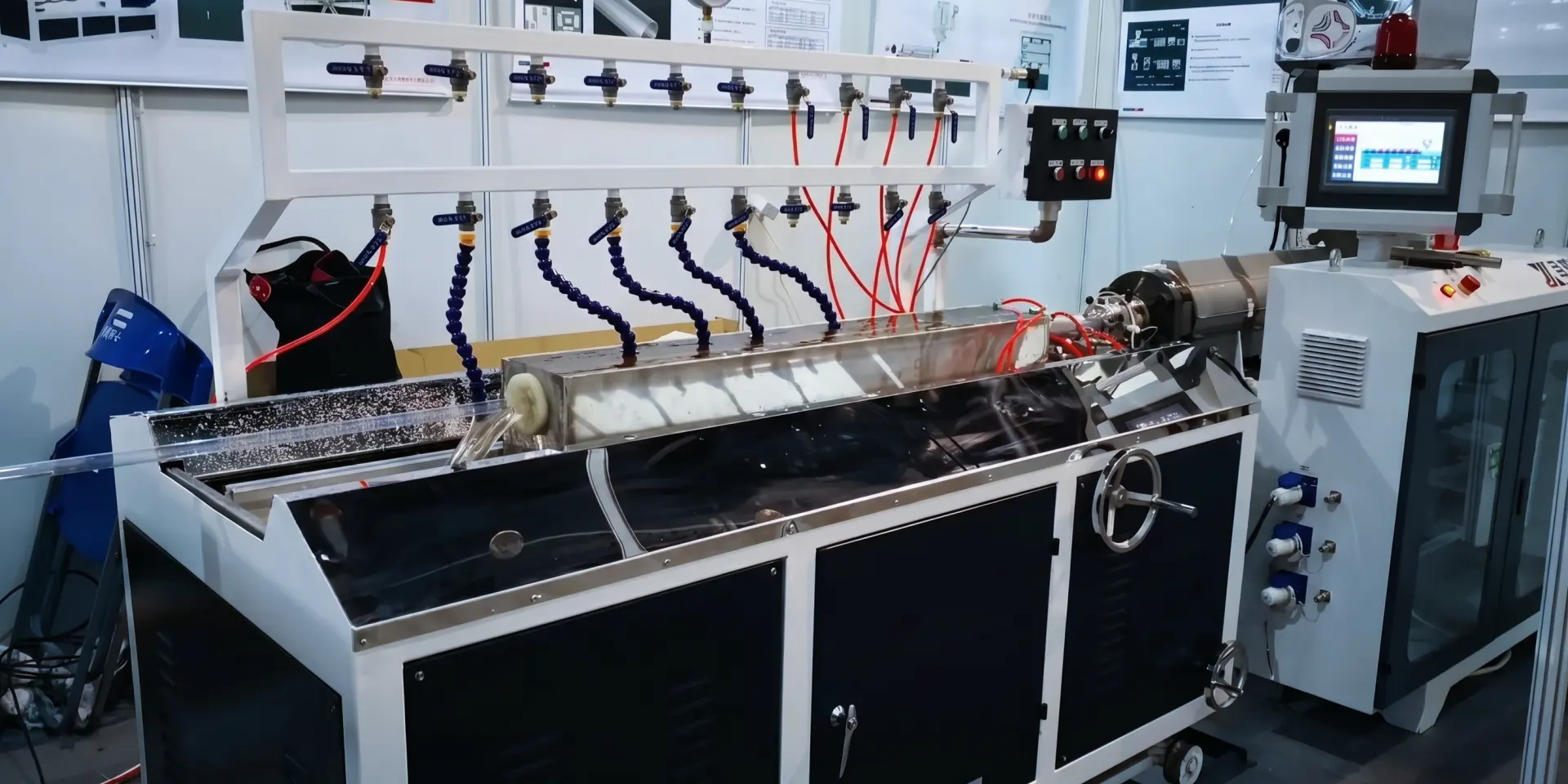
Installation puts the machines, utilities and safety systems in the correct condition. Commissioning then proves that the complete extrusion line can run safely, synchronize its downstream equipment and produce the agreed product from the tested starting parameters.
| Stage | Main work | Pass point before the next stage |
|---|---|---|
| 1. Site readiness and positioning | Confirm layout, floor, lifting access, utilities and equipment condition after unloading. | Every machine is placed in the confirmed sequence with safe operating and maintenance clearance. |
| 2. Mechanical and electrical installation | Level and align the extruder, die, cooling, haul-off and cutting or winding equipment; connect equipment-side power, water and air. | Rotation, guarding, grounding, emergency stops, sensors and utility connections pass the pre-start check. |
| 3. No-load and material commissioning | Test heaters, drives and line synchronization without material, then introduce the agreed material and tune from the FAT baseline. | The line runs continuously and the product meets the agreed dimensional and surface checks. |
| 4. Training, acceptance and handover | Train operators, record the stable settings and hand over the agreed documents and open items. | Buyer and Jinxin confirm the commissioning record, training scope and remaining actions. |
The detailed sequence below applies to Jinxin-built lines. Final responsibilities, engineer attendance and acceptance criteria are fixed in the quotation for the specific project.
Every extrusion line installation and commissioning process starts before the machine leaves our factory. We configure the line to your voltage, material, and product specification, then run a full-load test until output meets the agreed dimensions.
We build the mold in-house to match the extruder. The die head and machine are tested as a unified system, not assembled from separate suppliers for the first time at your factory.
FAT is not a quick pass/fail check. We adjust the mold, calibrate temperatures, and refine process parameters over multiple days until the product meets agreed specifications.
Most clients verify performance remotely. We provide a full video report of the line running at production speed, plus the complete parameter sheet. Since the tuning phase can have unpredictable timing, this is often more practical than scheduling an on-site visit.
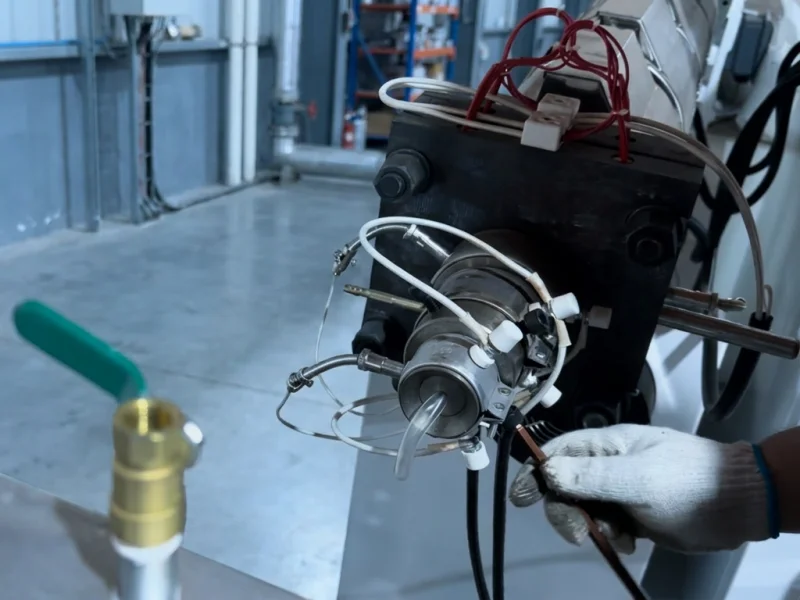
For every Jinxin-built extrusion line, commissioning support starts with the information generated during factory testing.
A visual reference showing the line running with the tested material and product setup.
Temperatures, screw speed, haul-off speed, pressure references, and other baseline settings recorded during FAT.
Engineer support by message, photo, and video when your team installs and starts the line.
Operation guidance, layout or wiring references where applicable, and the confirmed spare parts list.
These materials do not replace your local installation work, but they give your team a verified starting point.
Some projects need hands-on support at the customer's factory. On-site service is available by quotation and arrangement.
For new factories, complex lines, or teams that need direct installation and commissioning support.
For teams that need supervised start-up, shutdown, routine cleaning, basic maintenance, and first-level troubleshooting practice.
For projects where material differences, local utilities, or production targets require additional tuning after arrival.
Travel, accommodation, visa costs, and daily service arrangements are confirmed separately in the project quotation or service agreement. On-site engineer support and operator training should also be confirmed as separate scope items unless your quotation clearly bundles them together.
Before remote or on-site commissioning begins, your factory should prepare the basic site conditions. This prevents paid engineer time from being spent waiting for utilities or materials.
Voltage, grounding, and cabinet connection should match the confirmed line configuration.
Water supply and drainage must be ready for cooling tanks, molds, and other process points.
Air supply should be available where pneumatic components are used.
Prepare enough of the agreed material for start-up and parameter tuning. Different material from FAT may require adjustment.
Forklift, crane, floor space, and local crew should be ready before the equipment arrives.
Prepare basic tools, protective equipment, and a team member responsible for recording issues during start-up.
If you plan to request on-site commissioning, we recommend completing power, water, air, and machine positioning before our engineer arrives.
Ideal for: factories with maintenance experience or tight project timelines.
If your team has basic mechanical and electrical experience, remote support can be enough to move from unloading to first production. This section explains how the standard remote guidance works in practice.
Your team can compare the arrival condition, running sound, material flow, and product shape against the factory test.
Temperatures, screw speed, haul-off speed, and pressure references give your team a tested first setting instead of tuning from zero.
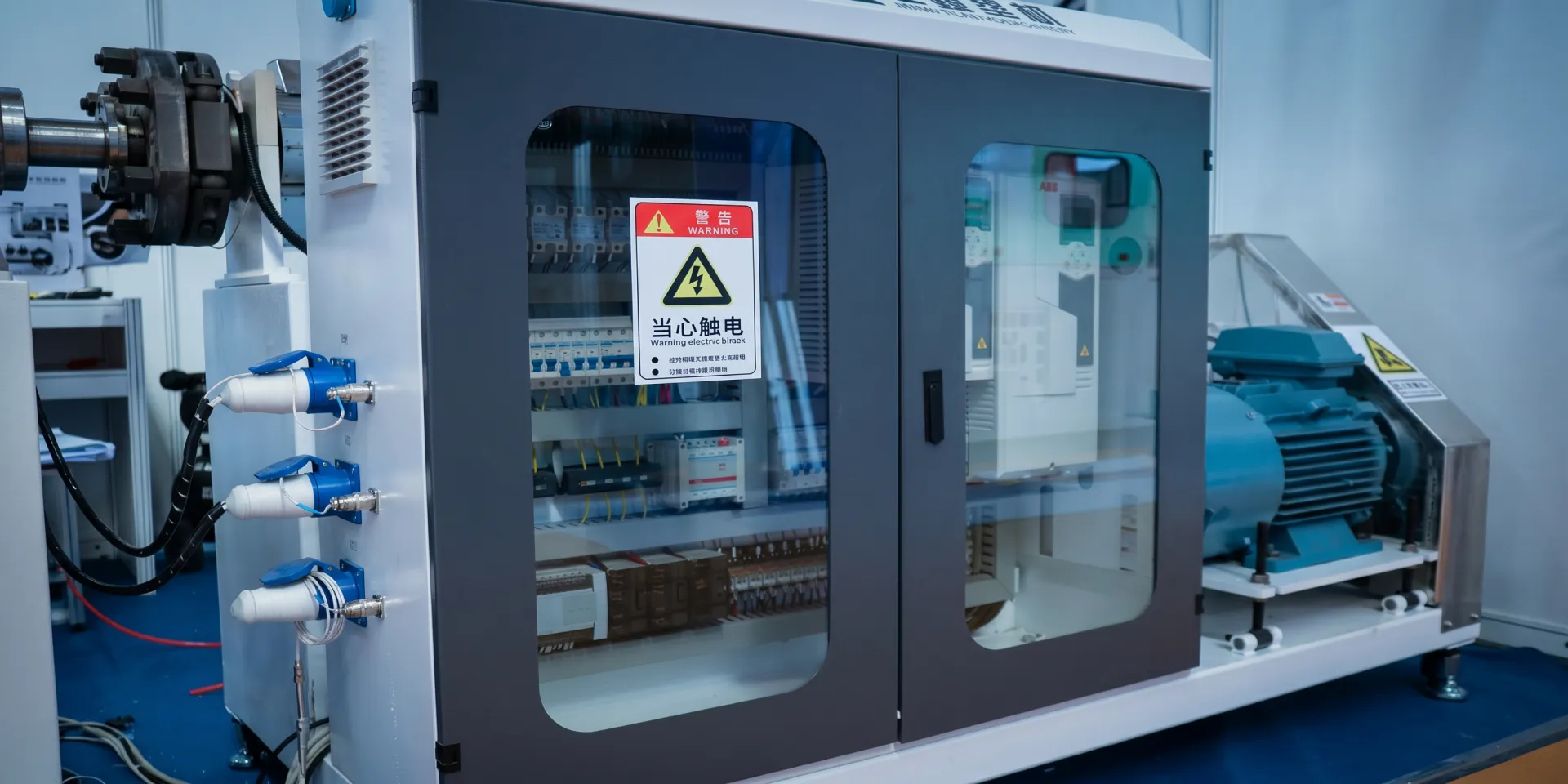
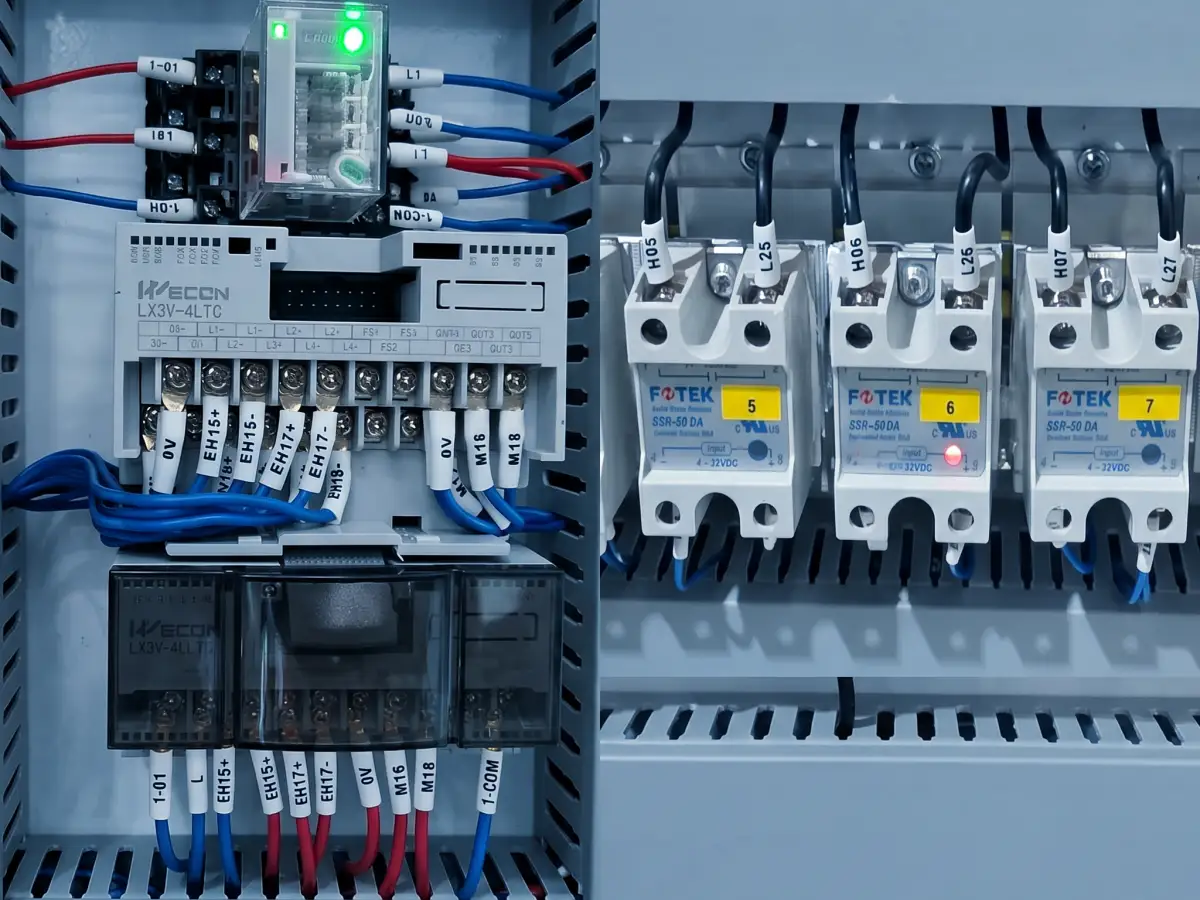
Main electrical connections use quick-connect aviation plugs where applicable. Wires and pipes are labeled in English to match the layout drawings.
Practical note: If you later request on-site engineer support or operator training, complete utilities, positioning, and basic installation first. This avoids paying for engineer time while the site is still being prepared.
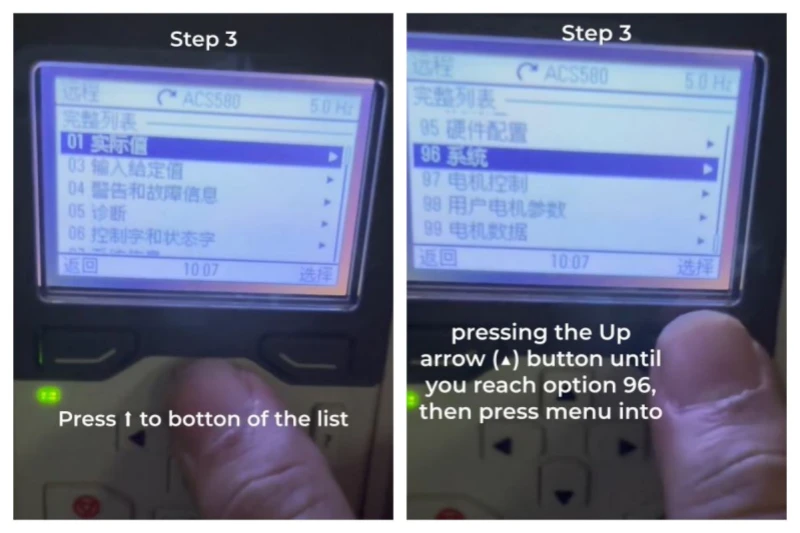
Ideal for: new factories, complex lines, or teams needing intensive coaching.
When on-site support is included in the project scope, we can send an engineer to your factory for hands-on installation and commissioning. Operator training can be included in the same visit when it is confirmed in the service arrangement.
The local team should follow the confirmed layout rather than positioning each machine independently. A typical line is installed in process order: material feeding and extruder, die or tooling, calibration and cooling, haul-off, then cutting, winding or other downstream equipment.
Use lifting equipment sized for the packed machine weights. Check the packing list, visible transport damage and loose parts before removing protective packaging.
Set the machines on a firm, level floor with the operating aisle, electrical-cabinet access and maintenance clearance shown on the layout.
Align the extruder, die, cooling section, haul-off and finishing equipment so the product is not forced sideways during start-up.
Connect the confirmed voltage, grounding, protective breaker, cooling-water supply and drainage, and compressed air where pneumatic devices are used. Local mains work must be completed by a qualified electrician under local rules; Jinxin verifies the equipment-side connections.
Check fasteners, lubrication, guards, emergency stops, heater and sensor wiring, motor direction, water flow, air pressure and downstream communication before material is introduced.
Do not energize an unpacked or partially connected line merely to “see whether it runs.” The no-load check begins only after the mechanical, electrical and safety checklist is complete.
Commissioning is split into two different tests. Passing a no-load test does not prove that the line can make an acceptable product.
| Acceptance area | What is checked |
|---|---|
| Mechanical | Alignment, vibration, fasteners, leakage and stable product travel through the line. |
| Electrical and safety | Grounding, protection, emergency stops, alarms, sensors and control response. |
| Process | Stable temperature, pressure, current, cooling and synchronized line speed. |
| Product | Agreed dimensions, surface and finishing result using the confirmed material and tooling. |
| Open items | Any buyer-side utility, material or downstream issue that remains outside the completed commissioning scope. |
Operator training is tied to the installed line and the buyer's real product. When included in the service scope, it should cover:
At handover, keep one signed or mutually confirmed commissioning record showing the tested material, tooling, stable parameters, training items, accepted product checks and any unfinished buyer-side action. This record becomes the reference for later troubleshooting instead of relying on memory.
There is no single installation duration or hourly price that fits every extrusion line. A compact line in a prepared factory and a multi-machine line in a new facility require different lifting, connection, trial and training time.
The quotation should state:
Site readiness is the main schedule protection. If power, cooling water, compressed air, lifting access, production material or local labor is not ready, commissioning cannot proceed even when the engineer is present.
The final document package depends on the line configuration, but typical handover materials include:
Operation manual or operating guidance
FAT video and startup parameter sheet
Electrical schematic or cabinet reference where applicable
Layout or connection reference where applicable
Confirmed spare parts and wear parts list
Notes from commissioning or operator training when on-site service is arranged
Keep these documents with your maintenance team. They become the reference point when diagnosing future production issues.
FAQ
Contact us with a video of the issue. Our engineers analyze the footage and guide your team through adjustments by video call or message. Material differences sometimes require parameter fine-tuning. This is normal and covered by our standard remote support for Jinxin-built lines.
Prepare power, water and compressed air at the installation site. Also prepare sufficient raw material, especially if your material differs from what was used during FAT.
Yes, when operator training is included in the service arrangement. On-site engineer support and operator training should be confirmed in the quotation before travel is scheduled. We recommend preparing a question list in advance so the engineer can address specific issues during commissioning.
Inquiry
For an accurate quotation, include your target product, material, size range, expected output, factory voltage and any product drawing or sample requirements.