Downstream equipment in plastic extrusion is the group of machines after the extruder die that calibrate, cool, pull, cut, wind or stack the hot extruded product. The extruder creates a melt stream and pushes it through the die, but the downstream section turns that unstable hot shape into a usable pipe, profile, tube, sheet or flexible product.
In simple terms, the extruder makes the shape possible. The downstream equipment makes the shape stable, measurable and ready to ship.
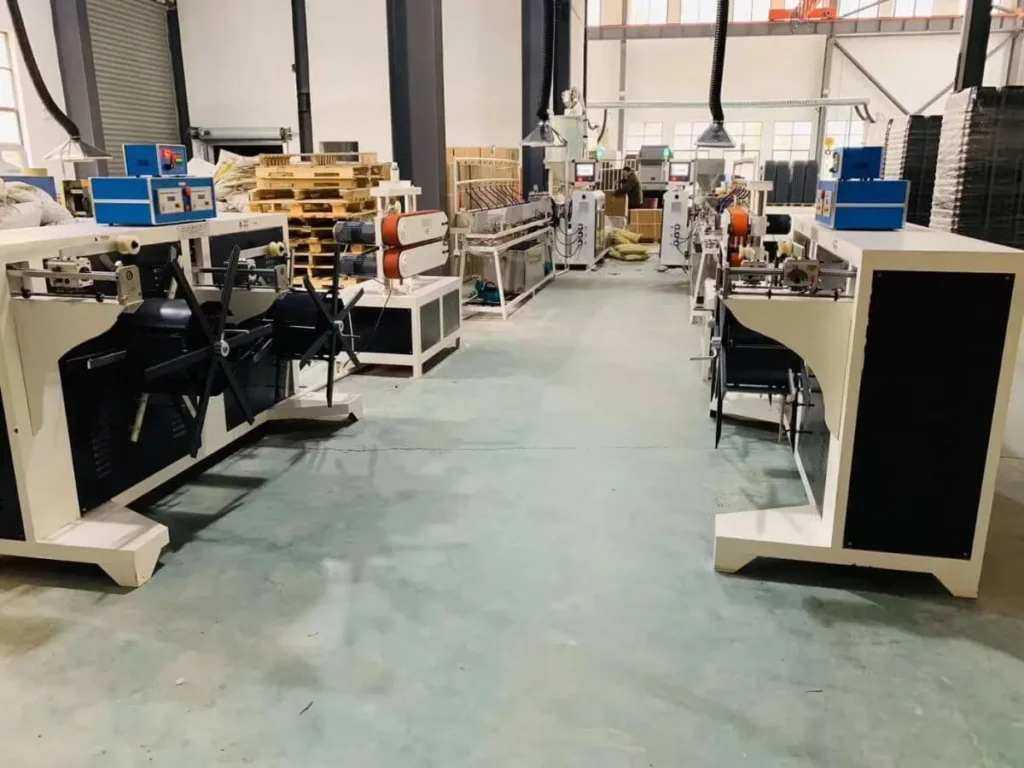
If you need the machine basics first, start with what a plastic extruder machine is. This article focuses on what happens after the die. For what the die itself does before this stage, see the guide to plastic extrusion die.
Quick Answer: What Equipment Is Used After a Plastic Extruder?
Most plastic extrusion downstream equipment follows this sequence:
| Station | What it does | What it controls | What can go wrong |
|---|---|---|---|
| Calibration / sizing | Holds the hot extrudate to the required shape | OD, profile geometry, roundness | ovality, size drift, uneven wall |
| Cooling | Removes heat until the product is stable | shrinkage, internal stress, line speed | bending, warping, post-line deformation |
| Haul-off / puller | Pulls the product at controlled speed | wall thickness, line tension, speed stability | thickness fluctuation, stretching, slipping |
| Cutting / winding | Turns continuous output into sellable form | cut length, end face, coil tension | poor cut, deformation, unstable package |
This is also why downstream equipment is not the same as all auxiliary equipment. Auxiliary equipment can include drying, feeding, dosing, grinding, chillers and other support devices. In this article, downstream means the stations after the die that handle the continuous extruded product.
The Die Is Not the End of the Process
When plastic leaves the die, it already has a cross-section, but it is still hot and easy to deform. Gravity, uneven cooling, unstable pulling or poor alignment can change the product before it becomes rigid.
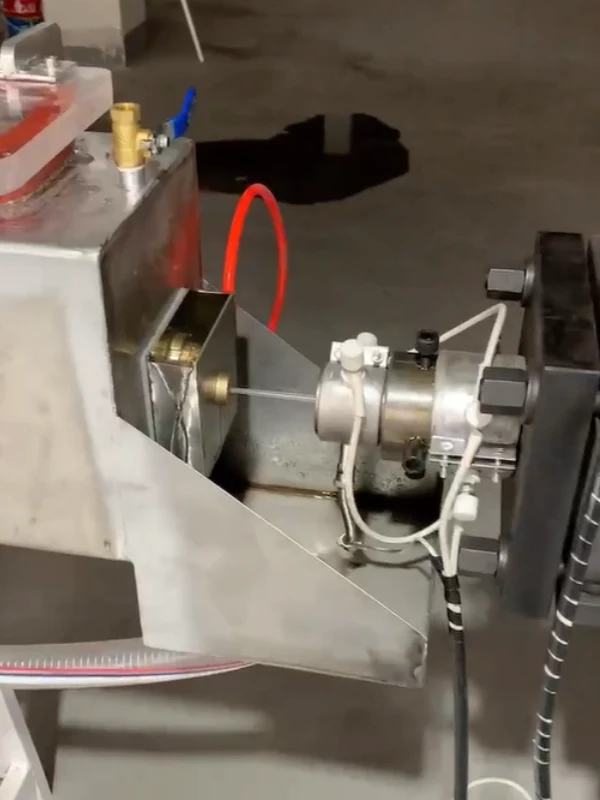
A complete extrusion line therefore has two sides:
- the upstream side, where material is melted, filtered and shaped through the die;
- the downstream side, where the shape is fixed, cooled, pulled and collected.
Before the die, melt quality may also depend on a screen changer for extrusion. After the die, however, most dimensional stability comes from downstream control.
Calibration and Sizing: Lock the Geometry
Calibration is the first quality gate after the die. For pipe and tube extrusion, the product often enters a vacuum calibration tank. Vacuum pulls the hot plastic wall against a calibration sleeve while water begins to cool the surface. This helps control outside diameter and roundness. On a PPR pipe extrusion line, the still-soft pipe passes through vacuum calibration and spray cooling, and a caterpillar haul-off then provides the steady pulling force before cutting and stacking.
For profiles, the product may pass through calibration blocks or a sizing table. These tools hold the profile surfaces while the material cools enough to keep its geometry. On a PC and PMMA profile extrusion line, that calibration tooling is defined from the actual drawing: vacuum, water and support plates hold the section while the profile cools, and wide or thin shapes may need extra support against sagging.
If calibration is weak, later stations cannot repair the shape. A cooling tank can cool an oval pipe, but it cannot make the pipe round again. Typical calibration problems include poor vacuum, worn sizing sleeves, misalignment between die and tank, and insufficient contact time.
Cooling: Stabilize the Product Before It Leaves the Line
Cooling is not just about making the product cold to touch. It removes internal heat so the shape stays stable after stacking, coiling or cutting.
If line speed increases but cooling length does not, the product may look correct at the cutter and then deform later. Pipe can bend after stacking. Profile can twist. Tube can become oval after winding. These are downstream problems, even if they are sometimes blamed on the extruder.
Cooling design depends on the product. Pipe and profile lines commonly use water tanks or spray cooling. Sheet, film and other products may use different cooling or take-off arrangements. The point is the same: the downstream section must remove heat at the same rate that the extruder produces output.
Haul-Off: The Speed Reference of the Line
The haul-off machine, also called the puller, pulls the product through the downstream line. Its job is not only to move the product forward. It sets the line speed.
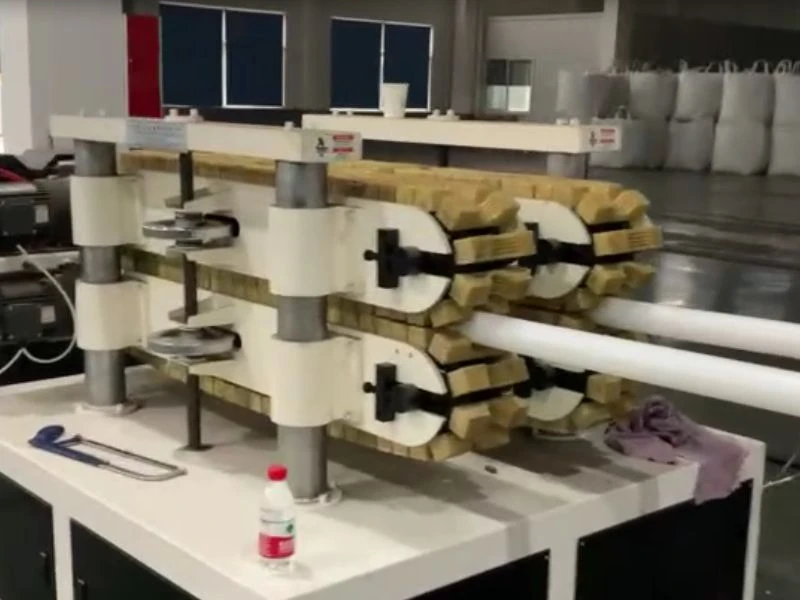
Wall thickness depends on the relationship between extruder output and haul-off speed. If the puller runs faster, the product is stretched thinner. If it runs slower, material accumulates and the wall becomes thicker.
This is why a small speed oscillation can create a repeating thickness pattern. In many troubleshooting cases, operators first adjust barrel temperature or screw speed, but the real cause is worn caterpillar pads, unstable clamping pressure or a control mismatch in the haul-off drive. Small tubes add one more step: on a PE/PP dip tube extrusion line, calibration and cooling are followed by 360° air-blow drying before haul-off and cutting, because surface water can cause micro-slippage that changes the cut length.
For a full line, haul-off speed must also synchronize with the cutter, winder and other downstream stations. That is why the extrusion line control system matters as much as the individual machines.
Cutting, Winding and Collection: Define the Delivery Form
Extrusion is continuous, but customers need cut lengths, coils, rolls or stacks. The end-of-line equipment depends heavily on the product.
Rigid pipes often use a planetary cutter or chipless cutter. The blade moves around the pipe and cuts without creating chips, giving a clean end face for joining or installation.
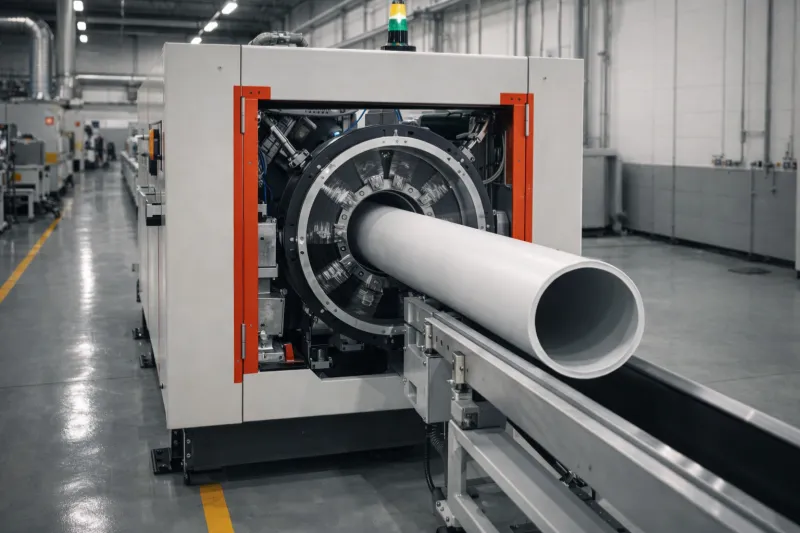
Profiles may use saws or flying cutters. Flexible tubes, hoses and soft strips may use a coiler or winder instead of fixed-length cutting. A PVC braided hose extrusion line is not a simple sequence behind one die: it extrudes the inner tube, stabilizes it, adds yarn braiding and applies the outer layer before final cooling, so pulling and winding tension must stay coordinated across both extrusion steps.
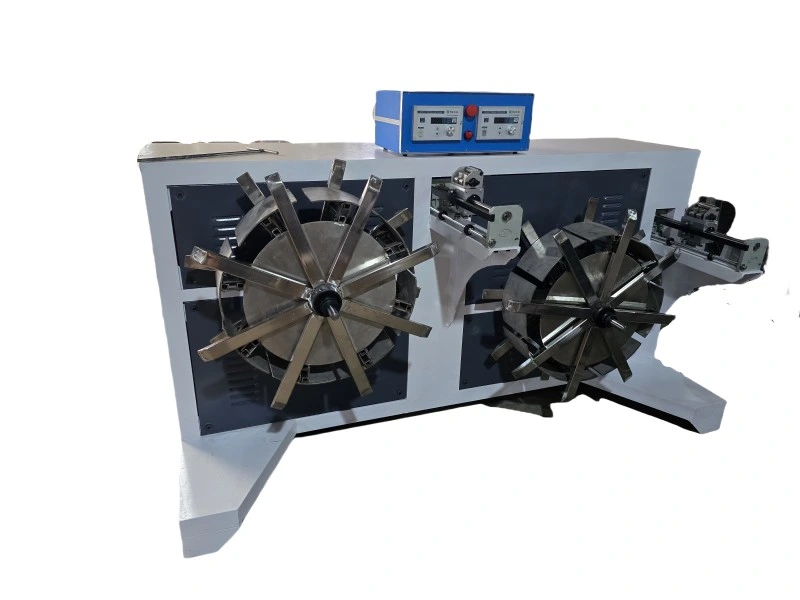
Winding tension is important. If tension is too high, flexible products can stretch or flatten. If it is too low, the coil may be loose and unstable. For this reason, cutting and collection are not minor accessories. They determine how the product is delivered. A TPE tourniquet extrusion line shows the limit of a universal downstream definition: the flat band is formed and calibrated by a two-roll calender, then cooled, slit and accumulated by a dancer unit before micro-perforation, cutting or roll rewinding.
How Product Type Changes the Downstream Configuration
A pipe line, profile line, soft tube line and sheet line do not need the same downstream equipment.
- Pipe extrusion usually needs vacuum calibration, cooling tanks, caterpillar haul-off, planetary cutting and stacker.
- Profile extrusion may need dry calibration blocks, cooling, haul-off and saw cutting.
- Soft tube or hose extrusion may need gentler pulling and controlled winding.
- Sheet or film extrusion uses a different take-off and cooling logic, often based on rolls rather than tanks.
Pelletizing and recycling lines may also use cooling and cutting, but that is a different intent. This article is about downstream equipment for continuous plastic products, not general recycling machinery or metal extrusion.
Why Downstream Problems Are Misdiagnosed as Extruder Problems
Many quality problems appear at the finished product, so people often look back to the largest machine: the extruder. That is not always correct.
- Oval pipe can come from calibration or cooling, not only the die.
- Wall thickness variation can come from haul-off speed, not only screw output.
- Warping after stacking can come from insufficient cooling.
- Poor cut faces can come from the wrong cutter, not melt quality.
During extrusion line installation and commissioning, Jinxin evaluates the line as a synchronized system. A vacuum tank, haul-off and cutter may each run normally alone, but the complete line still needs matched speed, alignment and control response.
Conclusion
Downstream equipment in plastic extrusion is the part of the line that turns a hot extruded shape into a stable product. Calibration fixes geometry, cooling stabilizes the product, haul-off controls speed, and cutting or winding defines the delivery form.
If you are comparing complete production lines, review the plastic extrusion line categories instead of looking only at the extruder model. If you already know your product shape, material and target output, send the details through the contact page and Jinxin can help configure the downstream section with the main extruder.
Jason Shen
Founder and Lead Engineer, Jinxin ExtruderJason Shen leads Jinxin Extruder's single screw extrusion line projects, with hands-on experience in machine configuration, tooling adjustment, factory testing and extrusion troubleshooting.
Inquiry
Email Your Line Requirements
For an accurate quotation, include your target product, material, size range, expected output, factory voltage and any product drawing or sample requirements.