
Melt filtration in extrusion is the control point between the extruder and the die. It removes contamination from the molten polymer, but it also changes melt pressure. That is why an extrusion screen changer should not be treated as a simple filter holder.
For a pipe, profile, sheet or pelletizing line, the practical question is not “should we buy the most advanced screen changer?” The better question is: how dirty is the material, how quickly will the screen load, and how much pressure disturbance can the final product tolerate?
This matters especially when recycled or regrind material is used. More impurities mean faster screen clogging, higher upstream pressure, more frequent screen changes and more scrap if the filtration method does not match the process. But for Jinxin finished-product lines that run clean compound pellets, such as PPR, PE and PP pipe or rigid profile lines, an automatic screen changer is usually not the default answer.
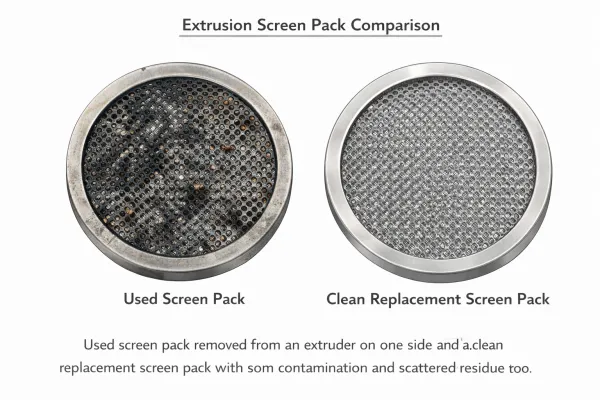
Quick Answer
A screen changer for an extruder holds the screen pack in the melt flow and allows the operator to replace loaded screens. Its job is to filter contamination before the die and keep the pressure behavior of the line within a usable range.
Manual or slide-plate screen changers are often enough for clean pellets and products with a reasonable tolerance window. Automatic or continuous screen changers make more sense when the line runs recycled material, regrind with unknown contamination, pelletizing, or long continuous production where each stop creates expensive scrap.
For a complete line decision, filtration should be considered together with the extruder, die, haul-off, cooling and control system. See Jinxin’s plastic extrusion line overview and the PPR pipe extrusion line page for the broader equipment context.
What Melt Filtration Does Before the Die
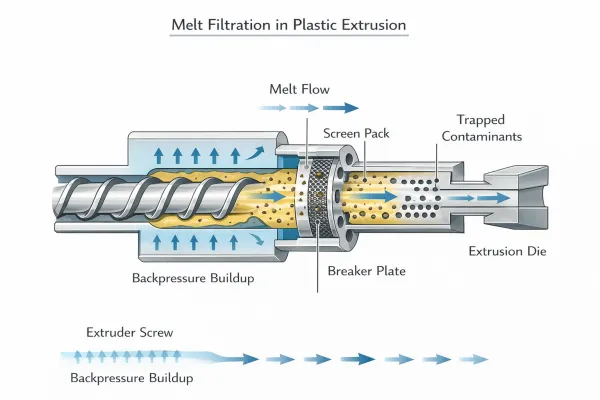
The screen pack normally sits on a breaker plate between the screw outlet and the die. Molten polymer passes through one or more layers of woven metal mesh. The screen catches solid contamination before the material reaches the die flow channel.
Common material caught by the screen includes:
- unmelted particles or hard gels;
- carbonized polymer from thermal degradation;
- metal dust or wear particles;
- packaging fiber, paper, wood or handling dust;
- different polymer fragments in recycled or regrind material.
The breaker plate supports the screen against pressure. Without that support, the mesh can deform or rupture. The screen pack also creates backpressure, which can help melt mixing when it is moderate. When the screen becomes loaded, however, that same resistance becomes a process risk.
Why Screen Loading Changes Pressure
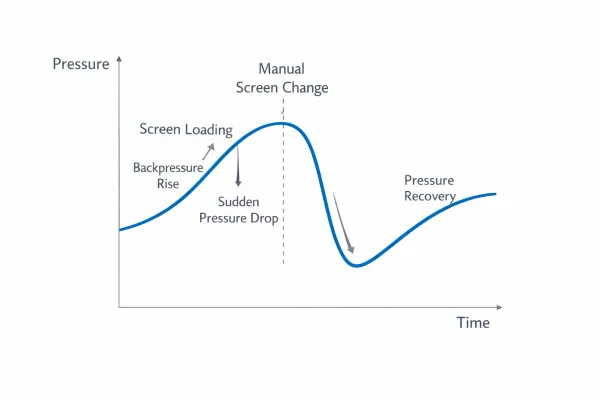
A clean screen has open area. As particles accumulate, open area decreases and upstream pressure rises. The operator may see this as a gradual increase in head pressure, motor load or melt temperature.
A rising pressure trend is useful information. It tells you that the screen is doing work, but it also tells you how fast the material is loading the filter. Clean compound pellets may run for a long time before a screen change. Recycled material can load the same screen much faster.
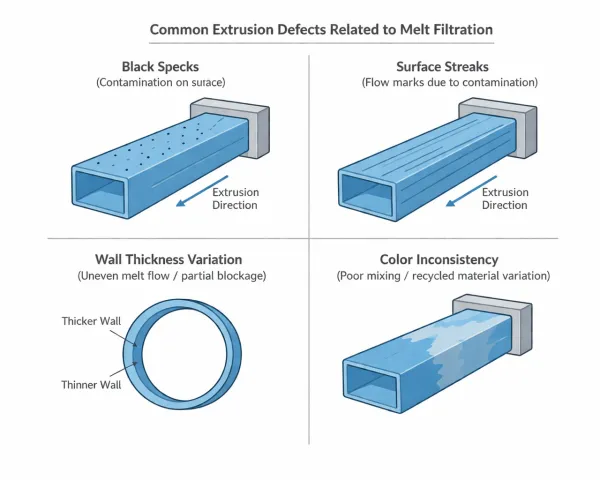
The problem appears when a dirty screen is replaced by a clean one. Resistance drops suddenly. The melt pressure before the die can fall, then recover as the process stabilizes. For products that are sensitive to flow changes, this pressure event can create:
- pipe wall thickness variation;
- OD fluctuation;
- profile shape shift;
- short scrap after the screen change;
- visible streaks or surface instability.
Allan Griff explains this pressure effect clearly in Plastics Technology’s guide to extrusion screens, noting that clogged screens cause a sudden pressure drop when changed and that screw speed or line speed may need adjustment to keep dimensions stable. Parkinson Technologies also warns that continuous screen changers must be controlled by clean-screen pressure and acceptable pressure rise, not operated like a simple slide plate.
Clean Pellets and Recycled Material Are Not the Same Case
This is the most important selection boundary.
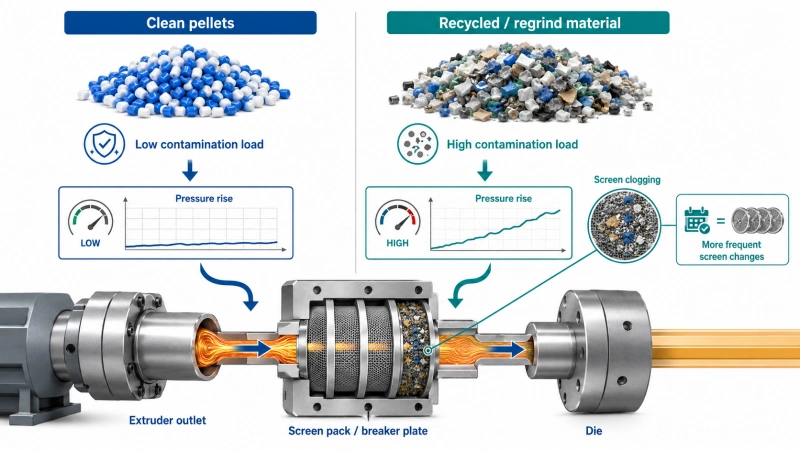
For many Jinxin finished-product extrusion lines, the customer uses finished compound pellets. PPR, PE and PP pipe lines, and many rigid profile lines, normally start from material that has already been compounded and pelletized. The contamination load is usually low. In this situation, the line often needs a sensible screen pack, pressure monitoring and a practical maintenance routine, not the most complex automatic filter system.
Recycled or regrind material is different. It may contain paper, metal dust, different polymers, degraded fragments, unmelted pieces or color contamination. Even when the material looks acceptable in the hopper, those small impurities can collect quickly at the screen. The result is faster pressure rise and more frequent screen changes.
That does not mean recycled material can never be used. It means the line must be specified honestly:
- What percentage is virgin, regrind or recycled material?
- Is the regrind clean post-industrial material or mixed post-consumer material?
- How fine does the screen mesh need to be?
- How often can the line tolerate a screen change?
- How much scrap is acceptable after each pressure disturbance?
If a customer plans to use regrind to make new products, filtration is not a small accessory topic. It becomes a production-risk topic.
Manual, Hydraulic and Automatic Screen Changers
The right type depends on contamination load and downtime cost.
Manual or bolt-type screen changers are simple and cost-effective. They work well when screen changes are infrequent and the product can tolerate a short stop or pressure event.
Hydraulic slide-plate or piston screen changers make changing easier and faster. They reduce operator effort and hot-condition handling, but they may still create pressure fluctuation during the transition.
Automatic or continuous screen changers keep filtration active while the screen area is renewed. Continuous belt, dual-piston and similar designs are useful when the screen loads quickly or the line cannot stop. They are common in recycling, pelletizing and high-contamination applications.
The mistake is to treat automatic as automatically better. If a pipe or profile line runs clean pellets and screen changes are rare, a continuous screen changer may add cost, controls and maintenance without giving much practical value. If the line runs dirty recycled material all day, the same equipment may be justified.
Mesh Size Is Not Simply Finer Is Better
A finer mesh catches smaller particles, but it also increases resistance. That means higher pressure, faster loading and more frequent changes. A coarse screen lowers pressure but may allow gels or hard particles to reach the die.
The practical target is not the finest possible mesh. It is the mesh combination that protects the die and product while keeping pressure rise manageable.
For surface defects such as black specks or gels, filtration is one possible cause, but not the only one. Degradation in the barrel, die buildup or material contamination can create similar symptoms. See Black Specks in Extrusion for a wider diagnostic path.
Relationship With Melt Pumps and Meter Weight Control
A melt pump can stabilize output after the extruder and help reduce pressure pulsation at the die. It does not remove contamination. If the screen is clogging quickly because the material is dirty, a melt pump cannot solve that root cause.
That is why CT-A2 should be read together with Melt Pump for Extrusion and Meter Weight Control in Plastic Extrusion. Filtration, pressure control and material-per-meter control are related, but each solves a different problem.
A practical line review should ask:
- Is the defect caused by contamination, pressure instability, material feeding or downstream pulling?
- Is the pressure rise before the screen normal or too fast?
- Does the line create scrap mainly during screen changes?
- Is the material clean enough for the current screen pack?
- Would automatic screen changing reduce real downtime, or only add complexity?
For wider line diagnosis, use the plastic extrusion troubleshooting guide.
RFQ Checklist
When discussing a screen changer or melt filtration setup, include these details in the RFQ:
- material type: PPR, PE, PP, rigid profile material or recycled blend;
- virgin/regrind/recycled ratio;
- expected contamination level;
- product type and tolerance sensitivity;
- target output and run length;
- current or expected screen change frequency;
- acceptable pressure rise before screen change;
- whether the line must keep running during screen replacement.
If the supplier recommends an automatic screen changer, ask why. The answer should refer to contamination load, change frequency, downtime cost or product tolerance, not just “higher configuration.”
Conclusion
Melt filtration in extrusion is a process decision, not only a hardware decision. The screen changer controls what reaches the die, but it also changes how pressure behaves before the die.
For clean finished-pellet pipe and profile production, the practical answer may be a reliable manual or hydraulic screen changer with the right mesh and pressure monitoring. For recycled, regrind, pelletizing or high-contamination production, the filtration burden is heavier, and automatic or continuous changing may be worth evaluating.
If you are configuring a pipe or profile extrusion line, contact Jinxin with your material, regrind ratio, output target and product tolerance.
FAQ
What is melt filtration in extrusion?
It is the process of filtering molten polymer before it reaches the die. A screen pack or melt filter removes gels, degraded particles, metal dust and other contamination that could damage the die or appear as product defects.
What is an extrusion screen changer?
An extrusion screen changer is the device that holds and replaces the screen pack in the melt flow. It may be manual, hydraulic, semi-automatic or continuous, depending on the production requirement.
When do I need an automatic screen changer?
Usually when screen changes are frequent, downtime is expensive, or the material contains enough contamination to load the screen quickly. Recycling, pelletizing and high-regrind production are more typical cases than clean finished-pellet pipe or profile extrusion.
Can recycled material be used in extrusion lines?
Yes, but the filtration burden must be checked. Recycled or regrind material can contain more impurities, so it may need a larger filter area, finer mesh, closer pressure monitoring or a different screen-changing method.
Is finer screen mesh always better?
No. Finer mesh catches smaller contamination, but it also raises pressure and can clog faster. The correct mesh balances product quality, die protection, pressure rise and change frequency.
Does a melt pump replace a screen changer?
No. A melt pump stabilizes flow and pressure, but it does not remove contamination. Filtration still needs a screen pack or melt filter before the die.
Further Reading
Plastics Technology / Griffex — Get Smart About Screens
Parkinson Technologies — Screen Changer: Timed vs Pressure Control Screen Movements
Jason Shen
Founder and Lead Engineer, Jinxin ExtruderJason Shen leads Jinxin Extruder's single screw extrusion line projects, with hands-on experience in machine configuration, tooling adjustment, factory testing and extrusion troubleshooting.
Inquiry
Email Your Line Requirements
For an accurate quotation, include your target product, material, size range, expected output, factory voltage and any product drawing or sample requirements.