
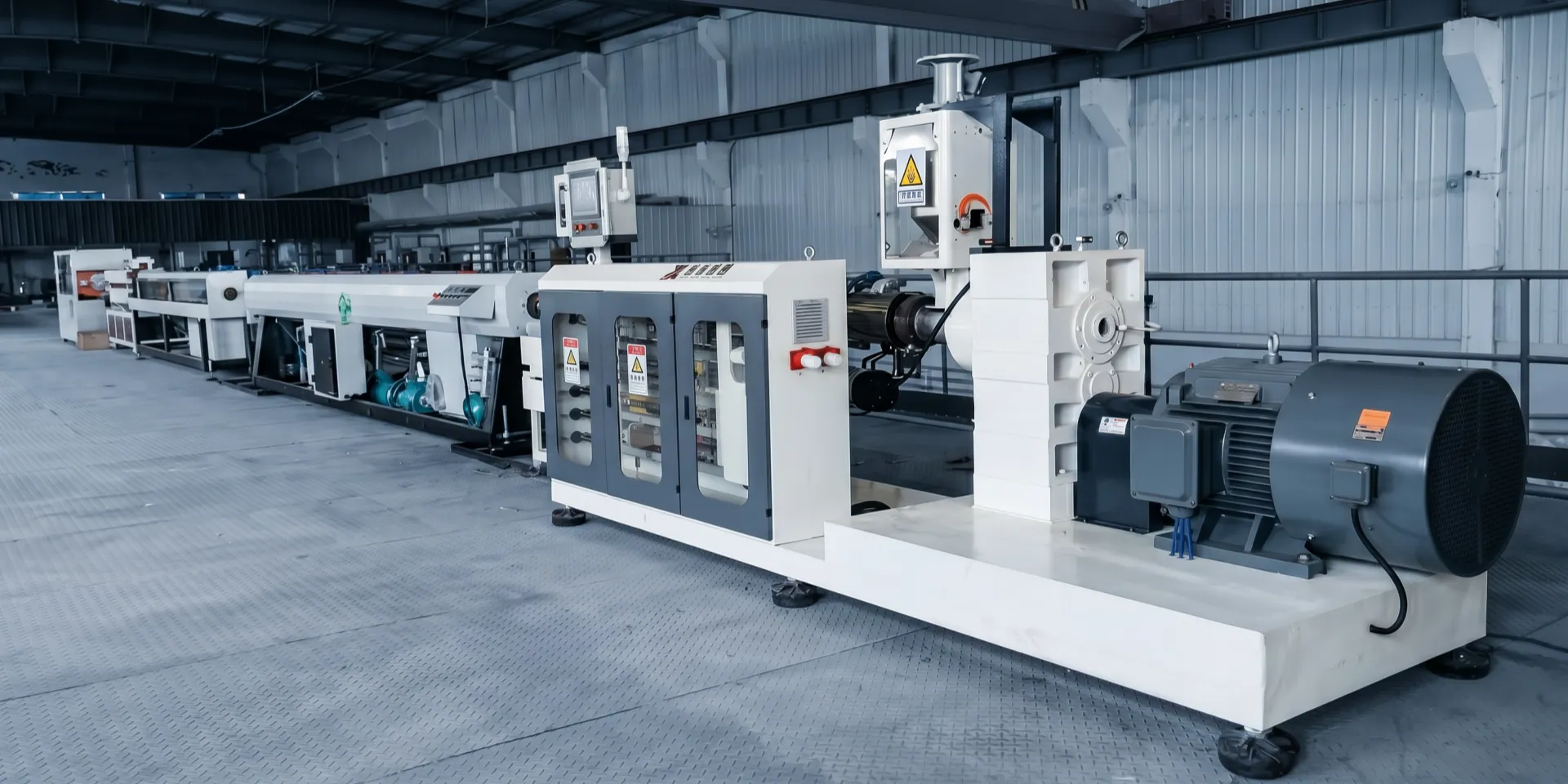
PPR pipes are made by a continuous extrusion process. PP-R resin is plasticized in a single-screw extruder, shaped through a pipe die, sized in a vacuum calibration tank, cooled, pulled at a controlled speed, then cut and stacked as finished pipe.
For buyers, the important point is not only that a pipe can be extruded. The line must keep the outside diameter, wall thickness, surface quality, cutting length and output stable across real production. That is why a PPR pipe production line is designed as a complete process system, not just one extruder.
This article focuses on the manufacturing route behind PPR / PP-R pressure pipe. For the full equipment specification and quotation context, see Jinxin’s PPR pipe extrusion line.
Quick Answer
PPR pipes are normally manufactured on a single-screw pipe extrusion line. The basic process is:
- feed PP-R resin and color masterbatch into the line;
- plasticize the resin in the single-screw extruder;
- form the molten material through a pipe die and mandrel;
- size the pipe in a vacuum calibration tank;
- cool the pipe through spray or water cooling;
- pull the pipe with a synchronized haul-off unit;
- cut the pipe to length and stack it;
- add a marking stripe or multilayer PPR-GF-PPR structure when the project requires it.
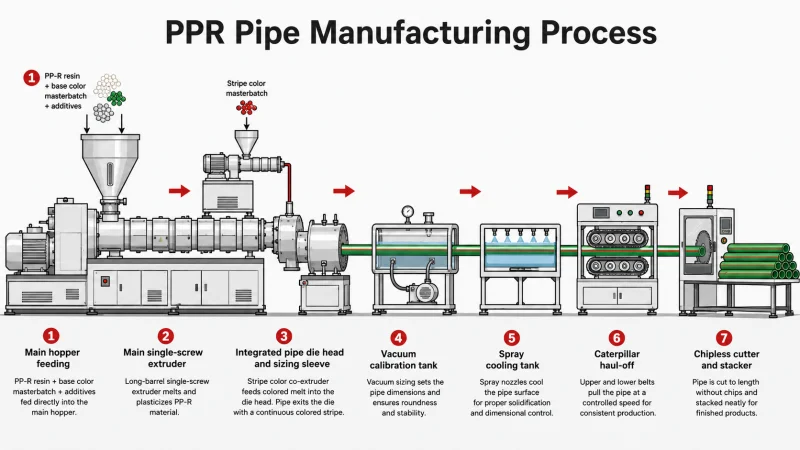
Each step affects the final pipe. If the extruder output is unstable, the wall thickness changes. If calibration is weak, the pipe may lose roundness. If cooling and haul-off are not synchronized, the pipe can drift in size or surface quality.
1. Raw Material Feeding
The process starts with PP-R resin, also called polypropylene random copolymer. In production, the pipe manufacturer may also use color masterbatch, marking-stripe material, or a separate material stream for a multilayer structure, depending on the pipe design.
The material must be clean and consistent. Different resin grades, recycled content, color systems or layer structures can change the processing window, so they should be confirmed before the line is configured.
On a PPR pipe extrusion project, the buyer should normally confirm:
- pipe diameter range;
- wall thickness, PN or SDR requirement;
- resin grade and supplier information;
- color and marking stripe requirement;
- single-layer or multilayer structure;
- output target for each main pipe size.
These details determine the extruder model, die tooling, calibration sleeves, cooling length, haul-off setup and control configuration.
2. Plasticizing in the Single-Screw Extruder
After feeding, the PP-R resin enters the single-screw extruder. The screw rotates inside the heated barrel, conveying, melting and mixing the material until it becomes a stable melt.
This step must be controlled carefully. A stable melt helps the die form an even pipe wall. Poor plasticizing can lead to surface defects, pressure fluctuation, unstable output or inconsistent wall thickness.
For Jinxin’s standard PPR pipe line range, the equipment is configured around PP-R pipe production from 20-160mm. The JF-SJ65/33 covers small and medium pipe sizes, while the JF-SJ75/33 covers the larger part of the standard range. The final model depends on diameter, output target, strand configuration and layer structure.
For equipment model ranges, turnkey scope and reference pricing, compare Jinxin’s PPR pipe extrusion line. This article continues with the manufacturing process rather than duplicating the full product specification.
3. Pipe Die Forming
The molten PP-R then passes through the pipe die. Inside the die head, the melt is distributed around the mandrel and shaped into a hollow tube.
The die does more than create a round opening. It must distribute material evenly around the circumference of the pipe. Uneven flow can create wall-thickness imbalance, unstable pipe shape or difficulty during calibration.
For a buyer, die tooling should be discussed together with the target pipe sizes. A quotation should make clear which die set, mandrel and calibration sleeve are included, and which additional sizes require extra tooling.
4. Vacuum Calibration
After leaving the die, the hot pipe is still soft. It enters the vacuum calibration section, where sizing sleeves and vacuum help hold the outside diameter and roundness.
This is one of the most important sections for pipe quality. The pipe must be supported and sized before it cools too much or deforms. If calibration is not matched to the diameter and wall thickness, the pipe may show ovality, sizing marks or dimensional drift.
For PPR pressure pipe, calibration quality matters because the finished product must fit fittings, meet dimensional expectations and maintain consistent wall structure.
5. Cooling
After calibration, the pipe continues through cooling. Cooling removes heat from the pipe wall so the product becomes stable enough for pulling, cutting and handling.
Cooling capacity must match the pipe diameter, wall thickness, material and line speed. If the pipe is pulled too fast before it is cooled, it can deform or drift in size. If the cooling section is oversized or poorly controlled, the line may waste floor space or create unnecessary operating complexity.
For this reason, pipe extrusion is always a balance between output, cooling length and haul-off speed. The line is not selected only by maximum diameter.
6. Haul-Off and Meter-Weight Stability
The haul-off unit pulls the pipe at a controlled speed. This speed must match the extruder output. If the haul-off runs too fast, the pipe wall may become thin. If it runs too slowly, the pipe may become heavy or oversized.
In a well-configured PPR pipe line, output control and haul-off synchronization are central to stable production. Jinxin’s PPR pipe line uses gravimeter meter-weight control as a standard configuration, so the line can monitor material consumption per meter and help keep the product close to the target.
For more detail on this control logic, see meter weight control in plastic extrusion and extruder output and haul-off speed synchronization.
7. Cutting and Stacking
Once the pipe has been pulled and cooled, it is cut to the required length. A chip-free cutter is commonly used for PPR pipe because the cut edge should be clean and the production area should avoid unnecessary plastic chips.
After cutting, the pipe is transferred to a stacker for collection. Cutting accuracy, stable pulling and proper pipe support all affect the final handling quality.
At this stage, the pipe is no longer just a molten product. It has become a finished length that must match the buyer’s packaging, storage and downstream handling requirements.
8. Marking Stripe and PPR-GF-PPR Options
Many finished PPR pipes require a color marking stripe for identification, branding or pipe-type distinction. This is usually produced by an auxiliary co-extruder that feeds a small stream of colored material into the die area.
A marking stripe is not the same as a multilayer pipe structure. PPR-GF-PPR pipe is a three-layer structure with a glass-fiber middle layer, used when the project requires improved dimensional stability for hot-water or heating applications.
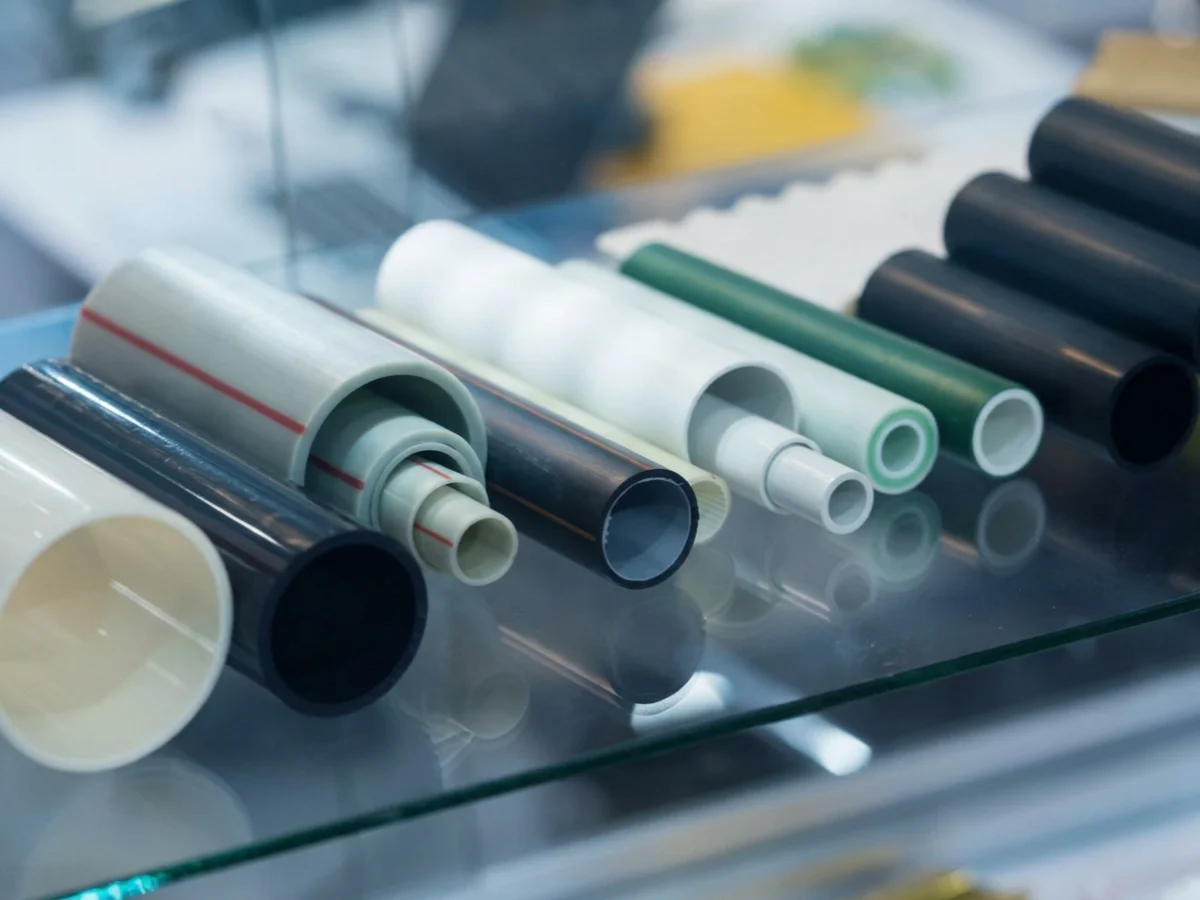
These options should be itemized clearly in the quotation. A low online machine price may omit the marking-stripe co-extruder, multilayer tooling, gravimeter, chiller or other downstream modules. Buyers should compare the full scope, not only the headline price.
For quotation comparison, use the extrusion line quotation checklist.
9. What Buyers Should Confirm Before Choosing a PPR Pipe Line
Before selecting a PPR pipe extrusion line, prepare the production basis first:
| Information | Why it matters |
|---|---|
| Pipe diameter range | Determines extruder size, die tooling, calibration and downstream capacity. |
| PN / SDR / wall thickness | Affects material consumption, cooling load, haul-off force and pressure-pipe requirements. |
| Output target | Determines whether the line should focus on standard output or higher small-diameter capacity. |
| Single or dual strand | Small-diameter projects may use dual-strand configuration; larger sizes usually use single strand. |
| Layer structure | Single-layer, marking stripe and PPR-GF-PPR require different co-extrusion scope. |
| Standards or project references | Helps confirm dimensional expectations and buyer-side testing requirements. |
| Factory utilities | Voltage, cooling water, compressed air, floor space and local installation conditions affect implementation. |
A PPR line should be selected around the real production plan. If the buyer needs a very wide range of pipe sizes, it is important to check whether one line can run all sizes efficiently. See pipe extrusion line size range for that equipment-window logic.
Conclusion
PPR pipe production is a continuous extrusion process: PP-R resin is melted, formed, calibrated, cooled, pulled, cut and stacked. The quality of the finished pipe depends on how well each section of the line works together.
For equipment buyers, the best question is not only “what machine makes PPR pipe?” A better question is: what complete line configuration can hold the required diameter, wall thickness, output and layer structure in stable production?
If you are planning a PPR pipe project, contact Jinxin with your pipe size range, PN/SDR, material, output target and layer requirement. Jinxin can recommend a configured PPR pipe extrusion line and prepare an itemized FOB quotation.
FAQ
Are PPR pipes made by extrusion?
Yes. PPR / PP-R pipes are normally made by continuous extrusion. PP-R resin is melted in a single-screw extruder, shaped through a pipe die, calibrated, cooled, pulled and cut to length.
What material is used to make PPR pipe?
PPR pipe is made from PP-R resin, or polypropylene random copolymer. Color masterbatch, marking-stripe material or a glass-fiber middle layer may be added depending on the pipe structure.
What machine is used to make PPR pipe?
Industrial PPR pipe is made on a PPR pipe extrusion line, not a small pipe welding tool. The line includes the single-screw extruder, die head, vacuum calibration tank, cooling tank, haul-off, cutter, stacker and related control system.
Is PPR pipe production the same as PPR fitting production?
No. PPR pipe is usually produced by extrusion as a continuous product. PPR fittings are normally made by injection molding. The material family may be related, but the equipment and process are different.
Which step controls PPR pipe diameter?
The die begins the pipe shape, but the vacuum calibration section is critical for holding the outside diameter and roundness. Cooling and haul-off speed must also be stable to prevent dimensional drift.
Which step controls wall thickness?
Wall thickness is affected by melt output, die flow, haul-off speed and meter-weight stability. A gravimeter meter-weight control system helps keep material consumption per meter closer to the target.
Why should PPR pipe pass through vacuum calibration before final cooling?
The pipe is still soft when it leaves the die. Vacuum calibration gives the pipe a supported sizing window before the cooling section fixes the shape. If the pipe enters cooling without stable calibration, the cooling water can lock in ovality, sizing marks or diameter drift instead of correcting them.
What information is needed for a PPR pipe line quotation?
The supplier needs pipe diameter range, wall thickness or PN/SDR, resin grade, output target, line speed requirement, layer structure, marking stripe needs, factory utilities and any project standards the buyer must follow.
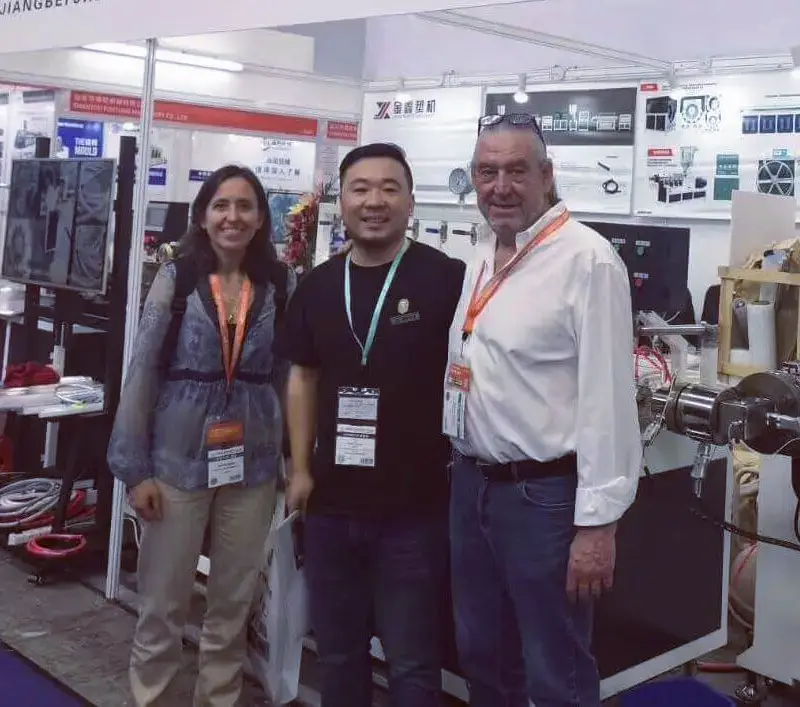
Jason Shen
Founder and Lead Engineer, Jinxin ExtruderJason Shen leads Jinxin Extruder's single screw extrusion line projects, with hands-on experience in machine configuration, tooling adjustment, factory testing and extrusion troubleshooting.
Inquiry
Email Your Line Requirements
For an accurate quotation, include your target product, material, size range, expected output, factory voltage and any product drawing or sample requirements.