
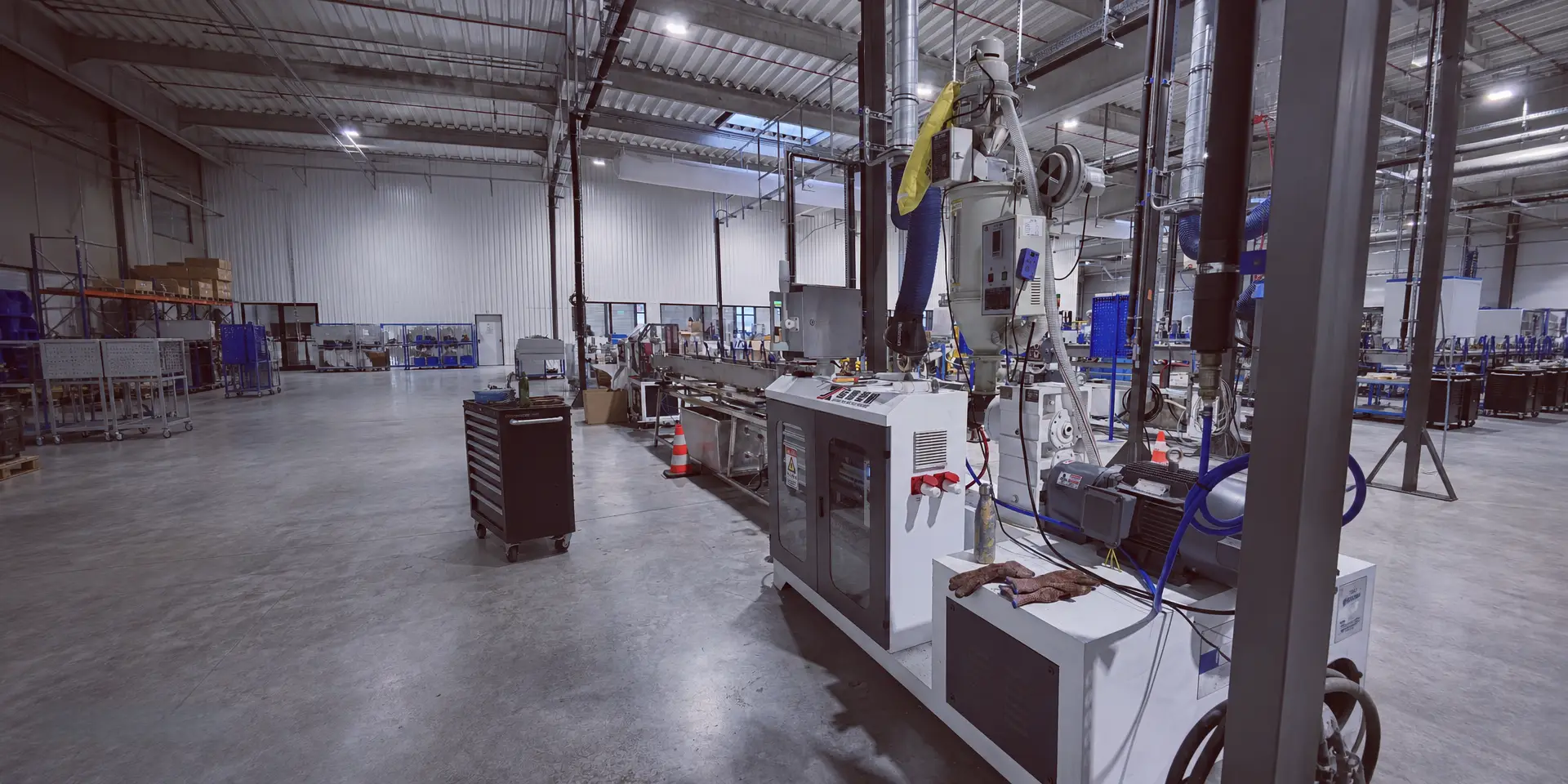
Plastic dip tubes for lotion pumps, perfume pumps, aerosol valves and trigger sprayers are normally made by continuous extrusion. PE or PP resin is plasticized in a single-screw extruder, formed through an annular tube die, sized by vacuum calibration, cooled, dried, pulled at a controlled speed, then cut to length or wound for later processing.
This article covers the narrow plastic tube body used inside dispensing and aerosol packaging. It does not cover water-heater dip tubes, metal or quartz dip pipes, dip-molded PVC tubing, or the later assembly of the tube into a finished pump or valve.
Once the material, OD, ID, wall thickness, cut length, cut-end profile and collection method are known, see how Jinxin configures a PE/PP dip tube extrusion line around those buyer inputs.
Quick Answer
Plastic dip tube manufacturing follows this basic sequence:
- feed PE or PP pellets into the single-screw extruder;
- convey, melt and mix the resin into a stable polymer melt;
- form a continuous hollow tube through the die and core;
- set the outside diameter and roundness through vacuum calibration;
- remove heat in the cooling section;
- pull the tube with a synchronized haul-off;
- cut the tube to length and shape in-line, or wind it for later processing.
Jinxin places a circular air-blow drying unit between cooling and haul-off as a standard part of its dip tube line. It removes residual surface water, but it is not shown as a universal stage in the core sequence because other suppliers may use a different arrangement or omit a dedicated air-blow drying unit.
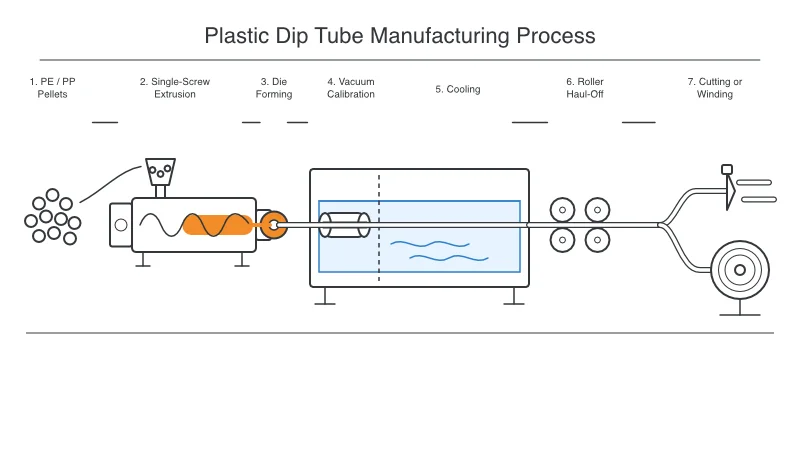
The die starts the tube geometry, but no single stage controls the finished dimensions by itself. Melt delivery, die and core design, calibration, cooling and haul-off speed must work as one process.
1. Which Plastic Dip Tubes Does This Process Cover?
The term “dip tube” is used for several unrelated products. In packaging, it normally means the narrow tube that carries liquid from a bottle or can into a pump, sprayer or aerosol valve. This tube has a continuous hollow cross-section, which makes extrusion the practical production method.
The tube body is only one component of the final dispensing system. Pump housings, valve bodies, caps and other molded or assembled parts are outside the extrusion-line scope. Jinxin supplies the production line for the tube body, not finished dip tubes or complete pump assemblies.
Material, diameter, wall thickness, cut length and cut-end profile can differ by application, but the line still follows the same core sequence from pellets to cut or wound tube.
2. PE, LDPE or PP: Material Comes Before Machine Settings
Jinxin configures dip tube lines for PE, including LDPE, or PP. These materials do not share one universal processing recipe, and the application name alone is not enough to select a grade.
| Material direction | Typical reason for selection | What still needs confirmation |
|---|---|---|
| PE, including LDPE | Flexibility for many lotion, perfume and cosmetic pump tubes | Resin grade, tube fit, stiffness, contents and required cut behavior |
| PP | Higher stiffness or chemical-resistance needs in some aerosol valve and dispensing applications | Actual valve design, contents, tube dimensions and assembly fit |
LDPE is commonly used when the tube must bend inside a bottle while keeping enough shape for insertion. PP can be selected when a stiffer tube is required. These are application directions, not blanket rules. The buyer’s resin, tube sample and mating pump or valve should be reviewed together.
3. Feeding and Plasticizing in the Single-Screw Extruder
The process starts when PE or PP pellets enter the hopper. A rotating screw conveys the material through the heated barrel, where heat and shear gradually produce a continuous melt. Stable feeding and plasticizing help the die receive a consistent material flow.
For the typical 3-10mm dip tube application range, Jinxin configures SJ35 or SJ45 single-screw platforms. The final platform is selected around the resin, OD and ID, wall thickness, cut requirement and practical output target. The 3-10mm figure is a typical application range, not a universal mechanical limit.
For a wider explanation of melting and continuous forming, see what plastic extrusion is.
4. Forming the Hollow Tube Through the Die
The stable melt moves from the extruder into the die head. A die and core create the annular flow path that gives the melt its starting hollow shape. The tooling must distribute material evenly around the circumference of a very small tube.
The die opening should not be treated as the finished tube dimension. The melt can change after it exits the die because of draw-down, vacuum sizing, cooling and shrinkage. Tooling therefore has to be matched to the target tube and the downstream process, not copied from the finished OD alone.
Uneven flow or incorrect alignment can create an off-center wall, unstable sizing or difficulty entering the calibration section. For the general function of this component, see what an extrusion die does.
5. Vacuum Calibration and Cooling
The tube is still soft when it leaves the die. It enters the vacuum calibration section, where matched sizing tooling and controlled vacuum support the outside diameter and roundness. Cooling then removes heat so those dimensions become stable enough for downstream pulling and cutting.
Calibration and cooling have related but different jobs:
- the die and core establish the starting tube geometry;
- vacuum calibration holds the outside shape while the tube is soft;
- cooling fixes that shape as the polymer solidifies;
- haul-off speed influences draw-down and material per unit length.
Vacuum calibration does not independently guarantee wall thickness. An unstable melt flow, off-center tooling or an output-to-haul-off mismatch can still move the wall even when the vacuum setting appears steady.
6. Surface-Water Removal: Jinxin’s Standard Air-Blow Drying Unit
After water cooling, moisture can remain on the tube surface. Not every dip tube line uses the same drying arrangement. Jinxin includes a circular air-blow drying unit as standard after cooling to remove that water before the tube reaches the haul-off and cutter.
This stage is easy to overlook because it does not form the tube. It protects the stability of the next stages. A wet small-diameter tube can slip at the puller, which can change the effective line speed and cut length. Residual water can also make the cutting area less consistent.
7. Haul-Off Pressure and Speed
The haul-off pulls the tube through the line. For typical 3-10mm thin-wall dip tubes, Jinxin usually uses a compact roller-type haul-off because the tube is small and requires fine grip control rather than high pulling force. A belt-type haul-off can be configured when the tube material, softness or tolerance target calls for a different contact method.
Grip pressure matters. Too much pressure can mark or deform a soft tube. Too little pressure can allow slip, runout or length variation. The puller must also stay synchronized with actual melt output.
If haul-off speed rises while output stays unchanged, the tube receives less material per meter and may become thinner. If output rises or the puller runs too slowly, the tube receives more material per meter. The full mechanism is explained in extruder output and haul-off speed synchronization.
8. In-Line Cutting or Winding
After the tube is dry and pulling is stable, the line can either cut it to length or wind it for later processing. The collection route depends on the factory’s product and assembly flow.
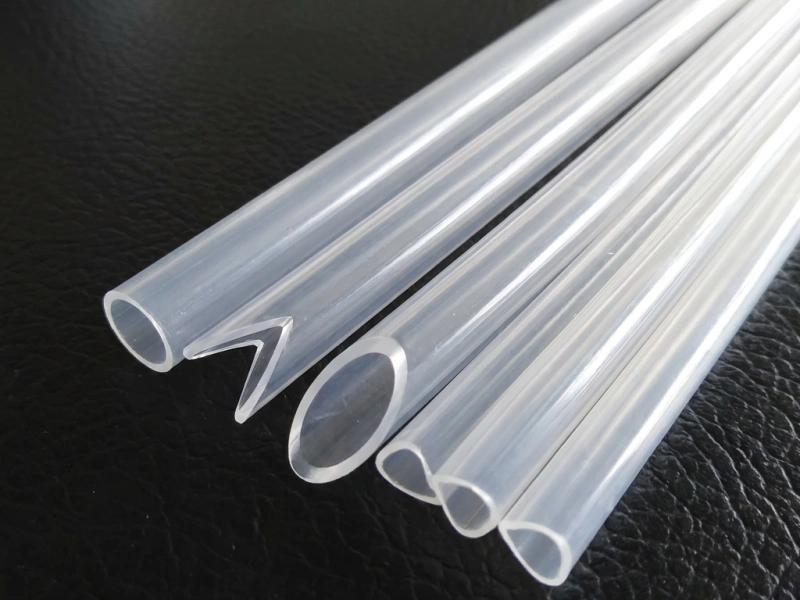
For cut-to-length production, Jinxin uses a servo flying-knife system. The cutter can form the final end profile during extrusion, so a correctly configured line does not need a separate secondary trimming step for that profile.
Confirmed cut shapes include:
- flat or square cut;
- V-notch with a custom angle;
- slanted cut;
- concave cut.
Each profile requires its own dedicated cutter head. The cut shape, angle and tube length must be confirmed before the head is made. A second profile requires an additional matching head; it is not produced by changing one software setting.
Winding is the alternative when continuous tube is collected on a reel before a later cutting or assembly stage. Cutter and winder configurations should not be treated as the same production route.
9. How Application Requirements Change the Tube
The extrusion sequence stays similar, but the target tube changes with the dispensing system.
| Application | Typical process concern |
|---|---|
| Lotion pump | Flexible PE or LDPE is common; stable OD helps maintain the intended fit in the pump housing. |
| Perfume or fine-mist pump | Narrow, thin-wall tube and a clean cut end; some designs use V-notch or slanted cuts. |
| Aerosol valve | PE or PP may be used depending on stiffness, contents and valve design; roundness and material consistency matter for fit. |
| Trigger sprayer | Tube size and tolerance may differ from cosmetic pumps; dry traction and repeatable cut length remain important. |
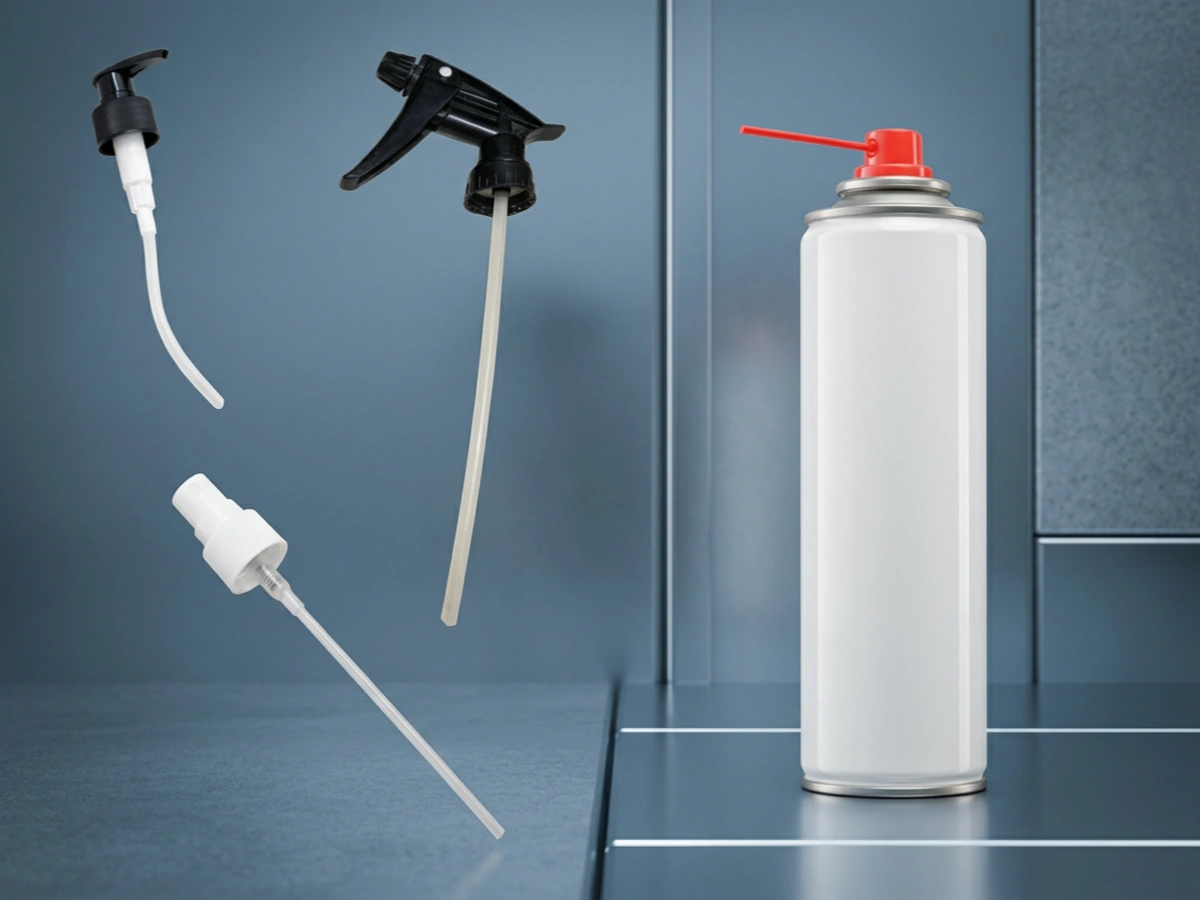
These are practical directions, not fixed material assignments. A production line should be reviewed against the actual tube sample or drawing and the mating pump or valve.
10. Common Dip Tube Process Problems
Most dimensional problems are process-chain problems rather than one bad setting.
| Symptom | Process areas to check first |
|---|---|
| OD drift or ovality | Die/calibration alignment, vacuum stability, cooling and haul-off speed |
| Wall-thickness drift | Melt output, die and core flow, haul-off synchronization and cooling stability |
| Roller marks or tube deformation | Tube temperature at the puller, roller gap and grip pressure |
| Slip or cut-length variation | Surface water, haul-off grip, speed synchronization and cutter timing |
| Distorted or inconsistent cut end | Tube cooling, cutter-head match, confirmed profile and cutting synchronization |
The useful diagnostic question is not simply “Which setting controls the dimension?” OD, roundness and wall thickness are related but not identical. If the wall moves with material per meter, inspect melt output and puller speed. If meter weight is stable but the shape moves, calibration, cooling, alignment or grip becomes more likely.
For a fuller symptom-based workflow, see wall thickness variation in plastic extrusion.
11. Why Maximum Line Speed Is Not Finished Output
A headline such as 300 m/min describes linear speed, not sellable output. A very light dip tube can travel many meters per minute while using relatively little resin. A thicker tube at a lower line speed may represent more kilograms per hour.
Higher speed also changes the downstream requirement. The tube has less time in each meter of cooling, so the line may need more cooling length and floor space. Cutting and collection must respond at the same rate.
For a factory making several tube sizes or cut profiles, peak speed may be less useful than stable OD, clean cut ends and practical changeover. Output should be evaluated against the actual tube weight, quality target and product mix, not one catalog m/min number.
Conclusion
Plastic dip tubes for pumps, sprayers and aerosol valves are made by a continuous PE or PP extrusion process. The resin is plasticized, formed through a die, vacuum-calibrated, cooled, dried, pulled and then cut or wound. The finished result depends on how those stages work together.
For equipment evaluation, define the actual resin, OD, ID, wall thickness, cut length, cut-end profile and collection route. Those inputs determine the tooling and downstream configuration more reliably than a generic speed claim.
If you are reviewing a dip tube production project, contact Jinxin with a tube sample or drawing and the intended pump or valve application. Jinxin can review the complete extrusion-line configuration without treating the extruder as the whole process.
FAQ
What happens after molten PE or PP exits the dip tube die?
The tube is still soft after the die. It enters matched vacuum calibration tooling to support its outside diameter and roundness, then passes through cooling and surface-water removal before haul-off and cutting or winding.
Why is vacuum calibration used for small dip tubes?
Vacuum calibration gives the soft tube a controlled sizing window before cooling fixes the shape. It is important for OD and roundness, but it does not replace stable melt output, centered tooling, consistent cooling or synchronized pulling.
What causes dip tube OD or wall thickness to drift?
Possible causes include unstable melt output, off-center die or core tooling, changing vacuum or cooling conditions, haul-off slip and an output-to-haul-off mismatch. The movement pattern should be identified before settings are changed.
Why must the tube surface be dry before haul-off and cutting?
Surface water can reduce traction at the haul-off. Slip changes the effective pulling speed and can contribute to dimensional movement or cut-length variation. Jinxin’s standard air-blow drying unit gives the puller a more repeatable contact surface; other lines may handle surface water differently.
How are V-notch, slanted and concave dip tube ends made?
On a configured Jinxin line, a servo flying-knife cuts the tube and forms the specified profile in-line. Flat, V-notch, slanted and concave profiles each need a dedicated cutter head made for that shape and angle.
Why are some dip tubes cut in-line while others are wound first?
It depends on the factory’s production flow. Cut-to-length tubes can leave the line ready for the next handling stage. Winding collects continuous tube on a reel when cutting or assembly will happen later. The required collection method should be confirmed before the line is configured.
Jason Shen
Founder and Lead Engineer, Jinxin ExtruderJason Shen leads Jinxin Extruder's single screw extrusion line projects, with hands-on experience in machine configuration, tooling adjustment, factory testing and extrusion troubleshooting.
Inquiry
Email Your Line Requirements
For an accurate quotation, include your target product, material, size range, expected output, factory voltage and any product drawing or sample requirements.