
Resin drying in plastic extrusion is the process of removing surface moisture or absorbed internal moisture from plastic pellets before they enter the extruder. It prevents steam formation, bubbles, splay marks, hydrolysis and strength loss during extrusion.
For materials such as PC, PMMA, ABS, PA, PET and TPU, drying is not a minor preparation step. It is part of melt-quality control. If wet pellets enter a hot barrel, the extruder may still run normally, but the product can come out with visible surface defects or hidden mechanical damage that no screw-speed or die adjustment can repair.
This guide explains when plastic extrusion drying is necessary, how moisture damages extruded products, and which drying parameters must be controlled before production starts.
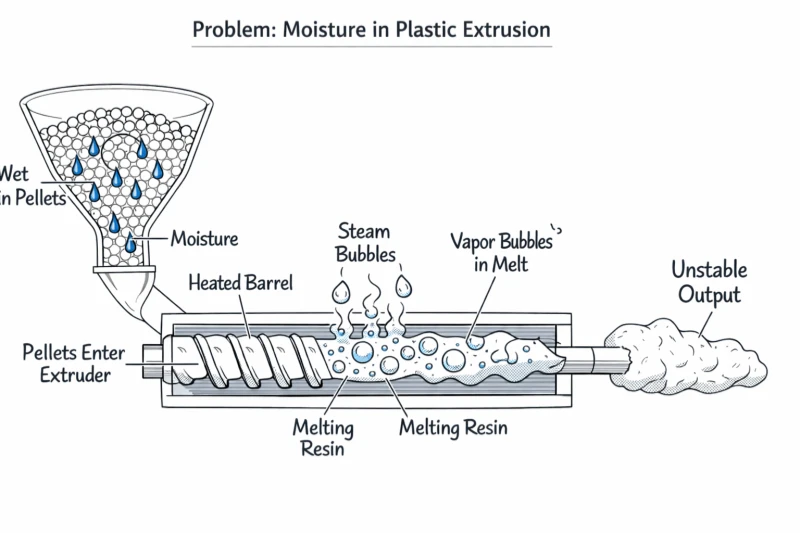
Quick Answer: Why Does Resin Drying Matter?
Resin drying matters because moisture turns into steam inside the extruder barrel. That steam can create bubbles, voids, silver streaks, rough surfaces and unstable melt flow. In hygroscopic plastics, moisture can also trigger hydrolysis, which breaks polymer chains and permanently weakens the material.
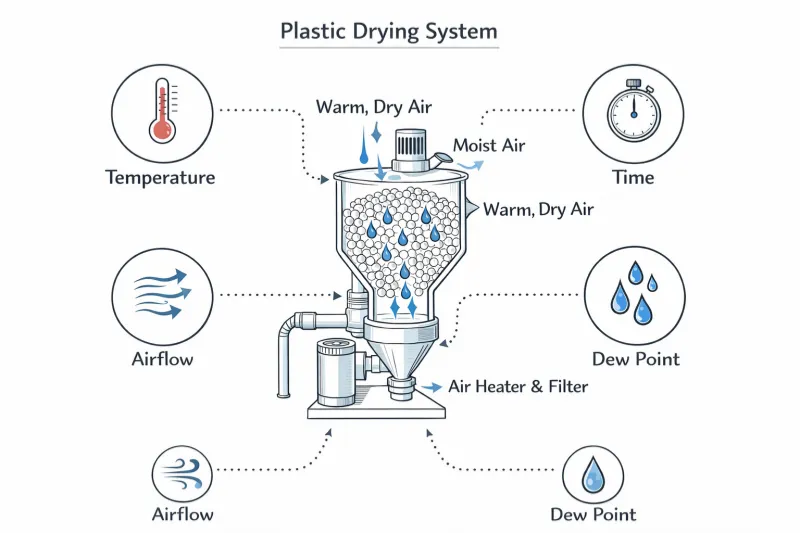
Good resin drying controls four things:
- temperature, so moisture can move out of the pellet without damaging the resin;
- drying time, so moisture has enough residence time to migrate;
- airflow, so evaporated moisture is carried away;
- dew point, so the drying air is dry enough to pull moisture from hygroscopic materials.
Hygroscopic vs Non-Hygroscopic Plastics
The first question is not “what dryer do I have?” It is “how does this material hold water?”
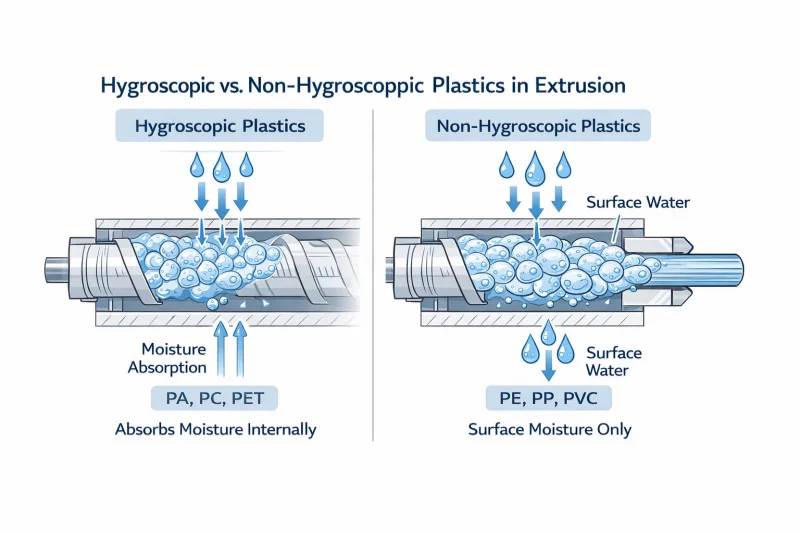
Non-hygroscopic plastics: surface moisture
Materials such as PE, PP and PVC generally do not absorb water deep into their molecular structure. Moisture usually stays on the pellet surface, often from condensation, humid storage, wet packaging or temperature changes during transport.
For these materials, proper storage and a hot-air hopper dryer are often enough. The goal is usually to remove surface water and preheat the material so feeding remains stable.
That does not mean drying can be ignored. Surface moisture can still create bubbles, unstable output or poor surface finish, especially if pellets were stored in a humid workshop or exposed after washing.
Hygroscopic plastics: internal moisture
Materials such as PC, PMMA, ABS, PA, PET and TPU behave differently. They absorb moisture from the air and hold it inside the pellet structure. A pellet can look dry on the outside while still carrying enough internal moisture to damage the extrusion process.
For pneumatic tubing production, the PU / TPU tube extrusion line connects the drying requirement with melt stability, tube calibration and downstream handling.
For these materials, a standard hot-air dryer may remove surface water but leave internal moisture behind. A dehumidifying dryer or desiccant drying system is normally required because it supplies heated air with a very low dew point, commonly -30°C or lower.
This dry air creates the moisture gradient needed to pull water out from inside the pellet. Without a low dew point, heating alone may only make the pellets warm, not truly dry.
For a broader material map, see common plastics used in extrusion.
For additional background on moisture behavior in different polymers, Plastics Technology’s Understanding Moisture Content in Resin is a useful technical reference.
What Happens When Moisture Enters the Extruder?
When wet plastic enters a high-temperature extruder barrel, the moisture does not simply disappear. It changes into steam, disrupts the melt and may react chemically with the polymer.
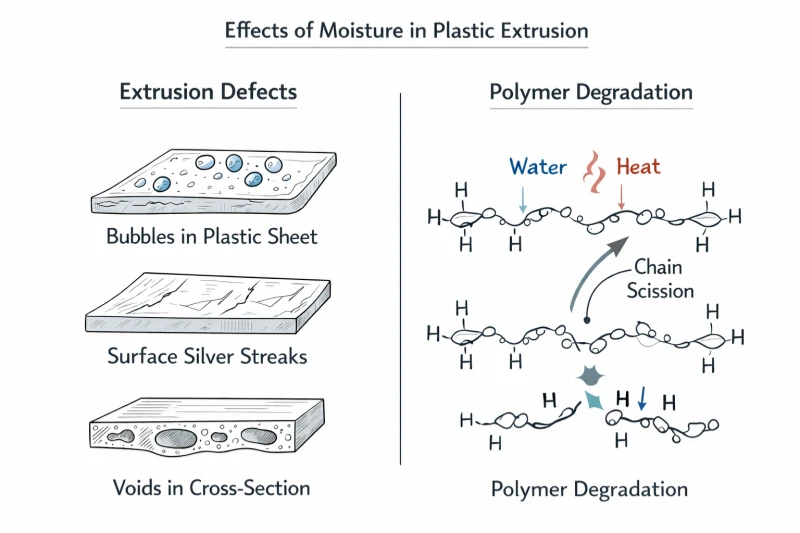
Visible Defects: Bubbles, Voids and Splay
The most obvious moisture defects in extrusion appear on the product surface or cross-section:
- bubbles and voids inside the wall or profile;
- splay marks or silver streaks caused by gas escaping through the melt;
- surface pitting or roughness where steam disrupts melt flow;
- haze in transparent profiles, especially in PC, PMMA and clear materials.
In opaque PE or PP products, a small moisture defect may be less visible. In transparent PC or PMMA profiles, the same drying error can become a full production reject. Transparent products cannot hide micro-bubbles, haze or streaks.
If similar defects continue after drying is corrected, use a broader plastic extrusion troubleshooting framework to check feeding, melt temperature, filtration, die condition and downstream stability.
Hidden Damage: Hydrolysis and Strength Loss
Moisture can also cause damage that is not visible at the die exit. At high processing temperatures, water can react with polymers such as PC, PA and PET. This reaction is called hydrolysis.
Hydrolysis breaks polymer chains and reduces molecular weight. The result can be:
- lower impact strength;
- increased brittleness;
- reduced tensile performance;
- poor long-term durability even when the surface looks acceptable.
This damage is irreversible. Once the polymer chains are broken, downstream adjustments cannot reconnect them. A lower melt temperature, slower screw speed, new die setting or melt pump can improve other process issues, but it cannot restore degraded material.
The Four Parameters of Plastic Extrusion Drying
Proper plastic extrusion drying is not just “heating the pellets.” Four parameters must work together.
| Parameter | What it controls | Common mistake |
|---|---|---|
| Temperature | Moves moisture out of the pellet without softening or oxidizing the resin | Using one default temperature for all materials |
| Time / residence time | Gives moisture enough time to migrate from inside the pellet | Topping up the hopper with fresh undried pellets |
| Airflow | Carries heat into the pellet bed and removes evaporated moisture | Low airflow that leaves pellets in a humid microenvironment |
| Dew point | Measures how dry the drying air is; hygroscopic materials commonly need air at -30°C or lower | Heating hygroscopic material with air that is still too moist |
Exact drying conditions should follow the resin supplier’s datasheet and the product quality requirement. A table copied from another material is not a safe substitute for material-specific data.
Temperature
The drying temperature must be high enough to activate moisture migration, but not so high that pellets soften, stick together, discolor or oxidize. This window changes by polymer.
Time
Drying takes time because internal moisture must diffuse outward. One common production mistake is adding fresh pellets to a hopper shortly before extrusion. The material may be inside the dryer, but it has not stayed there long enough to dry.
Airflow
Dry air must pass through the pellet bed in sufficient volume. If airflow is weak, moisture that leaves the pellet can remain around the material and reduce the drying force.
Dew Point
For hygroscopic materials, dew point is often the most overlooked parameter. Air can be hot but still too wet. A dehumidifying dryer must deliver air dry enough to pull internal moisture from the pellet; in many extrusion drying systems, that means a dew point around -30°C or lower.
For a deeper reference on drying parameters and equipment selection, Novatec’s Resin Drying Basics explains the same four control areas: heat, dew point, drying time and airflow.
Drying Can Fail After the Dryer
Drying does not end when the resin leaves the hopper. Strongly hygroscopic materials can reabsorb moisture quickly if they are exposed to normal workshop air after drying.
For PC, PMMA, PA and similar materials, long open transfer paths can undo hours of drying. Two hidden causes appear often during troubleshooting:
- dried pellets are topped up with fresh undried material;
- dried material is conveyed with ordinary compressed air that contains moisture.
The safest arrangement is to keep the dryer close to the extruder feed throat or use a conveying system designed to maintain dry air conditions from the dryer outlet to the machine inlet.
How Jinxin Looks at Drying in an Extrusion Line Project
As an extrusion line manufacturer, Jinxin usually sees drying problems during commissioning or trial production, not during a standalone dryer check. The dryer may appear to work, but the full line reveals the real problem: material storage, hopper residence time, air dew point, conveying method or exposure before feeding.
That is why drying should be considered part of the plastic extrusion line configuration when the project uses hygroscopic plastics or transparent products. It affects product quality as directly as screw design, die design, cooling and haul-off stability.
Resin Drying Checklist Before Extrusion
Before starting production, confirm:
- the material is hygroscopic or non-hygroscopic;
- bags or containers were not left open in a humid workshop;
- drying temperature and time match the resin supplier’s recommendation;
- the dryer has enough airflow for the hopper size and throughput;
- dew point is suitable for the material;
- freshly dried pellets are not exposed too long before feeding;
- conveying air will not reintroduce moisture;
- transparent or high-strength products have stricter drying control.
Frequently Asked Questions
Do all plastics need drying before extrusion?
No. PE, PP and PVC usually need surface moisture control rather than aggressive dehumidifying drying. Hygroscopic materials such as PC, PA, PET, PMMA, ABS and TPU need more careful drying because they absorb moisture internally.
Is a hot-air hopper dryer enough?
It depends on the material. A hot-air hopper dryer can remove surface moisture from many non-hygroscopic plastics. For hygroscopic plastics, a dehumidifying dryer is usually required because low dew point air is needed to remove internal moisture.
What defects are caused by moisture in extrusion?
Common defects include bubbles, voids, splay marks, silver streaks, haze, surface pitting, roughness and brittle products. Some defects are visible immediately; hydrolysis-related strength loss may appear later.
Can process adjustment fix wet material?
Usually not. If moisture has already entered the melt and caused hydrolysis or gas defects, changing screw speed, barrel temperature or die pressure may reduce symptoms but cannot fully restore material quality.
Conclusion
Resin drying in plastic extrusion is a quality-control step, not just a material-preparation habit. The goal is to keep moisture out of the melt before it becomes steam, surface defects or irreversible polymer degradation.
For simple non-hygroscopic materials, good storage and surface drying may be enough. For hygroscopic materials, transparent products and demanding engineering applications, drying temperature, time, airflow, dew point and post-drying handling must be controlled together.
If you want to continue learning how the extrusion process works from raw material to finished product, the next step is: What Is Plastic Extrusion? →
If you are planning an extrusion line and are unsure which drying configuration fits your material, send your material type, product shape and output target through the contact page. Jinxin can review the drying requirement together with the extruder and downstream line configuration.
Jason Shen
Founder and Lead Engineer, Jinxin ExtruderJason Shen leads Jinxin Extruder's single screw extrusion line projects, with hands-on experience in machine configuration, tooling adjustment, factory testing and extrusion troubleshooting.
Inquiry
Email Your Line Requirements
For an accurate quotation, include your target product, material, size range, expected output, factory voltage and any product drawing or sample requirements.