
Knowing how to clean an extruder screw and barrel is not only a maintenance task. It is a production decision. In many cases, controlled purging is enough to remove residual polymer before it becomes a hard deposit. In other cases, black specks, color streaks, gels or startup scrap keep returning because old material is trapped in the screw, barrel, adapter or another hold-up area.
The practical question is not whether the machine should be cleaned. The question is which level of cleaning is justified by the evidence: continue purging, change purge strategy, pull the screw, inspect the downstream flow path, or step back to a broader troubleshooting path.
For whole-line routines, use the extrusion line maintenance checklist. If the residue is mainly in the die, use extrusion die cleaning. If the defect pattern is not yet clear, start with black specks in extrusion or the broader plastic extrusion troubleshooting guide.
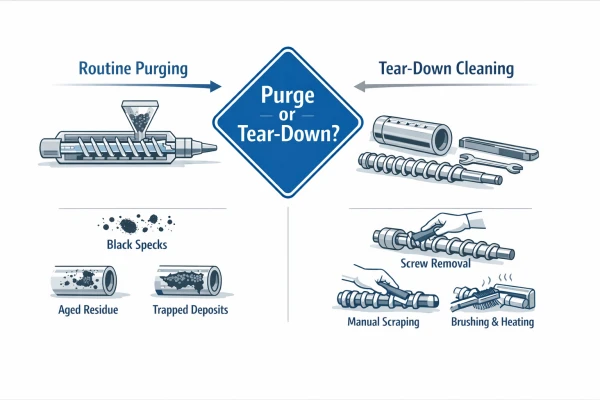
Quick Answer
Start with purge when contamination is mobile and trending down. Escalate to mechanical cleaning only when the evidence shows trapped, aged or carbonized residue that purge no longer removes.
| Situation | Best first action | Why |
|---|---|---|
| Normal color or material change | Controlled purge | Residual polymer is still mobile. |
| Startup specks steadily decrease | Continue purge and stabilize | The line is moving toward clean output. |
| Specks clear briefly then return | Stop relying on more purge alone | The source may be trapped deposit. |
| Purge use increases without improvement | Plan inspection or screw pull | Cost is rising without solving the source. |
| Specks appear with die lines or repeated position marks | Inspect adapter and die path | The screw may not be the only source. |
| Feeding becomes unstable after purge residue | Check feed throat and material path | Route to feeding diagnosis if blockage is upstream. |
1. Purging and Mechanical Cleaning Do Different Jobs
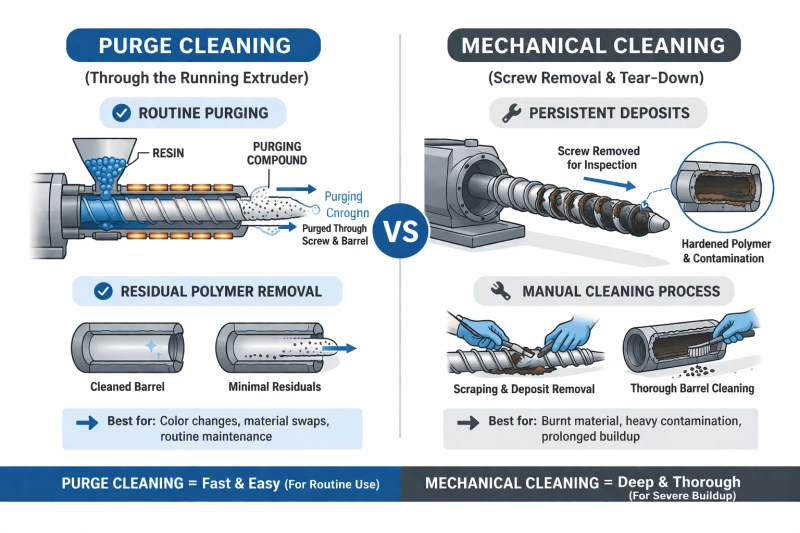
Purging manages residual polymer while the machine stays assembled. It is usually the right first step for color change, material transition, preventive cleaning during long runs and controlled shutdown preparation. The aim is to push old material out before it ages further.
Mechanical cleaning is an escalation. It means opening the machine and physically removing residue that purge cannot clear reliably. That may involve pulling the screw, accessing the barrel, checking the breaker plate, or inspecting the adapter path.
| Method | Use when | Main risk |
|---|---|---|
| Purging | Residue is still mobile and the discharge improves. | Treating purge compound as a cure for trapped deposits. |
| Mechanical cleaning | Deposits are aged, carbonized or repeatedly returning. | Damaging screw/barrel surfaces or cleaning the wrong area. |
| Broader diagnosis | Contamination appears with feeding, pressure or die symptoms. | Spending hours on the screw while the source sits elsewhere. |
2. Why Screw and Barrel Residue Becomes Contamination
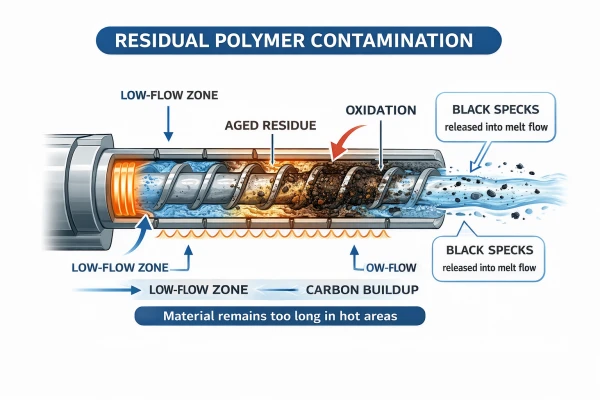
A screw and barrel do not become dirty like a floor. Most problems begin as polymer that stayed too long in the wrong condition. Long hot idle time, repeated heating cycles, incomplete changeover, low-flow areas and poor shutdown practice can all turn ordinary residue into degraded material.
Once residue ages, it may oxidize or carbonize. Later it appears as black specks, color streaks, gels, unstable startup scrap or material that seems to contaminate the next run. For the basic screw/barrel function, see the plastic extruder machine guide.
3. Decide by Trend, Not Appearance
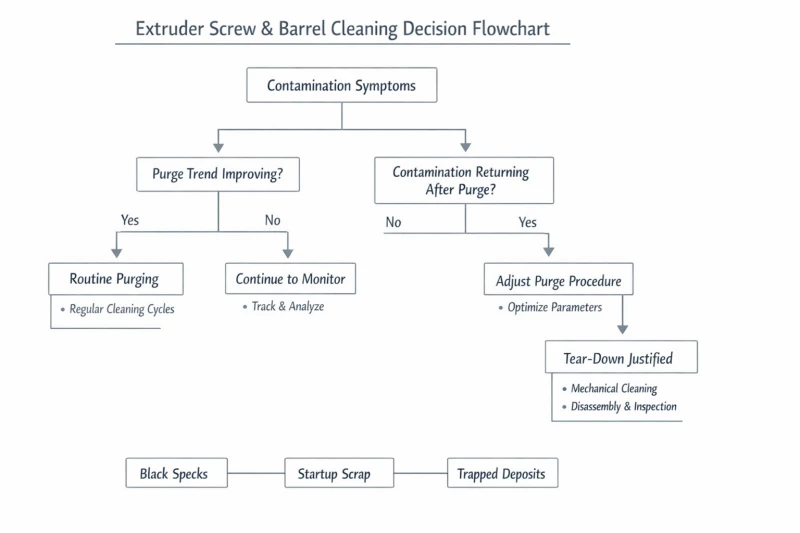
The most reliable signal is the trend. A short clean-looking discharge does not prove the machine is clean. A line is truly clean when it returns to stable output without recurring specks, repeated startup scrap or another immediate cleaning cycle.
| Trend | Meaning | Decision |
|---|---|---|
| Contamination steadily decreases | Purge is still working. | Continue controlled purge and stabilize the next resin. |
| Clean briefly, then returns | Easy residue was removed but source remains. | Inspect trapped zones before using more purge. |
| Worse after hot hold or poor shutdown | Residue likely aged in the machine. | Escalate faster; review shutdown discipline. |
| Tied to one material transition | Changeover window is the trigger. | Adjust purge grade, temperature path and transition procedure. |
| Same mark or position repeats | Flow-path or die-source possible. | Check adapter and die before blaming only the screw. |
4. When Purging Is Usually Enough
Purging is usually enough when the line responds predictably. It fits routine color changes, compatible material transitions, preventive cleanouts and planned shutdown preparation.
A good purge is controlled. Remove as much previous resin as practical, choose a purge compound or transition resin that matches the material family, monitor the discharge trend, and finish by stabilizing the next production resin. Do not judge only by the first cleaner-looking strand.
5. When to Pull the Screw
Pulling the screw becomes reasonable when contamination returns after apparently successful purging, when aged deposits are suspected, or when the line has a history of long hot idle, overheating, poor shutdowns or difficult resin transitions.
A pulled screw does not automatically mean a clean machine. If the real source is in the adapter, breaker plate, vent area, die path or feed system, the same defect can return after restart. Use evidence before teardown, and clean the right places for the right reason.
6. Material and Changeover Risks
PP and PE can share a line, but they do not always share the same processing window. If PE residue remains during a hotter PP run, or if an earlier PP transition leaves aged material behind, the next run can release layered contamination.
PVC raises the risk further because it is more heat-sensitive and more sensitive to residence time. Engineering plastics, recycled blends and dark colors may also leave difficult residues. The cleaning logic stays the same, but temperature limits, purge choice and shutdown urgency must match the resin.
| Material situation | Cleaning concern | Practical control |
|---|---|---|
| PP/PE changeover | Layered carryover after repeated transitions. | Displace the previous resin before temperature changes. |
| PVC | Heat-sensitive degradation and corrosive byproducts. | Shorten residence time and follow material-specific shutdown. |
| Recycled material | Higher contamination and filtration load. | Track screen, purge and black-speck history. |
| Dark-to-light color change | Visible streaks and hidden residue. | Judge by trend and next-resin stability. |
7. Avoid Cleaning Damage
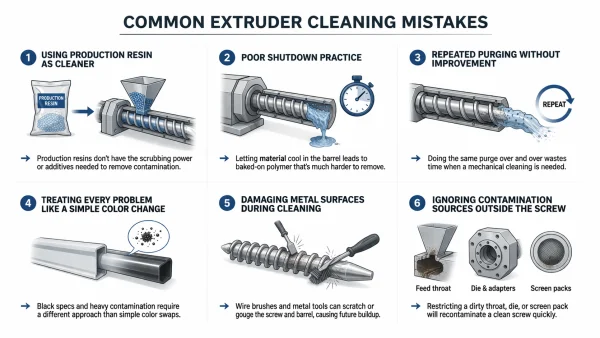
Mechanical cleaning can remove deposits, but it can also create tomorrow’s dead spots if it scratches precision surfaces or leaves gouges that hold polymer. Use plant-approved tools and methods. Avoid aggressive steel tools on precision surfaces unless the equipment procedure specifically allows them.
Common mistakes:
| Mistake | Why it hurts |
|---|---|
| Using production resin as the only cleaning method | It may be too weak for aged carbonized residue. |
| Leaving the machine hot during a poor shutdown | Residue gets more time to degrade. |
| Purging after the trend has stopped improving | Cost rises while trapped material remains. |
| Treating every case like a simple color change | Material history and hold-up zones are ignored. |
| Scratching screw or barrel surfaces | New retention points can create recurring contamination. |
| Blaming the screw for every black speck | The source may be feed path, breaker plate, adapter or die. |
8. Connect Cleaning to Prevention
The cheapest screw pull is the one the line never needs. Build preventive purge into real production events: long campaigns, difficult temperature changes, material switches and planned shutdowns. Record which materials create the hardest cleanouts and which lines show specks after restart.
If residue or purge material blocks the feed throat, use why the extruder is not feeding. If multiple symptoms appear together, use plastic extrusion troubleshooting. If the contamination pattern specifically looks like black specks, diagnose the source with black specks in extrusion.
Conclusion
Clean by decision, not by habit. Purging is the right first response when residue is mobile and improving. Tear-down is justified when the trend shows trapped, aged or returning deposits. The goal is not to make the screw look clean for a moment; the goal is to return the line to stable, predictable production without avoidable damage or downtime.
FAQ
How do you clean an extruder screw and barrel?
Most lines start with controlled purging to remove residual polymer. Mechanical cleaning or screw pull is used when deposits are trapped, aged or repeatedly return after purge.
When is purging enough?
Purging is enough when contamination keeps trending down and the line returns to stable production without recurring black specks or startup scrap.
When should you pull the screw?
Consider pulling the screw when purge clears the line only briefly, when deposits are carbonized, or when long hot idle and poor shutdown history suggest trapped residue.
Can purge compound remove all contamination?
No. Purge can remove mobile residue and early contamination, but it may not remove layered deposits in low-flow or hold-up zones.
What tools should be avoided during mechanical cleaning?
Avoid improvised aggressive tools that scratch screw or barrel surfaces. Follow the equipment procedure and use approved soft tools where precision surfaces are exposed.
Why do black specks return after cleaning?
The source may still be in a hold-up area, adapter, breaker plate, die path, feed system or an unchanged shutdown/changeover practice.
Need Help Choosing the Cleaning Level?
Send the material, color change history, purge result trend, shutdown history, photos of the contamination and where the defect appears after restart. We can help decide whether to keep purging, pull the screw or inspect another part of the extrusion line.
Jason Shen
Founder and Lead Engineer, Jinxin ExtruderJason Shen leads Jinxin Extruder's single screw extrusion line projects, with hands-on experience in machine configuration, tooling adjustment, factory testing and extrusion troubleshooting.
Inquiry
Email Your Line Requirements
For an accurate quotation, include your target product, material, size range, expected output, factory voltage and any product drawing or sample requirements.